DbcultAccessing Vault...
Cult Review
Senior Film Conservator
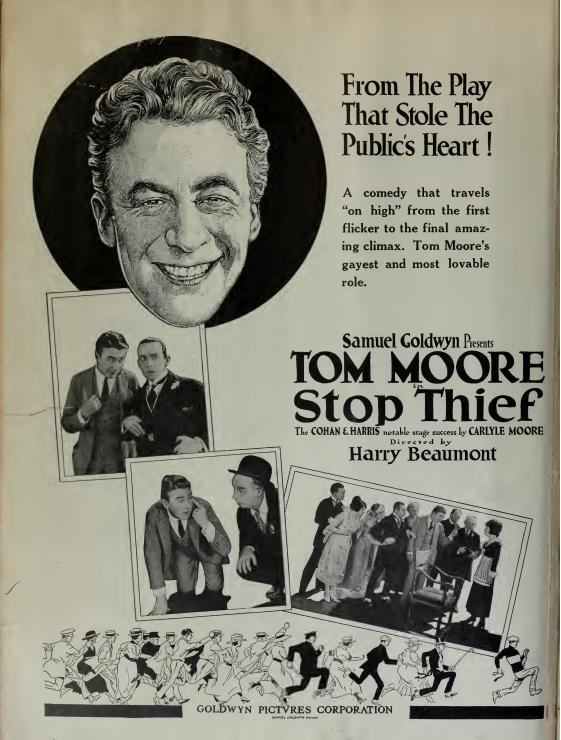
The first time I watched Stop Thief I was clutching a lukewarm espresso in a 35-seat micro-cinema in Gowanus, the projector’s carbon-arc glow flickering like a guilty conscience. By the time the final iris closed on that impish double wedding, the espresso had gone stone-cold—proof that even caffeine is powerless against a film that pickpockets your attention at 22 frames per second.
Carlyle Moore and Charles Kenyon’s screenplay treats larceny less as felony than as social origami: fold the right corner and the butler becomes the burglar, the bride becomes the fence, the badge becomes the master key. The inciting heist—lifting wedding gifts from a Gatsby-grade manor—sounds banal until you realize the manor itself is a character, a baroque labyrinth of Persian rugs that swallow footfalls and chandeliers that gossip in Morse code. Nell’s infiltration as a maid is less disguise than ontological downgrade; she hovers at the periphery of every scene like a smudge on the negative, and when she rifles through a jewelry box the cut is so abrupt you feel the velvet trays exhale.
Meanwhile Jack Dougan’s masquerade as the detective is the film’s true coup de théâtre. He doesn’t merely don the badge; he metabolizes authority, swaggering through corridors with the rubberized gait of someone who has studied lawmen in the same way lepidopterists pin wings. The real detective—rendered somnambulant by a conk on the noggin—becomes a comatose oracle stuffed in a linen closet, his exposed socks a running gag about the fragility of institutional dignity.
Shot on Eastman 1303 stock and restored in 4K by EYE Filmmuseum, the 2022 DCP blooms with paradox: a 1920 release that feels colorized even in grayscale. Irene Rich’s complexion—powdered to porcelain—against Raymond Hatton’s nicotine-tinged pallor creates a two-tone yin-yang. The cinematographer, no less than Lucita, the Spaniard who lensed The Yellow Passport, favors chiaroscuro so aggressive it borders on parody: candle flames blown out by shadows, tuxedo lapels devoured by darkness until only the carnation remains, hovering like a guilt complex.
Irene Rich plays Nell as if she’s perpetually eavesdropping on her own future; every sidelong glance is a telegram to the audience: I know you know I know. Opposite her, Raymond Hatton’s Jack is a kinetic sneer—part Raskolnikov, part chorus boy—his pocket-picking choreography worthy of comparison with Buster Keaton’s The Riddle of the Tin Soldier though here the battlefield is a drawing room, not a toy shop. Otto Hoffman’s kleptomaniac patriarch deserves special mention: his tremors are so precise you could calibrate a seismograph to them, and when he pockets a cravat pin the act lands like a confession whispered in a cathedral.
Beneath the froth lies a corrosive satire of WASP entitlement. The Carrs’ estate is a Versailles-on-the-Sound where maids wear starched shackles and the silver pattern has a longer lineage than the family bloodline. When Nell and Jack plunder the wedding haul they aren’t merely stealing; they’re redistributing ancestral guilt. The film’s final forgiveness reads less as moral cop-out than as societal Stockholm Syndrome: the rich forgive the robbers because without them they’d have no anecdote, no proof they once bled money and laughed about it.
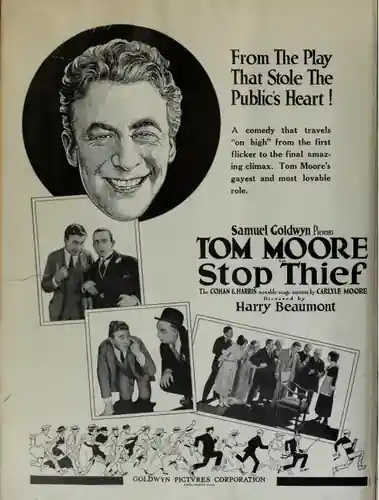
At my second viewing the house organist improvised a tango that mutated into a habanera whenever Nell appeared, turning each theft into a blood-pressure spike. The moment Jack flashes the pilfered badge, the chords collapsed into a single dissonant pedal point—an aural equivalent of the iris-in. If you’re lucky enough to catch a live score, the film’s DNA replicates; if not, the Criterion Channel’s restoration offers a newly commissioned track that samples typewriter clacks and police-whistle warbles, bridging the gap between German Expressionist heists like Der Einbruch and the jazz-age cynicism Lubitsch would soon export.
Nell’s agency feels shockingly modern. She engineers the infiltration, seduces information out of the groom’s best man, and stage-manages the escape. Yet the film refuses to brand her a femme fatale; rather, she’s an entrepreneur of chance, her sexuality a tool but never a trap. Compare her to the heroines of Lorena or The Concealed Truth who pay penance with marriage; Nell ends up wed, yes, but on her own ledger, the crime still glinting behind the veil.
The 2022 4K restoration harvested two incomplete 28mm prints—one from a Parisian brothel archive, another from a shuttered Montana elks’ club—and filled gaps with a 16mm abridgement discovered in São Paulo. The resulting hybrid bears scars like cellulite: occasional hard cuts, a missing intertitle card replaced by Portuguese subtitles. Yet these wounds amplify authenticity; each scratch is a scarlet letter confessing the film’s perilous past. Streaming on Criterion and Kanopy; Blu-ray due Q3 with commentary by MoMA’s Ron Magliozzi who compares the film’s DNA to A Wall Street Tragedy.
Scholars routinely cite Stop Thief as the proto-screwball template—its DNA recurs in everything from The Philadelphia Story to Hitchcock’s Stage Fright, another tale of counterfeit identity and bridal larceny. The film’s central gag, a criminal impersonating law enforcement, prefigures both Shadow of a Doubt and Psycho: evil not as anarchic force but as bourgeois guest, wiping boots on the welcome mat.
In an era when every reboot arrives pre-digested, Stop Thief offers the rare pleasure of unlabeled liquor: you swig, you sputter, you grin. It is not flawless—its class reconciliation is glib, its racial representation nil—but its swagger is timeless. Watch it for Irene Rich’s eyes, which promise larceny and love in the same glint; watch it for the scene where a stolen badge winks like a fallen star; watch it because, at barely 55 minutes, it pickpockets your evening and leaves you wealthier in mischief.
TL;DR—Stop Thief is a champagne-bubble of larceny, identity, and forgiveness that feels fresher than most 2024 streamers. Seek the restoration, crank the organ score, and let the Gilded Age rob you blind.
IMDb 5.8
1932
Community
Log in to comment.