DbcultAccessing Vault...
Cult Review
Senior Film Conservator
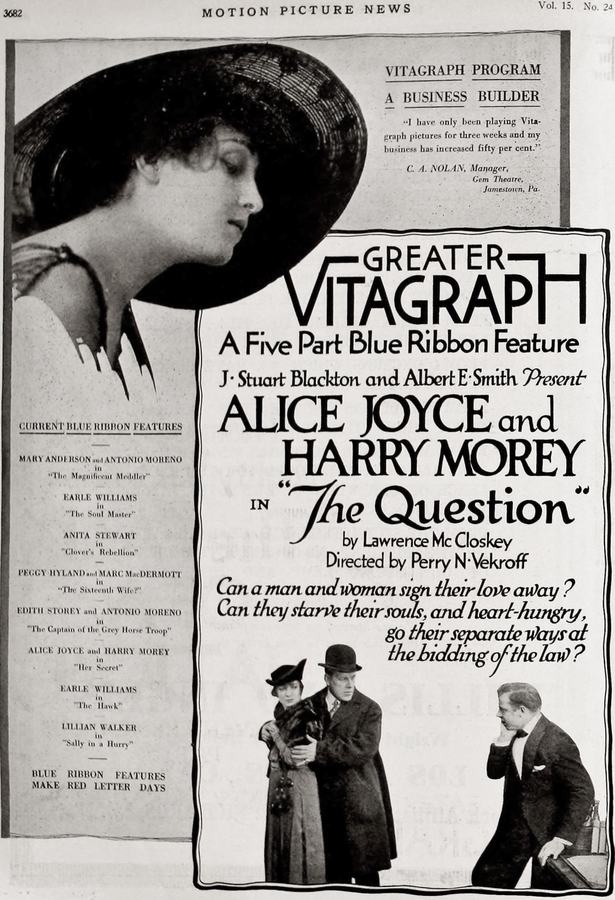
Stepping back into the nascent days of cinema, one occasionally unearths a gem that, despite its age and the inherent stylistic limitations of its era, still manages to provoke thought and illicit a genuine emotional response. Such is the case with 1917’s The Question, a film that, even a century later, presents a fascinating study in narrative construction, societal commentary, and the daring use of a plot device that continues to divide audiences. Directed with a certain earnestness by its uncredited hand, and penned by George H. Plympton and Lawrence McCloskey, this feature plunges into a melodramatic abyss only to pull back with a twist that is as audacious as it is potentially frustrating.
At its core, The Question posits a classic conflict: the relentless pursuit of scientific advancement versus the tender, undeniable call of human affection. Dr. Rundel, portrayed by the venerable Charles Kent, is a man possessed. His life’s singular focus is the development of a medical formula, a panacea he believes will revolutionize healthcare. This singular obsession renders him blind to the human cost of his ambition. He views romance, specifically the burgeoning love between his assistant, John Stedman (Gladden James), and Martha Wainwright (Alice Joyce), as an impediment, a distraction from the sacred work. In a move that feels both archaic and chillingly pragmatic, Rundel compels Stedman to sign a formal agreement, a legal document stipulating that marriage must be postponed until the formula's completion. It is a moment that sets the stage for all subsequent tragedy, a contract signed not in blood, but in the dashed hopes of young lovers.
The tragic irony is amplified by Rundel's subsequent death. Rather than liberating Stedman, his demise solidifies the agreement, transforming a temporary deferment into an enduring, almost sacred, vow. This contractual bind, though seemingly a mere formality, becomes a spectral hand gripping Stedman’s future, a testament to the era’s rigid adherence to written promises, regardless of their human impact. Gladden James, as John Stedman, capably conveys the mounting despair of a man trapped between his word and his heart. His performance, typical of the silent era, relies on exaggerated gestures and facial expressions, yet within these conventions, he projects a genuine sense of anguish and powerlessness.
Martha Wainwright, brought to life by the luminous Alice Joyce, embodies the quintessential silent film heroine: beautiful, virtuous, yet tragically constrained by the patriarchal dictates of her time. Her father, a man of practical mind and societal standing, insists that Martha wed the wealthy Allen Cosgrove (Harry T. Morey). Cosgrove, a character rendered with a suitable blend of affluence and entitlement by Morey, represents the pragmatic choice, a stable future devoid of the passionate, yet precarious, love Martha shares with Stedman. Joyce, with her expressive eyes and graceful demeanor, masterfully portrays Martha's internal struggle, her loyalty to Stedman clashing with the immense pressure from her family and society. Her quiet suffering is palpable, making her eventual, radical decision all the more impactful.
The moment Martha sends Stedman a note, urging him to relinquish her, is a devastating turning point. It is a sacrifice born of desperation, a last resort to spare her beloved further pain. This act, however, shatters Stedman, pushing him into a profound mental breakdown. Here, the film delves into the psychological toll of unfulfilled love and societal pressure, a theme explored in other melodramas of the era, such as The Folly of Desire, which similarly dissected the destructive power of thwarted affections. The intensity of Stedman’s collapse is a stark reminder of the emotional stakes involved, and James’s portrayal, while perhaps theatrical by modern standards, effectively communicates profound despair.
In a bold stroke of narrative courage for 1917, Martha, defying all societal expectations and risking her reputation, comes to Stedman's aid. She agrees to live with him, an act of profound love and rebellion that instantly ignites a scandal. This decision is remarkable, placing Martha not merely as a passive victim but as an agent of her own destiny, willing to sacrifice her standing for the man she loves. This act of defiance against rigid social norms, while perhaps simplified in its cinematic portrayal, resonates with the burgeoning desire for female agency that would slowly gain traction in the coming decades. It’s a moment that elevates The Question beyond mere melodrama, hinting at a deeper critique of societal hypocrisy.
The scandal, of course, culminates in a tense confrontation between Cosgrove and Stedman. Harry T. Morey, as Cosgrove, brings a simmering indignation to his role, representing the offended pride of a man whose rightful claim has been usurped. The dramatic tension, built through intercutting close-ups and the expressive acting of the leads, would have held contemporary audiences rapt. The film’s pacing, a hallmark of early cinema, allows these emotional beats to breathe, ensuring the audience fully grasps the gravity of the situation. It’s a testament to the craft of director and actors alike that even without spoken dialogue, the stakes feel incredibly high.
And then comes the twist. The entire elaborate edifice of love, sacrifice, scientific obsession, and societal scandal crumbles with a single, jarring revelation: Dr. Rundel awakens from a dream. The formula, the agreement, Stedman’s breakdown, Martha’s defiance – all of it was a figment of his subconscious, a vivid nightmare. He immediately destroys the agreement, rendering the entire ordeal null and void. This ending, while certainly a bold narrative choice, presents The Question with its most significant critical challenge.
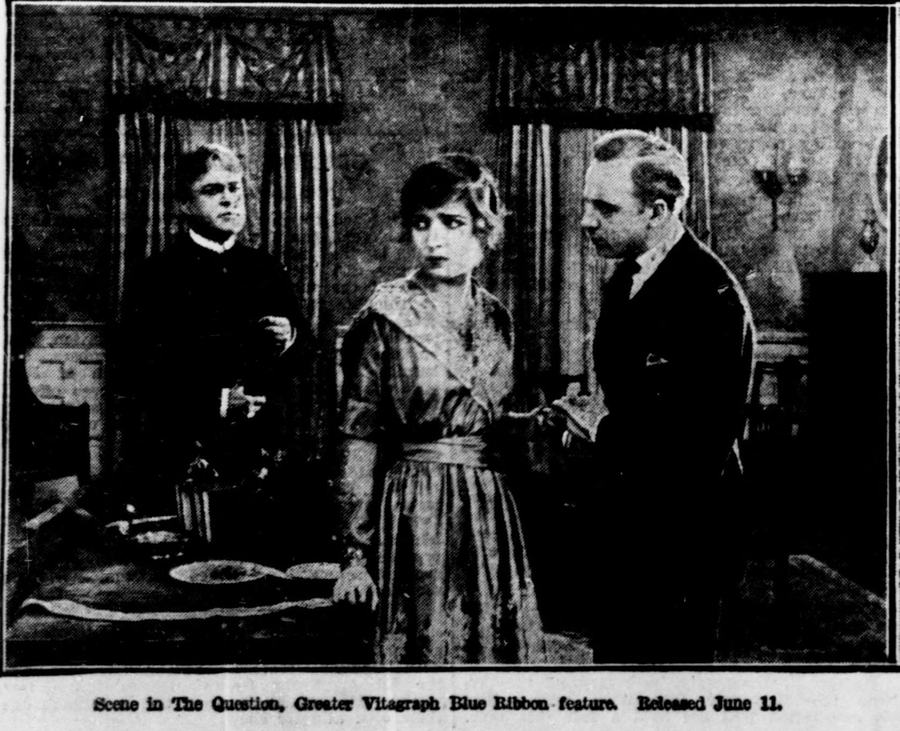
For modern viewers, this 'it was all a dream' trope often feels like a narrative cheat, a convenient shortcut to an otherwise intractable problem. It can undermine the emotional investment built throughout the film, leaving a sense of dissatisfaction. However, it's crucial to contextualize this within the cinematic landscape of 1917. Narrative conventions were still being established, and such a twist might have been perceived differently. Was it a clever way to resolve an impossible situation without resorting to death or permanent ruin, allowing for a happy ending while still exploring dark themes? Or was it a nascent attempt at psychological depth, suggesting the anxieties and moral dilemmas that plagued even the most focused minds?
The dream sequence, in a way, allows the film to explore the darkest possibilities of Rundel’s obsession – the destruction of lives, the ruin of reputations – without having to commit to them. It's a hypothetical nightmare that, once dispelled, leaves the characters unscathed, free to pursue their happiness. This contrasts sharply with the often grim realities portrayed in contemporary dramas like The Destroyers or even the stark realism found in international films such as A föld embere, which grappled with more tangible, inescapable hardships. In The Question, the 'dream' functions as a safety net, allowing for dramatic exploration without permanent consequence.
Beyond the controversial ending, The Question offers a valuable glimpse into early filmmaking craftsmanship. The cast, including Edwards Davis and Amy Remley in supporting roles, delivers performances in the broad, expressive style characteristic of silent cinema. Alice Joyce, in particular, stands out, her naturalistic grace shining through the melodramatic conventions. Her ability to convey deep emotion with subtle shifts in expression, even within the confines of the era's acting styles, is commendable. It’s a reminder of why she was a prominent star of her time, often compared to the likes of other leading ladies in films like Betty of Greystone or Rags.
The cinematography, while not groundbreaking, is competent, employing standard techniques of the period such as intertitles for dialogue and exposition, and relatively static camera work punctuated by occasional close-ups for emotional emphasis. The sets and costumes, though simple, effectively convey the early 20th-century aesthetic, grounding the narrative in a believable, if somewhat idealized, reality. The film's primary strength lies not in its technical innovation, but in its ambitious narrative structure and the bold decision to employ a twist ending that, for its time, was quite a gamble.
Writers George H. Plympton and Lawrence McCloskey deserve recognition for crafting a story that, despite its eventual resolution, manages to build significant dramatic tension and explore complex emotional landscapes. The idea of a contract dictating personal happiness, and the subsequent societal fallout from defying it, speaks to timeless themes of individual freedom versus societal expectation. Even if the 'dream' ending softens the blow, the questions it raises about the choices we make and the consequences we face remain potent.
Ultimately, The Question stands as a curious and compelling artifact of early American cinema. It may not possess the epic scope of Du Barry or the stark realism of Barbarous Mexico, but it carves its own niche through its willingness to experiment with narrative structure. While the dream twist might be a point of contention for contemporary audiences, it was, in 1917, a bold, if perhaps simplistic, solution to a complex dramatic problem.
The film invites us to reflect on the nature of reality and illusion, and how our subconscious fears and desires can manifest in vivid, overwhelming ways. It poses the titular question not just within the narrative, but to the viewer: how do we reconcile the dramatic journey with its sudden, almost whimsical, resolution? Is the emotional impact of the journey negated by the destination, or does the journey itself hold its own intrinsic value, regardless of the ultimate outcome?
For silent film enthusiasts and scholars, The Question is more than just a historical curiosity; it’s a case study in early narrative experimentation, a testament to the evolving language of cinema. It reminds us that filmmakers, even a century ago, were grappling with how to tell stories effectively, how to evoke emotion, and how to surprise their audiences. It’s a film that, despite its quirks, holds up a mirror to the enduring human struggles of love, duty, and the often-blurred line between what is real and what we merely dream.
IMDb 6.1
1933
Community
Log in to comment.