DbcultAccessing Vault...
6/10
Senior Film Conservator
A definitive 6/10 rating for a film that redefined the boundaries of cult cinema. Unseeing Eyes remains a cornerstone of transgressive art.
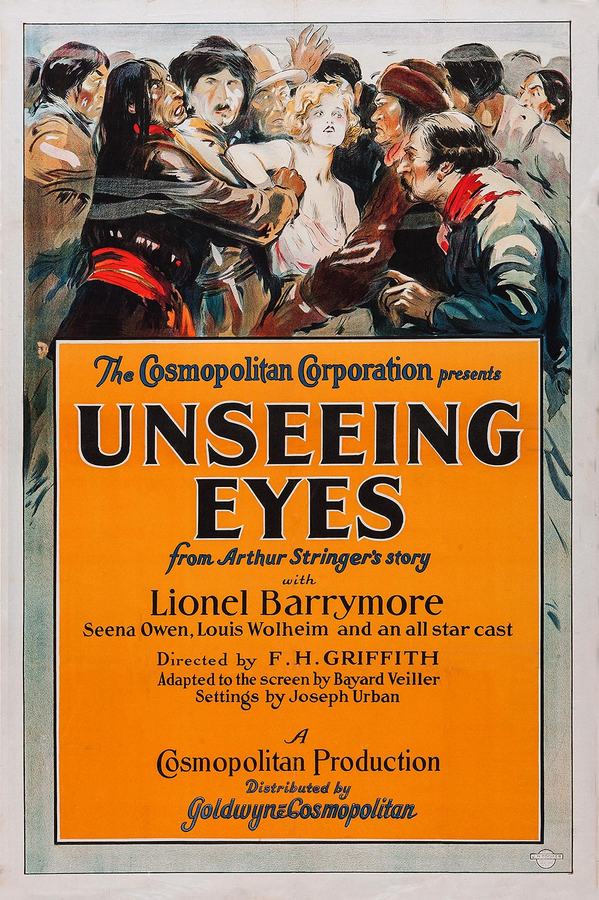
The year 1923 stood as a pivotal juncture in the evolution of the moving image, a time when the cinematic grammar was being rewritten by visionaries who dared to drag heavy cameras into the most inhospitable corners of the globe. Among these ambitious endeavors, Unseeing Eyes emerges as a visceral testament to the 'Northland' genre, a film that eschews the comfortable artifice of the studio lot for the jagged, wind-whipped realities of the Canadian wilderness. It is a work that captures the precariousness of human existence when pitted against the colossal indifference of an arctic landscape, framed through the lens of a high-stakes rescue mission that feels as urgent today as it did a century ago.
The plot, adapted from the prose of Arthur Stringer and refined for the screen by Bayard Veiller, centers on the desperate plight of a silver mine owner. However, the true emotional core resides in Miriam (played with a luminous resilience by Seena Owen). Miriam is no mere damsel; she is the catalyst for the entire narrative, the force of will that propels the story into the clouds. When she enlists the services of a renegade pilot, the film transitions from a domestic drama into a high-octane (for the period) aviation thriller. This renegade, a man who lives on the fringes of polite society, represents the archetypal 'lost soul' of the post-war era, finding redemption not in the arms of a woman, but in the mastery of his machine against the tempestuous sky.
The 'unseeing' aspect of the title functions on multiple semiotic levels. There is the literal threat of snow blindness—a terrifying reality for those traversing the white desert—but there is also the metaphorical blindness of greed and the inability of the civilized world to 'see' the inherent danger of the wild. Unlike the more domestic preoccupations found in Nearly Married, which navigates the social intricacies of matrimony, Unseeing Eyes plunges into the primitive. It shares a certain thematic DNA with The Magic Eye in its exploration of perception and the hidden truths revealed through extreme circumstances, yet it grounds these concepts in a much more tactile, punishing environment.

One cannot discuss this production without acknowledging the formidable presence of Lionel Barrymore. Even in this early stage of his screen career, Barrymore possessed a gravitas that anchored every scene he inhabited. He brings a nuanced complexity to the proceedings, avoiding the mustache-twirling villainy that plagued many of his contemporaries. His performance is a masterclass in economy, using subtle shifts in posture and gaze to convey a wealth of interiority. Beside him, the cast is populated by stalwarts like Gustav von Seyffertitz and Louis Wolheim, the latter of whom provides a rugged, earthy counterpoint to the more refined sensibilities of the leads.
The inclusion of Dan Red Eagle and Francis Red Eagle adds a layer of authenticity to the film's portrayal of the North, though, as with many films of this vintage, the cultural representation is filtered through the specific lens of 1920s Hollywood. Nevertheless, their presence provides a grounding effect, reminding the audience that the 'wilderness' Miriam and her pilot are 'conquering' is a land with its own history and inhabitants. This complexity of cast makes the film feel much more like a lived-in world rather than a mere stage play, a stark contrast to the more stylized melodrama of Fiamma simbolica.
Visually, Unseeing Eyes is a triumph of location photography. The cinematography captures the blinding albedo of the snow with such intensity that one can almost feel the chill radiating from the screen. The aerial sequences are particularly noteworthy; in an era before sophisticated green screens or CGI, the sight of a rickety biplane dwarfed by the massive Canadian Rockies is genuinely breathtaking. There is a sense of genuine peril in these frames—a realization that the actors and crew were truly out there, battling the elements to capture these fleeting images.
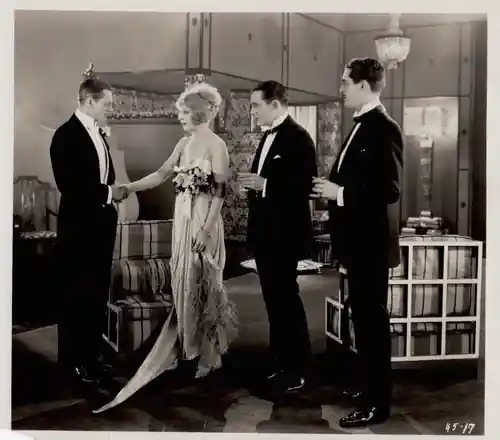
The film utilizes light in a way that suggests a pre-noir sensibility. The deep shadows in the mining cabins contrast sharply with the overexposed brilliance of the outdoor scenes, creating a visual rhythm of claustrophobia and agoraphobia. This aesthetic choice mirrors the psychological state of the characters, who are trapped between their internal demons and the external threat of the frost. It lacks the surrealist leanings of Panopta II, opting instead for a rugged naturalism that enhances the stakes of the survival narrative. While Scars of Jealousy deals with the internal erosion of the spirit, Unseeing Eyes shows us the physical erosion of the body against the wind.
The renegade pilot, played with a brooding intensity by Walter Miller, serves as a symbol of the modern age encroaching upon the ancient. Aviation in 1923 was still a novelty, a dangerous and romantic pursuit that represented the pinnacle of human ingenuity. By making a pilot the hero, the film aligns itself with the forward-looking optimism of the roaring twenties, even as it acknowledges the high cost of such progress. The plane itself becomes a character—a temperamental beast of wood, wire, and canvas that requires constant coaxing to stay aloft. When the inevitable mechanical failure occurs, the shift from the speed of flight to the agonizing slowness of trekking on foot creates a profound narrative tension.
This transition highlights the theme of human vulnerability. In the air, they are gods; on the ground, they are mere prey. This duality is explored with far more grit here than in the lighter, more comedic treatments of travel seen in Be My Wife. The stakes are existential. If they fail, they don't just lose a mining claim; they vanish into the 'unseeing' maw of the north, becoming part of the landscape they sought to master.
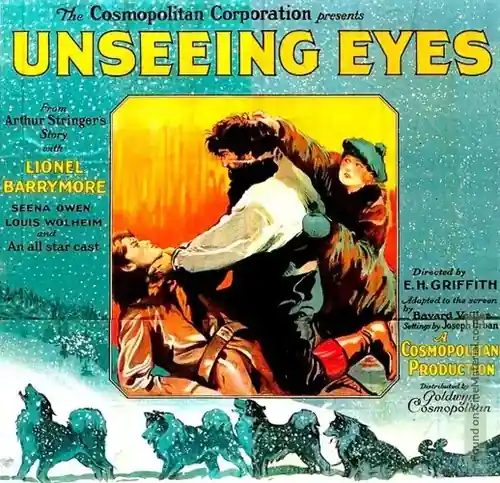
The screenplay’s strength lies in its pacing. Arthur Stringer, known for his adventure novels, provides a solid structural foundation, while Bayard Veiller—a man who understood the mechanics of suspense—tightens the screws at every opportunity. The dialogue (delivered via intertitles) is sparse and punchy, avoiding the flowery sentimentality that often bogged down silent dramas. Instead, we get a sense of characters who have no breath to waste on trivialities. Every word is a choice between survival and surrender.
The film’s exploration of isolation and the breakdown of social order reminds one of the darker undertones in The Reign of Terror, though the 'terror' here is environmental rather than political. There is a sequence involving a blizzard that is edited with such frantic energy that it predates the montage techniques that would later become a staple of the medium. The way the snow is used to obscure the frame, leaving only the characters' eyes visible, reinforces the central motif of the film: what we see versus what we feel.
To watch Unseeing Eyes today is to look through a window into a world that was rapidly disappearing. The 'frontier' was closing, and the silent film era was reaching its zenith of technical proficiency. The film stands as a precursor to the great survival epics of the sound era, laying the groundwork for the rugged individualism that would define much of American and Canadian cinema. It lacks the melodramatic excess of L'altalena della vita, preferring a more stoic, almost Hemingway-esque approach to its protagonists.

Furthermore, the film’s focus on the silver mining industry provides a fascinating glimpse into the economic drivers of the era. The mine is not just a setting; it is the 'inciting incident' of industrial greed that puts all these lives at risk. In this way, the film subtly critiques the very progress it celebrates through the pilot's aviation. It is a complex, multi-layered work that rewards multiple viewings, especially for those interested in the intersection of early technology and the natural world.
Ultimately, Unseeing Eyes is a film about the clarity that comes from extreme hardship. It is a beautifully shot, expertly acted, and tautly written adventure that transcends its silent-era origins. While many films from 1923 have faded into the mists of archival obscurity, this one remains a potent reminder of the power of visual storytelling. It doesn't need synchronized sound to convey the howling of the wind or the desperate beating of a heart; the images speak with a profound, unshakeable eloquence.
Whether it is the haunting presence of Seena Owen, the steely resolve of the renegade pilot, or the formidable antagonism of the landscape itself, Unseeing Eyes is a cinematic journey that leaves an indelible mark on the viewer. It is a stark, beautiful, and harrowing exploration of the human spirit’s refusal to be eclipsed by the 'unseeing' void of the wild. If you find yourself drawn to the rugged narratives of survival or the early history of aviation, this film is an essential piece of the puzzle, standing tall alongside other silent greats like The Double Event or the atmospheric intensity of Der Fund im Neubau. It is a masterwork of the Great White Silence.
IMDb —
1914
Community
Log in to comment.