DbcultAccessing Vault...
Cult Review
Senior Film Conservator
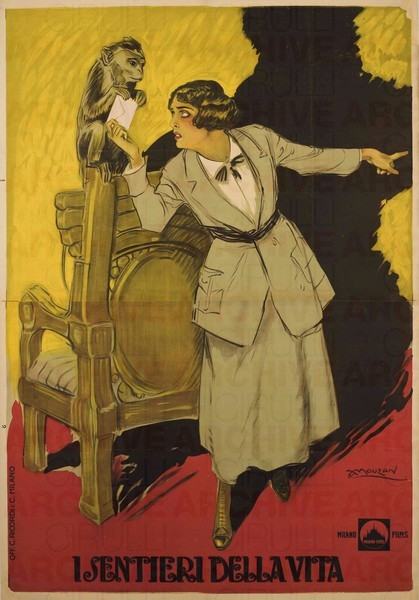
There are films that merely narrate a story, and then there are those that etch themselves onto the very fabric of your soul, provoking introspection long after the final frame fades. 'I sentieri della vita' is undeniably one of the latter. This cinematic masterpiece, featuring the captivating Carlo Strozzi, is not just a film; it is a profound philosophical treatise rendered in light and shadow, exploring the labyrinthine choices that define human existence, the relentless tug-of-war between passion and pragmatism, and the often-irreversible consequences of our most pivotal decisions. Set against a meticulously crafted backdrop of early 20th-century Italy, it immerses the viewer in a world brimming with both vivid beauty and stark social realities, a world where an artist's brush can either capture the essence of truth or become a tool for gilded deception.
At the heart of 'I sentieri della vita' lies the utterly magnetic performance of Carlo Strozzi. His portrayal of the titular painter is nothing short of breathtaking, a masterclass in nuanced emotional expression. From the initial scenes, where he embodies the raw, almost feral intensity of a young artist struggling against the currents of poverty, one is immediately drawn into his world. Strozzi conveys the inherent conflict within his character with an astonishing subtlety, allowing the audience to witness the gradual erosion of his artistic purity not through overt melodrama, but through a series of almost imperceptible shifts in his gaze, his posture, and the very way he holds his brush. His early scenes with Giulia are imbued with a palpable tenderness, a shared understanding that transcends dialogue, establishing a powerful emotional anchor for the narrative. Later, as he ascends the social ladder, Strozzi masterfully portrays the increasing hollowness beneath the veneer of success, a melancholic weight that settles upon his shoulders, manifesting in a quiet desperation that is far more impactful than any grand pronouncement.
Strozzi's ability to convey complex internal turmoil without resorting to histrionics is a testament to his profound understanding of human psychology. His transformation from the impassioned, idealistic youth to the celebrated, yet regret-laden, man is a masterclass in sustained character development. The film’s narrative hinges entirely on the credibility of his choices, and Strozzi ensures that each agonizing decision, each moment of compromise, feels earned and tragically inevitable. It's a performance that lingers, a testament to the enduring power of an actor truly inhabiting his role.
'I sentieri della vita' is a film that thrives on its thematic richness. At its core, it is a searing examination of choice – not merely the grand, life-altering decisions, but the myriad small compromises that incrementally steer one's destiny. The film posits a profound question: what is the true cost of success when it demands the sacrifice of one's authentic self? Carlo's journey serves as a powerful allegory for the universal human dilemma of balancing ambition with integrity, material gain with spiritual fulfillment. The contrast between the vibrant, almost tactile realism of his early works and the polished, conventional beauty of his commissioned pieces speaks volumes about the soul-crushing nature of artistic compromise.
The film also delves deep into the complexities of love across social strata. Giulia represents an idealized, pure love, one that nurtures and inspires, while Isabella embodies a more pragmatic affection, tied to status and convenience. This dichotomy echoes in the film's visual language, with the raw, bustling scenes of the working-class quarter contrasting sharply with the opulent, yet sterile, grandeur of aristocratic salons. The film suggests that true connection, whether artistic or romantic, cannot flourish in an environment built on pretense.
Visually, 'I sentieri della vita' is a triumph. The cinematography is exquisite, utilizing light and shadow not merely to illuminate scenes but to convey emotional states and thematic undertones. The early sequences, bathed in a softer, more natural light, evoke a sense of hope and genuine connection, while the later scenes of Carlo's success are often rendered with stark, almost artificial brilliance, emphasizing the superficiality of his new world. The director, whose vision permeates every frame, demonstrates a masterful command of mise-en-scène, transforming each setting into a character in itself. The crowded, vibrant streets feel alive with stories, while the cavernous, ornate drawing rooms often feel empty, echoing Carlo's internal void.
Symbolism is woven throughout the narrative with a delicate yet impactful hand. The evolving nature of Carlo's paintings, from the heartfelt realism of his early work to the polished, almost generic grandeur of his later commissions, serves as a powerful visual metaphor for his soul's journey. Even the costumes, meticulously designed, contribute to the narrative, with Giulia's simple, elegant attire standing in stark contrast to Isabella's elaborate, restrictive gowns. This attention to detail elevates the film from a mere story to a richly textured artistic experience.
To fully appreciate the depth of 'I sentieri della vita,' it is beneficial to consider its place within the broader tapestry of cinematic history, particularly among films that explore similar themes of societal pressure, moral dilemma, and the individual's struggle against destiny. One might draw parallels, for instance, with the stark moral quandaries presented in early dramas like The House of Bondage, where characters are often trapped by the societal expectations and economic realities of their time, forced to make choices that carry profound personal cost. Both films share a common thread of individuals navigating restrictive environments, highlighting the difficult balance between personal desire and external demands.
The theme of a prodigal talent straying from their true path, only to confront the emptiness of their choices, also finds an interesting resonance with films such as The Prodigal Son. While the latter often deals with familial reconciliation, 'I sentieri della vita' expands this concept to the reconciliation of an artist with his lost self, a more internal and perhaps more tragic journey. Carlo Strozzi’s character, much like the titular figure in 'The Prodigal Son,' embarks on a journey of self-discovery through missteps and deviations, ultimately seeking a return to a more authentic existence, even if that return is fraught with the pain of irreversible loss.
Furthermore, the film's exploration of forbidden or ill-fated love, complicated by social standing and moral compromise, brings to mind the intense emotional landscapes depicted in works like Sündige Liebe. Both films delve into the heartache and societal repercussions of relationships that defy conventional norms, though 'I sentieri della vita' adds the layer of artistic integrity as another element of sacrifice. The emotional weight carried by Giulia, similar to characters navigating the complexities of 'Sündige Liebe,' is portrayed with a quiet dignity, emphasizing the strength found in enduring heartbreak.
The psychological depth afforded to Carlo Strozzi’s internal conflict, the way his past choices subtly haunt his present, also evokes the lingering specters of Ghosts, where the consequences of past decisions and societal expectations weigh heavily on the protagonists. While 'Ghosts' is an adaptation of a theatrical work, its cinematic interpretation often focuses on the inescapable nature of one's legacy and moral lineage, a theme 'I sentieri della vita' echoes through Carlo's inability to escape the true cost of his artistic and personal compromises.
Even the grand, almost operatic sweep of melodrama and the clear delineation of moral choices, while subtly handled in 'I sentieri della vita,' can be seen as a sophisticated evolution of earlier serials like Judex. While 'Judex' often presented more straightforward battles between good and evil, 'I sentieri della vita' refines this into an internal struggle, where the 'villain' is often the protagonist's own ambition and the 'hero' is the pursuit of an elusive, authentic self.
The film's exploration of idealism clashing with harsh reality, particularly in the artistic realm, might even draw a distant comparison to the enduring spirit of Don Quixote, albeit in a more grounded, melancholic key. Carlo's initial idealism, his vision of art for art's sake, is eventually ground down by the windmills of societal expectation and economic necessity, leaving him to grapple with a different kind of disillusionment than the Spanish knight, but one equally profound.
Ultimately, 'I sentieri della vita' transcends its specific historical setting to deliver a universally resonant message about the human condition. It is a film that demands active engagement, inviting viewers to reflect on their own paths, their own choices, and the unseen forces that shape their destinies. Carlo Strozzi's performance alone is worth the price of admission, but combined with the film's stunning visuals, profound themes, and masterful direction, it becomes an unforgettable cinematic experience. It is a poignant reminder that while the paths of life are many, the most fulfilling ones are often those least traveled, paved not with gold, but with authenticity and integrity. This film is more than a narrative; it is a mirror reflecting the intricate dance between aspiration and reality, a testament to the enduring power of art to both inspire and indict. A truly essential viewing for anyone who appreciates cinema that dares to explore the deeper currents of existence.
IMDb 6.7
1935
Community
Log in to comment.