DbcultAccessing Vault...
Cult Review
Senior Film Conservator
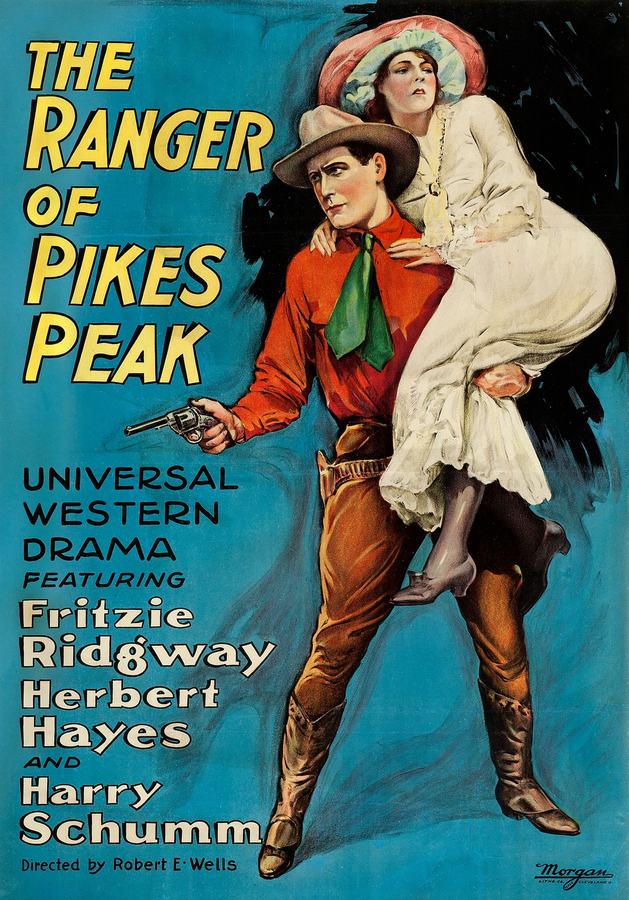
To witness The Ranger of Pikes Peak in the modern era is to participate in a form of cinematic archaeology. Released in 1921, a year where the silent medium was rapidly evolving from mere spectacle into a sophisticated language of shadows and light, this film stands as a testament to the power of location-based storytelling. While many contemporary productions were content with the artifice of studio lots, director and writer Dorothy Rockfort took her ensemble into the thinning air of the Colorado heights, capturing a sense of verisimilitude that remains startlingly effective over a century later.
At the heart of this topographical drama is Herbert Heyes. In an era often characterized by the histrionics of the stage, Heyes delivers a performance of remarkable restraint. He occupies the frame with a physical density that mirrors the granite outcroppings of Pikes Peak. Unlike the more flamboyant heroes of the time, his ranger is a man of economy—every gesture is calculated, every gaze heavy with the weight of responsibility. This is not the sanitized West of later decades; this is a West where the environment dictates the terms of survival. Heyes’ interaction with the terrain reminds one of the visceral struggle seen in the documentary-adjacent South (1919), where the environment is the primary antagonist.
Heyes’ character serves as the moral compass of the narrative, a precursor to the modern environmental hero. He is not merely a lawman; he is a curator of the wilderness. This nuanced characterization was rare for 1921. While films like The Mummy and the Humming Bird focused on the intricate social webs of the urban elite, Rockfort’s script pivots toward the solitary struggle of the individual against the encroaching tide of industrial greed. The ranger represents the last line of defense against those who would strip the land of its soul for a handful of silver.
Fritzi Ridgeway’s contribution cannot be overstated. Often, the women of early Westerns were relegated to the roles of the 'damsel' or the 'homesteader’s wife.' Ridgeway, however, injects her character with a palpable sense of agency. There is a luminosity in her performance that cuts through the monochromatic grain of the film. Her chemistry with Heyes is built on a foundation of mutual respect and shared isolation. When compared to the more traditional romantic dynamics found in The Heart of the Blue Ridge, Ridgeway’s portrayal feels significantly more modern, possessing a grit that matches the environment she inhabits.
Her performance is particularly striking in the film’s second act, where the tension between the ranger and the interloping villains reaches a fever pitch. Ridgeway doesn't just watch the action; she influences it. Her presence provides the emotional stakes necessary to ground the grandiosity of the mountain scenery. Without her, the film might have drifted into the realm of travelogue; with her, it becomes a gripping human drama.
The visual language of The Ranger of Pikes Peak is its most enduring legacy. The cinematography utilizes the natural light of the high altitudes to create a chiaroscuro effect that is both beautiful and haunting. The vast, sweeping wide shots of the Rockies serve to diminish the human characters, emphasizing their fragility in the face of geological time. This technique creates a sense of cosmic indifference that is quite sophisticated for the period. It evokes a similar atmospheric dread found in The Cloud, where the sky itself becomes an omen.
The use of depth of field is also noteworthy. Rockfort often places Heyes in the foreground, looking out over a valley that seems to stretch into infinity. This visual composition reinforces his role as the watcher, the sentinel. It’s a stark contrast to the claustrophobic interiors of many 1921 dramas. Here, the world is wide, dangerous, and utterly indifferent to the petty squabbles of men. The film captures the raw, unvarnished beauty of the American West before it was fully mythologized by the Hollywood machine.
Dorothy Rockfort’s writing deserves a place in the pantheon of early screenwriting. She manages to balance a traditional 'good vs. evil' plot with complex thematic undertones. The antagonists, led by Harry Schumm, are not merely mustache-twirling villains; they are representatives of a burgeoning capitalist mindset that views the natural world as a commodity to be exploited. This thematic depth elevates the film above the standard fare of the era. If we look at other contemporary works like The Book Agent, we see a focus on societal satire, but Rockfort aims for something more elemental.
The dialogue—delivered through intertitles—is poetic without being flowery. It captures the vernacular of the high country while maintaining a certain literary dignity. There is a sequence involving a confrontation near a precipice that is written with such tension that the lack of sound becomes an asset rather than a limitation. The silence allows the viewer to project their own anxieties onto the characters, creating a more immersive experience.
In the broader context of 1921 cinema, The Ranger of Pikes Peak occupies a unique niche. It avoids the melodramatic excesses of Beatrice Cenci and the whimsical nature of The Beloved Vagabond. Instead, it leans into a rugged realism that was quite progressive. It shares a certain spiritual DNA with Willy Reilly and His Colleen Bawn in its depiction of land-based struggle, though it swaps the Irish moors for the American mountains.
Even when compared to the short-form comedies of the time, such as Charley at the Beach, the contrast is jarring. While the industry was exploring the possibilities of slapstick and urban humor, Rockfort was interested in the silence of the peaks. This film was a precursor to the 'environmental Western' that would gain popularity decades later. It understood, long before it was fashionable, that the true hero of the American story is the land itself.
The editing in The Ranger of Pikes Peak is surprisingly rhythmic. The transition between the intimate close-ups of Ridgeway’s expressive face and the vast, impersonal shots of the mountain range creates a compelling visual dialectic. This isn't just functional editing; it's emotional editing. It forces the viewer to reconcile the smallness of human emotion with the vastness of the natural world. This level of sophistication is often overlooked in silent cinema, which is frequently dismissed as primitive. Yet, the pacing here rivals that of a modern thriller.
Furthermore, the stunt work—performed without the safety nets or CGI of the modern age—is genuinely hair-raising. The scenes of Heyes navigating the rocky terrain are not just impressive feats of athleticism; they are essential to the character’s identity. He is a man who has mastered his environment through sheer physical will. This physicality gives the film an edge that many of its contemporaries, like the more static Charity, lack.
Ultimately, The Ranger of Pikes Peak is a film about boundaries—the boundaries between civilization and wilderness, between law and lawlessness, and between the past and the future. It is a work that feels remarkably prescient in its concern for the environment and its celebration of a quiet, steadfast kind of heroism. While it may not have the name recognition of some other silent classics, its influence can be felt in every Western that followed which dared to treat the landscape as more than a pretty picture.
For those who appreciate the evolution of the cinematic form, this film is essential viewing. It is a reminder that even in the infancy of the medium, filmmakers were grappling with complex themes of conservation and morality. It is a rugged, beautiful, and deeply moving piece of art that deserves to be remembered not just as a historical curiosity, but as a vibrant and vital piece of filmmaking. As we look back from the vantage point of the 21st century, the ranger’s vigil on the peak feels more relevant than ever.
“The mountains are the beginning and the end of all natural scenery.” – A sentiment perfectly captured in every frame of this 1921 masterpiece.
IMDb —
1936
Community
Log in to comment.