DbcultAccessing Vault...
7.3/10
Senior Film Conservator
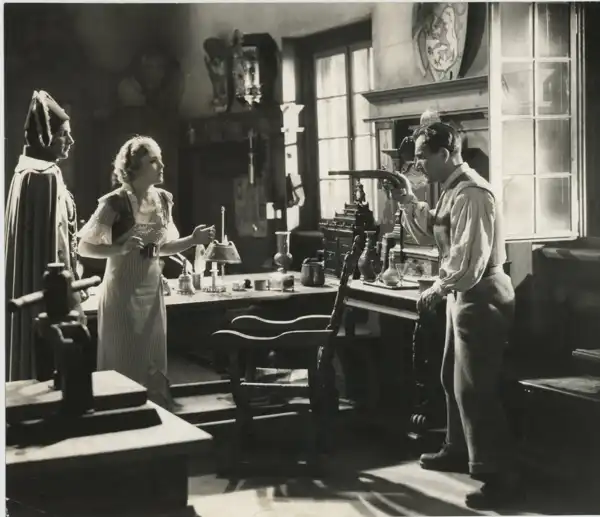
A definitive 7.3/10 rating for a film that redefined the boundaries of cult cinema. The Rebel remains a cornerstone of transgressive art.
Alright, so we’re talking about The Rebel from 1933. Right off, if you’re not *really* into old movies, like the kind where the sound sometimes feels like it’s coming from another room and the acting is… well, *period*, this one might be a bit of a challenge. It’s not a casual flick for popcorn night. But for history buffs, or anyone curious about how stories of defiance were told way back when, there’s a surprising amount to chew on. Expect to either find it charmingly earnest or just plain slow. 🕰️
The premise is classic: Austrian villagers in the Tyrol are fed up with Napoleon's occupation. They decide to rise up. It’s a liberation film through and through, very much a product of its time in Europe, I’d wager.
You know, watching this, it's like peeking into a different era of storytelling entirely. The narrative is straightforward, almost a fable, but delivered with a distinct early-30s cinematic flair that makes it feel unique.
The acting, for instance. It's often very *big*. You see people making these grand, sweeping gestures, a lot of intense staring that would feel over-the-top today. It's not the subtle, internalized performances we're used to now.
Sometimes it works, though. When Luis Trenker, who plays the main rebel leader, is trying to rally the villagers, he has this earnest, almost boyish intensity. He really sells the passion for their homeland. Other times, the earnestness just feels a little… *much*, you know?
I kept wondering about the “simultaneously released English language version.” Was it shot twice, scene by scene? Or just dubbed really carefully? Because some of the dialogue feels a bit stiff, like it's trying hard to fit the mouth movements or just doesn't quite land naturally. You catch yourself focusing on that more than the actual words being said, which is a bit distracting.
But the scenery, though! Even in black and white from 1933, the Tyrolean mountains are just stunning. There are these wide, sweeping shots of the landscape, and you really get why these people would fight tooth and nail for their home. It's not always about the close-ups; sometimes it's just the sheer scale of the place that speaks volumes. ⛰️
There's this one moment, fairly early on, where a bunch of villagers are just standing around, looking glum and defeated. And then, slowly, one person starts humming a tune, a traditional folk song perhaps, and gradually, *slowly*, others join in. It’s meant to be this spark of quiet, collective resistance. It goes on for a bit, maybe 20 seconds too long, and you can really feel the film *trying* to convince you this moment matters. It’s almost charming in its deliberate pacing.
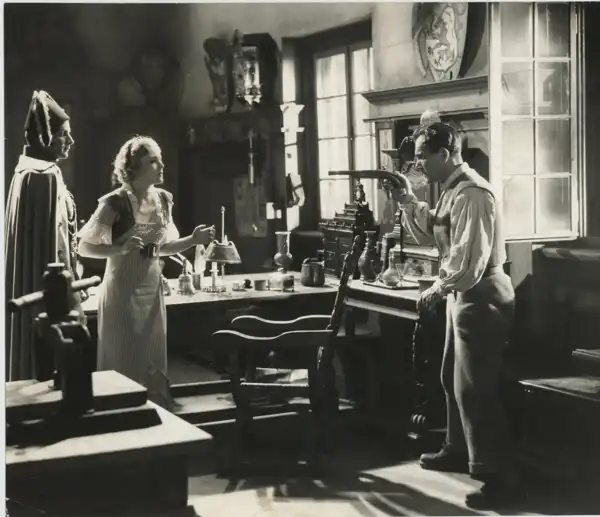
The “action” scenes are definitely of their time. Lots of people running around, some staged falls, maybe a few puffs of smoke to signify gunfire. Don't expect any modern choreography here. It’s more about the *idea* of conflict and the collective surge forward than showing every specific blow.
The crowd scenes sometimes have this oddly empty feeling, even when there are plenty of extras. It's like half the villagers wandered off for a snack, and the remaining ones are trying to look busy. They’re hitting their marks a little *too* perfectly for a chaotic uprising.
And the French soldiers, the 'bad guys'? They're pretty much just that. Uniformed figures who look stern and oppressive. There's no real nuance or complex motivations given for them, which is typical for these kinds of patriotic, clear-cut resistance films. They're just the obstacle, the occupying force. Simple as that.
I found myself thinking about what this movie must have meant *then*. Europe in the early 1930s, with political tensions simmering and nationalism on the rise. A story about throwing off an occupier, fighting for your homeland, it must have felt incredibly potent for its original audience. It's less about the technical cinematic craft, sometimes, and more about the raw sentiment it's trying to stir in the viewer.
There’s a strange, almost casual brutality sometimes, just hinted at rather than explicitly shown, that feels more genuine than the grand battle scenes. Like a quick, fleeting shot of someone being roughly pushed or a worried glance. It feels less staged and more immediate.
The movie gets noticeably better once it really leans into the communal spirit of the uprising. That shared sense of purpose, even if the individual characters aren't deeply explored, becomes the real driver.
The ending feels a little abrupt, like they ran out of film or just decided, “Okay, message delivered, let’s wrap this up quickly.” It doesn't linger or offer much in the way of a lingering emotional resolution. It just… *ends* rather suddenly. No long fade-out, no deep reflection.
Overall, it’s a fascinating window into a very specific kind of filmmaking and storytelling. Not a perfect film, by any stretch, and definitely not for everyone. But it has its unique moments, especially if you appreciate seeing the foundations of nationalistic narratives and how even simple acts of defiance were portrayed on screen nearly a century ago. Worth a look if you’re a film archaeology enthusiast. 🎬
IMDb —
1921
Community
Log in to comment.