DbcultAccessing Vault...
Cult Review
Senior Film Conservator
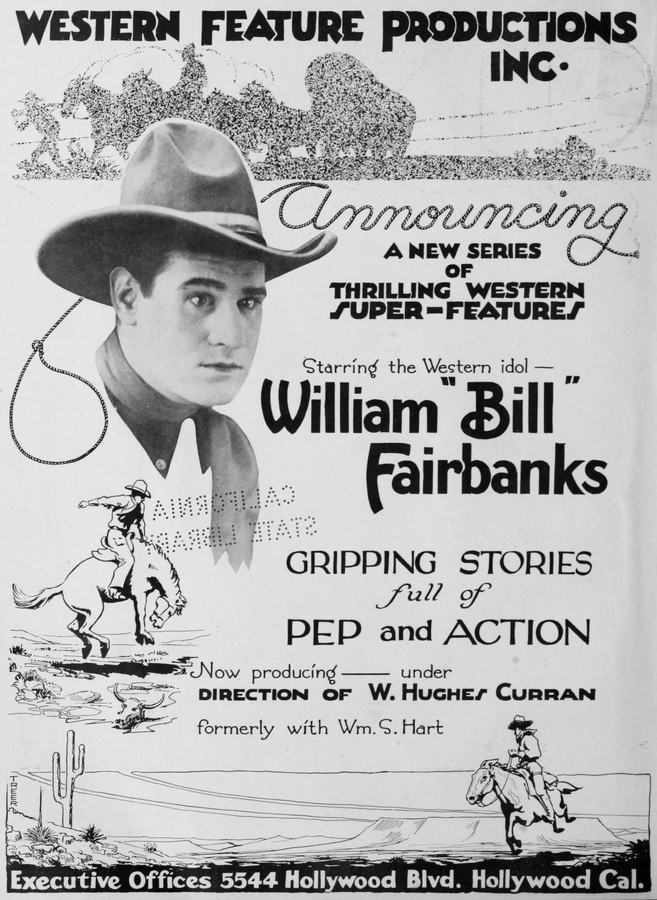
When we pivot our historical lens toward the year 1920, the cinematic landscape appears as a fertile, albeit chaotic, ground of experimentation. It was a time when the grammar of film was still being codified, and stars were forged in the crucible of physical endurance. Go Get Him, starring the indomitable William Fairbanks, stands as a testament to this era of raw, unadulterated energy. While often overshadowed by the more famous Douglas Fairbanks, William carved out a niche for himself that prioritized a rugged, blue-collar athleticism that resonated deeply with the audiences of the post-Great War period.
The film functions as a rhythmic sequence of escalations. From the opening frames, we are introduced to a world where movement is the primary dialect. Unlike the more static, stage-bound dramas of the previous decade, such as the somewhat more theatrical The Seal of Silence, 'Go Get Him' embraces the outdoors. It utilizes the urban and rural geography as a playground for Fairbanks’ particular brand of kineticism. The plot, involving a reporter’s quest for truth, serves as the skeletal framework for a muscular display of cinema.
Fairbanks’ portrayal of Bill is not one of nuanced psychological depth, nor does the film demand it. Instead, he provides a performance of corporeal charisma. Every leap, every punch, and every frantic climb up a fire escape is executed with a precision that suggests a precursor to the modern action star. One cannot help but compare this relentless pacing to the high-stakes tension found in The Highest Trump, though Fairbanks brings a more grounded, visceral quality to the screen than the more stylized dramas of that ilk.
In the midst of this whirlwind of action, Dorothy Dane provides the essential emotional grounding. Her role, while ostensibly that of the heroine in distress, is played with a certain spark of autonomy that was beginning to permeate the flapper era. The chemistry between Dane and Fairbanks is palpable, even through the flickering grain of a century-old print. Their interactions offer a reprieve from the breakneck speed of the investigation, grounding the film in a human reality that keeps the audience anchored.
Consider the romantic subplots of contemporary films like A Crooked Romance; in 'Go Get Him', the romance feels less like a narrative obligation and more like a necessary consequence of the characters' shared peril. Dane’s expressive performance manages to convey a depth of concern and resolve without the aid of intertitles, proving her mastery of the silent medium’s unique demands.
Technically, the film is a marvel of its time. The cinematography utilizes natural light to create a sense of immediacy and realism that was often missing from the more fantastical productions like Sinbad, the Sailor. The camera in 'Go Get Him' is surprisingly mobile, often struggling—and succeeding—to keep up with Fairbanks as he hurtles through the frame. This sense of 'chasing the action' lends the film a documentary-like grit that enhances the stakes of the mystery.
The editing, too, deserves recognition. The cross-cutting between Bill’s frantic search and the looming threats creates a sense of temporal pressure that is almost modern in its execution. We see shadows of the suspense techniques that would later be perfected in the thriller genre. The contrast between the light-hearted moments and the sudden descents into danger mirrors the tonal shifts found in The Island of Intrigue, yet 'Go Get Him' maintains a more consistent, driving energy.
To truly appreciate the achievement of this film, one must look at the broader spectrum of 1910s and 1920s cinema. While Poor Butterfly explored the more delicate, tragic nuances of human emotion, and Her Greatest Love leaned into the melodramatic excesses of the period, 'Go Get Him' is a work of lean, muscular storytelling. It eschews the flowery sentimentality of Just a Song at Twilight in favor of a narrative that is driven by action rather than introspection.
Even when compared to the epic scale of Desert Gold, Fairbanks’ film feels more intimate and yet more explosive. It doesn't rely on the vastness of the horizon but on the claustrophobia of the chase. The film shares a certain proletarian spirit with Germinal; or, The Toll of Labor, particularly in its depiction of the working-class hero standing up against forces much larger than himself. However, where 'Germinal' is heavy with the weight of social realism, 'Go Get Him' is light on its feet, buoyed by the sheer joy of cinematic movement.
William Fairbanks represents a bridge between the early pioneers of film and the golden age of the studio system. In 'Go Get Him', we see the DNA of future action icons. The film’s willingness to put its lead actor in genuine physical danger for the sake of a shot is a tradition that continues to this day. The sequences involving moving vehicles and high-altitude escapes are not just stunts; they are choreographed ballets of peril.
The film also manages to capture the zeitgeist of the early 20s—a period of rapid urbanization and the rise of the sensationalist press. By making the protagonist a reporter, the film comments on the power of the media to uncover truth, a theme that feels remarkably contemporary. This isn't the aristocratic adventure of The Climbers; it is a story of a man with a job to do, using his wits and his muscles in equal measure.
Watching 'Go Get Him' in the modern era requires a shift in perspective. We must look past the occasional flicker and the absence of sound to hear the roaring heart of the production. It is a film that celebrates the human body's capability to overcome obstacles. It is a film that understands the fundamental appeal of the chase—the primal urge to see the hero catch the villain and win the day.
Whether compared to the atmospheric tension of Judith of the Cumberlands or the international intrigue of Die Jagd nach dem Tode, Fairbanks’ work remains uniquely American in its optimism and its physicality. It is a reminder that before there were digital effects and green screens, there were men like Fairbanks and women like Dane, performing for the camera with a bravery that was very real.
In the grand tapestry of silent film, Go Get Him is a vibrant, orange-hued thread of pure adrenaline. It may not possess the philosophical weight of the European avant-garde, such as Zigeunerblut, but it possesses something equally valuable: the soul of the entertainer. It is a film that demands to be seen, not as a historical curiosity, but as a living piece of art that still has the power to thrill, to excite, and to move. It is, quite simply, a cinematic triumph of the will over the impossible.
As we conclude this deep dive, it is worth noting that the film’s influence can be seen in everything from the swashbuckling adventures of the 30s to the gritty thrillers of the 70s. The 'Get Him' of the title is not just a directive for the protagonist; it is an invitation to the audience to join in the pursuit of justice, romance, and the sheer thrill of the ride. Even in its quieter moments, such as those that might remind one of the breezy Wet and Warmer, there is an underlying tension that never truly dissipates until the final iris-out.
IMDb 6.2
1935
Community
Log in to comment.