DbcultAccessing Vault...
Cult Review
Senior Film Conservator
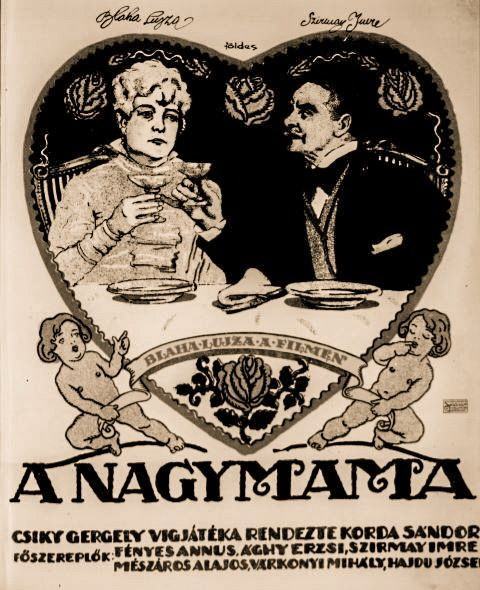
There are films that transcend their era, speaking to universal truths with a clarity that belies their age. Alexander Korda’s 1916 Hungarian silent drama, A Nagymama (The Grandmother), is precisely one such cinematic artifact. More than just a relic of early European filmmaking, it stands as a profound exploration of tradition versus modernity, generational divides, and the often-painful evolution of societal values. In an age grappling with the seismic shifts brought by industrialization and the looming shadow of war, Korda, alongside writers Árpád Pásztor and Gergely Csiky, crafted a narrative that felt both deeply personal and broadly resonant, a masterful blend of melodrama and social commentary.
The film invites us into a world where the past stubbornly clings to the present, personified by the formidable matriarch, Anna, played with breathtaking gravitas by the legendary Lujza Blaha. Her performance alone is reason enough to seek out this cinematic treasure. Blaha, a titan of the Hungarian stage, brings a nuanced complexity to a role that could easily have devolved into caricature. She embodies the very spirit of a fading aristocracy, her every gesture, every silent expression, conveying a lifetime of unwavering principle and unspoken burden. It’s a performance that echoes the stoicism found in works like The Testing of Mildred Vane, where a strong female lead shoulders immense responsibility, but Blaha infuses Anna with a unique Hungarian sensibility – a blend of pride, pathos, and a deep-seated love for her lineage.
At its heart, A Nagymama is a familial saga, set against the backdrop of the grand, yet crumbling, Balogh estate. Anna, the titular grandmother, is the stern, unwavering guardian of this legacy, her life defined by the preservation of family honour and the ancestral lands. Her granddaughter, Éva (Annuska Fényes), represents the burgeoning spirit of the new century. Fényes, with her luminous presence and expressive eyes, perfectly captures the youthful exuberance and burgeoning independence that challenges the Nagymama's rigid worldview. Éva's blossoming romance with János (Imre Szirmai), a brilliant but humbly born engineer, becomes the central conflict, a poignant clash between the dictates of the heart and the demands of social standing. Szirmai imbues János with an earnest intelligence and quiet determination, making him a compelling counterpoint to the established order.
The stakes are raised by a long-hidden family secret: a crippling debt that threatens to dismantle the Balogh's entire existence. The Nagymama, in her desperate bid to save the estate, orchestrates an advantageous marriage for Éva to Baron Gábor (Victor Varconi), a wealthy industrialist whose family could absorb their financial woes. Varconi, a familiar face from international silent cinema, brings a suitable air of aristocratic arrogance to Gábor, making his character an effective foil for János’s sincere affections. The tension between these forces – tradition, financial necessity, and genuine affection – forms the emotional core of the narrative, propelling it towards an inevitable confrontation.
Alexander Korda, even in these early stages of his career, demonstrates an astute understanding of visual storytelling. While perhaps not as overtly experimental as some of his later works, his direction here is remarkably assured. He uses deep focus and carefully composed frames to convey the grandeur of the estate and the internal struggles of its inhabitants. The camera often lingers on Blaha's face, allowing her subtle micro-expressions to communicate volumes. The pacing, though deliberate, never drags, building suspense through character interaction and escalating dramatic tension. One can draw parallels to the directorial finesse seen in films like Das wandernde Licht, where atmosphere and character psychology are paramount, though Korda's touch here feels distinctly Hungarian in its romanticism and melancholic undercurrents.
The screenplay, a collaborative effort by Árpád Pásztor, Gergely Csiky, and Korda himself, is surprisingly intricate for a silent film. It avoids simplistic good-versus-evil tropes, instead presenting characters with complex motivations. Even the Nagymama, initially perceived as an antagonist, is revealed to be driven by a profound, albeit misguided, sense of duty and love for her family. The gradual unveiling of the ancestral debt, and János's subsequent investigation, adds an element of detective work, elevating the plot beyond pure domestic drama. The supporting cast, including Erzsi Ághy as Mariska, the Nagymama's confidante, and László Molnár and Adél Marosi as Éva's parents, provide solid performances that flesh out the family dynamic, portraying a spectrum of reactions to the unfolding crisis.
Lujza Blaha's portrayal of the Nagymama is nothing short of iconic. She commands the screen with a presence that is both formidable and deeply moving. Her ability to convey immense inner turmoil and unwavering resolve through subtle shifts in posture, the slight tremor of a hand, or the piercing gaze of her eyes is a masterclass in silent acting. She doesn't just play a character; she embodies an entire era, a dying way of life. It’s a performance that should be studied by anyone interested in the art of the moving image. Her arc, from unyielding traditionalist to a figure capable of profound empathy and acceptance, is meticulously crafted and utterly believable.
Annuska Fényes, as Éva, provides the perfect counterpoint. Her youthful vitality and passionate conviction are infectious. She brings a modern sensibility to a role that could have been merely a damsel in distress, transforming Éva into an active agent of change within her family. Her chemistry with Imre Szirmai's János feels genuine, their silent exchanges brimming with unspoken affection and mutual respect. Szirmai, in turn, portrays János with an understated strength, making his intellectual prowess and moral integrity the true weapons against the entrenched power structures. Together, they represent the hope for a future where merit and love triumph over antiquated social strictures. Their dynamic is reminiscent of the earnest, romantic leads in films like Ramona, where sincere affection challenges societal barriers.
Even smaller roles, such as József Hajdú and Ida Andorffy, contribute to the rich tapestry of the Balogh household and its surrounding community, adding layers of authenticity and human interest. László Gabányi and Alajos Mészáros, though in more peripheral roles, help to paint a vivid picture of the societal forces at play, whether as legal counsel or minor gentry, their presence grounding the melodrama in a recognizable social fabric.
The central theme of A Nagymama is the perennial struggle between tradition and progress. The Nagymama clings to the past, not out of malice, but from a profound belief that the old ways offer stability and honour. Éva and János, however, represent a future built on meritocracy, truth, and genuine human connection. The film expertly navigates this tension, refusing to demonize either side completely. It acknowledges the beauty and dignity of tradition while championing the necessity of adaptation and the courage to embrace change. This nuanced portrayal elevates it beyond simple morality plays, giving it a timeless quality.
Financial ruin also serves as a potent metaphor for the crumbling of an old order. The ancestral debt isn't just a plot device; it symbolizes the unsustainable nature of a system built on inherited privilege rather than earned value. János's engineering background isn't just a character detail; it's symbolic of a new age where intellect and ingenuity can solve problems that tradition alone cannot. This economic undercurrent gives the drama a palpable sense of urgency, much like the anxieties explored in films such as When It Strikes Home, where financial pressures drive much of the narrative conflict.
Ultimately, the film is a testament to the power of love and integrity. Éva and János's unwavering commitment to each other, and János's ethical pursuit of the truth, force the Nagymama to re-evaluate her priorities. The dramatic reveal at the grand ball, where János exposes the fraudulent nature of the debt, is a powerful moment of truth, not just for the characters, but for the audience. It's a reminder that true strength lies not in rigid adherence to the past, but in the wisdom to discern right from wrong and the courage to adapt. This resolution, where the matriarch bestows her blessing, is deeply satisfying and emotionally resonant, suggesting a harmonious path forward rather than a complete rupture with the past.
In the grand tapestry of early cinema, Hungarian productions often receive less attention than their French, German, or American counterparts. Yet, films like A Nagymama demonstrate the rich artistic landscape that existed in Central Europe during this formative period. Korda, who would go on to become a titan of British cinema, began his career honing his craft on these poignant, character-driven narratives. His ability to elicit powerful performances from his cast, particularly from a stage legend like Lujza Blaha, is evident even here.
The film offers a fascinating window into Hungarian society at the turn of the century, capturing its aesthetics, social customs, and underlying anxieties. It’s a historical document as much as it is a work of art, allowing modern viewers to connect with a bygone era through its emotional core. While it may not have the grand spectacle of something like The Battles of a Nation, its intimate drama holds a power that is equally compelling, proving that the silent screen could convey complex human emotions with profound eloquence.
For fans of silent cinema, particularly those interested in European contributions beyond the usual suspects, A Nagymama is an essential viewing. It showcases the burgeoning talent of Alexander Korda and features a magnetic performance by Lujza Blaha that solidifies her status as one of the era's most significant actresses. It reminds us that stories of family, conflict, and reconciliation are timeless, capable of transcending language barriers and the passage of a century. Its subtle elegance and emotional depth make it a true highlight of early Hungarian filmmaking, a testament to the enduring power of human drama. The film, much like the enduring spirit of its titular character, stands as a beacon of resilience and the quiet triumph of the human spirit in the face of an ever-changing world.
IMDb —
1920
Community
Log in to comment.