DbcultAccessing Vault...
6/10
Senior Film Conservator
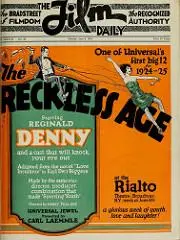
A definitive 6/10 rating for a film that redefined the boundaries of cult cinema. The Reckless Age remains a cornerstone of transgressive art.
The year 1924 represented a fascinating crossroads for American cinema, a period where the primitive slapstick of the nickelodeon era began to fuse with the sophisticated social satires of the burgeoning Jazz Age. Amidst this cultural shift, The Reckless Age emerged as a quintessential example of the 'light comedy' genre that Universal Pictures perfected during the mid-twenties. Directed by Harry A. Pollard and adapted from the nimble prose of Earl Derr Biggers, the film is far more than a mere relic of the silent era; it is a sharp, often caustic examination of how the Gilded Age's wealth began to barter for European titles, all wrapped in the veneer of a high-stakes romantic farce.
At the heart of the film lies a conceit that feels remarkably modern: the financialization of intimacy. When Lord Harrowby (played with a delightful, chin-up pomposity by William Austin) decides to insure his marriage to Cynthia Meyrick (the luminous Ruth Dwyer), the film pivots from a standard romance into a procedural comedy. This plot device serves as a brilliant engine for conflict. It transforms Dick Minot (Reginald Denny) from a mere protagonist into a man trapped between the rigid structures of corporate capitalism and the nebulous whims of the heart. Unlike the darker explorations of duty found in Michael Strogoff, Pollard’s film keeps the stakes buoyant and the pacing electric.
Reginald Denny, often overshadowed in historical retrospectives by the likes of Keaton or Lloyd, displays a particular brand of athletic charm here. He doesn't rely on the pathos of the 'Little Tramp,' but rather on a proto-screwball energy that feels akin to the work of Cary Grant a decade later. His chemistry with Dwyer is palpable, providing a grounded emotional core to the increasingly absurd logistical hurdles placed in their path. The film’s ability to balance this genuine romantic tension with the frantic energy of a confidential agent on the clock is a testament to Rex Taylor’s tight screenplay.
Visually, The Reckless Age utilizes the expansive sets of the 1920s studio system to create a world of opulent ballrooms and claustrophobic office spaces. The cinematography doesn't just capture the action; it emphasizes the social distance between the characters. When compared to the more experimental framing seen in European imports of the time, such as Fantomas - On the Stroke of Nine, Pollard’s direction is distinctly American—direct, clear, and focused on the physicality of the performers.
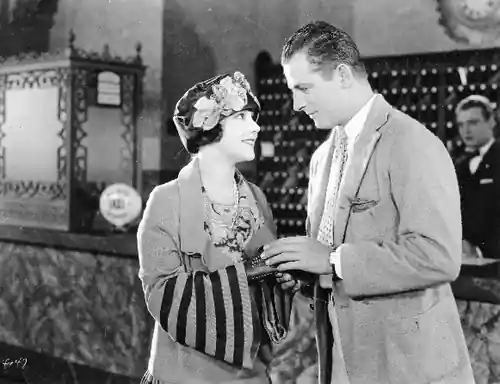
One cannot discuss this film without acknowledging the supporting cast, which reads like a 'who’s who' of silent era character actors. Fay Tincher and Tom McGuire bring a seasoned comedic timing that prevents the film from ever sagging in its second act. The presence of Heinie Conklin adds a touch of the grotesque slapstick that was slowly being phased out of features in favor of situational humor, much like the transition observed in Call a Taxi. The ensemble works in a rhythmic harmony, ensuring that the 'ushering' proceedings feel like a choreographed dance of errors.
Earl Derr Biggers is best known for creating Charlie Chan, but his contribution to the romantic comedy genre is equally significant. In The Reckless Age, his penchant for intricate plotting is on full display. The insurance policy isn't just a gimmick; it’s a thematic anchor that allows the film to critique the transactional nature of high-society unions. While A Pair of Sixes explored similar themes of masculine competition and betting, Biggers adds a layer of class-based irony that elevates the material. The 'Reckless' in the title refers not just to the speed of the era, but to the audacity of betting on the permanence of love.
To understand the impact of The Reckless Age, one must look at its contemporaries. It lacks the pastoral melodrama of Bull Arizona - The Legacy of the Prairie or the stark historical weight of Armenia, the Cradle of Humanity. Instead, it occupies a space of pure urbanity. It is a film of the city, of the boardroom, and of the modern woman. Cynthia Meyrick is not a damsel in distress; she is a woman with agency who is being treated as an asset, and her eventual rebellion against the arrangement is the film's most satisfying arc. This proto-feminist undercurrent can also be seen in works like Don't Call Me Little Girl, suggesting a broader cinematic movement toward more complex female characterizations.
The film also shares a DNA with the episodic investigative style of Beatrice Fairfax Episode 9: Outside the Law, where a professional must navigate a personal crisis under the guise of an investigation. However, where Beatrice Fairfax deals with the 'outside the law' elements of crime, Dick Minot deals with the 'inside the law' absurdities of contract law and insurance premiums. It is this mundane setting—the world of premiums and policies—that makes the ensuing chaos so hilariously relatable.
The editing in The Reckless Age is particularly noteworthy. Silent comedy lives and dies by its rhythm, and Pollard ensures that the gags land with percussive precision. The sequence where Minot attempts to 'usher' the proceedings while simultaneously undermining them is a masterclass in cross-cutting. The tension builds not from physical danger, as in Pure Grit, but from the social danger of being 'found out.' The use of intertitles is sparse but effective, allowing the visual storytelling to carry the heavy lifting of the plot.
Furthermore, the film’s exploration of the 'Englishman in America' trope provides a rich source of humor. William Austin’s Lord Harrowby is the perfect foil to Denny’s Minot. One represents the crumbling, debt-ridden past, while the other represents the energetic, if slightly chaotic, future. This clash of civilizations is a recurring theme in 1920s cinema, often used to validate the American spirit of meritocracy over inherited titles. In this regard, the film mirrors the social commentary found in June Madness, where traditional expectations are upended by the vitality of the youth.
As we look back at The Reckless Age a century later, its charm remains remarkably intact. It avoids the mawkish sentimentality that often plagues silent dramas, opting instead for a brisk, cynical-yet-sweet tone. It captures a moment in time when the world was moving too fast for the old rules to apply—hence the 'recklessness' of the age. It is a film that understands that while money can buy a policy, it cannot dictate the outcome of a heart's desire.
While it may not have the surrealist depth of Le peripezie dell'emulo di Fortunello e compagni, it possesses a narrative clarity and a comedic warmth that makes it infinitely watchable. For fans of Reginald Denny, it is essential viewing, showcasing his ability to carry a film with a mixture of physical prowess and subtle facial expressions. For those interested in the evolution of the romantic comedy, it provides a vital link between the slapstick of the 1910s and the sophisticated talkies of the 1930s.
In the grand tapestry of 1924 releases, from the whimsical Monty Works the Wires to the dramatic Her Moment, The Reckless Age stands out as a polished, professional, and thoroughly entertaining piece of filmmaking. It reminds us that even in an age of insurance and contracts, the most reckless thing one can do is fall in love. It is a cinematic triumph of wit over wealth, a theme that remains as relevant today as it was in the flickering light of a 1920s projector. Whether you are analyzing its social subtext or simply enjoying the comedic timing of a bygone era, this film offers a wealth of riches that no insurance policy could ever cover.
Reviewer's Note: For those seeking a similar blend of romance and social maneuvering, I highly recommend checking out What Love Will Do, which offers a fascinating contemporary counterpoint to the themes presented here.
IMDb 5.3
1934
Community
Log in to comment.