DbcultAccessing Vault...
Cult Review
Senior Film Conservator
In the vast tapestry of cinematic history, certain narratives stand out not just for their plot mechanics, but for their profound exploration of human nature, particularly its darker impulses. The Reckoning, a title that immediately conjures images of consequence and retribution, is one such film. It's a gripping journey through the labyrinthine corridors of greed, betrayal, and the inexorable march towards justice, however delayed. This isn't merely a story; it's a stark morality play, unfolding with the precision of a ticking clock, each second bringing its characters closer to their inevitable destinies. From the bustling port of Havre to the opulent, yet morally decaying, salons of Paris, we are drawn into a world where a single act of avarice ripples through generations, leaving a trail of destruction and desperation.
The narrative of The Reckoning commences with Captain Pierre Bernier, a figure of prosperity and anticipation, returning to Havre after a successful voyage. His thoughts, no doubt, are of his family in Paris, of shared moments and the fruits of his arduous labor. However, fate, or perhaps a more malevolent force, intervenes. Company orders detain him, forcing an unplanned stay in port. This seemingly innocuous delay sets the stage for the entire tragedy. Unable to secure his substantial earnings – a hefty $10,000, a fortune in its time – with his company, Bernier makes a fateful decision: he deposits his share with a local bank, placing the receipt in a letter destined for his wife. It's a moment of trust, a simple act that becomes the linchpin of his undoing. This initial setup is a masterclass in dramatic irony, as the audience is immediately aware of the lurking danger that Bernier, in his honest naivete, cannot perceive.
Enter Jacques Villebrun, the president of the very bank Bernier chose for his deposit. Villebrun is not merely a man on the brink of financial ruin; he is a man on the precipice of a grand, audacious embezzlement, planning to decamp with the bank's entire funds. His character embodies the corrosive power of unchecked ambition and moral decay. The film introduces an interesting dynamic with Renaud, a perceptive bank clerk who uncovers Villebrun's nefarious scheme. Renaud, rather than acting as a moral compass, sees an opportunity for personal gain, threatening exposure unless he receives a substantial cut. This complicity immediately muddies the waters, presenting a world where even those who witness injustice are tempted by its spoils. Villebrun, ever the pragmatist, promises Renaud a large sum, setting the stage for their joint, albeit ultimately fractured, escape.
The tension escalates rapidly when Bernier, perhaps alerted by a whisper of instability, decides to withdraw his money. His return to the bank is a collision course with destiny. In a brutal struggle, Bernier is murdered by Villebrun, his body summarily thrown over a cliff – a chilling visual metaphor for the complete disregard for human life that greed can foster. The casual brutality of this act underscores Villebrun's depravity. Meanwhile, Renaud, perhaps a step behind or simply opportunistic, discovers the $10,000 receipt and, instead of reporting the crime, shrewdly pockets it. This seemingly minor detail becomes the enduring symbol of both the crime and the potential for its eventual unraveling. The subsequent attempt by Villebrun and Renaud to flee in a taxicab is abruptly interrupted by Villebrun's ultimate betrayal of his accomplice, sending Renaud sprawling and ensuring his own solitary escape. It’s a moment that solidifies Villebrun’s character as utterly ruthless, willing to sacrifice anyone for his own survival and enrichment.
Fifteen years pass, a significant temporal leap that allows the consequences of Villebrun's actions to fester and ripen. The film masterfully portrays the stark contrast between the lives of the victims and the perpetrator. Captain Bernier's widow and son are reduced to dire poverty, their lives a testament to the devastating ripple effect of a single, heinous crime. Their destitution is not just financial; it's a spiritual erosion, a constant struggle for survival. Conversely, Villebrun, under a new identity, has ascended to the pinnacle of Parisian society, a wealthy property owner, his past buried beneath layers of ill-gotten luxury. This juxtaposition highlights the perceived injustice of the world, where virtue often suffers while vice thrives, at least temporarily. Renaud, the former clerk, now languishes in the lowest strata of society, a beggar, his life a grim reflection of his compromised morality and Villebrun's betrayal. Yet, he holds the key to Villebrun’s past, the receipt a potent, if dormant, weapon.
The narrative truly ignites when Renaud, in a moment of unexpected compassion, assists an old woman who has sprained her ankle. In a twist that feels both coincidental and divinely orchestrated, he discovers she is none other than the widow of the man he and Villebrun had robbed and, by extension, murdered. The revelation is a powerful catalyst, reigniting dormant guilt and a thirst for justice. To compound the dramatic irony, the widow is on the verge of eviction, and her landlord is, chillingly, Villebrun himself, operating under his assumed identity. This convergence of characters, brought together by the very crime that tore them apart, is a testament to the film's intricate plotting. It echoes the thematic concerns of films like A Fatal Lie or Slave of Sin, where past transgressions inevitably resurface to demand their due.
Renaud, now driven by a complex mix of remorse and self-preservation, promises to intercede for the widow. His visit to the landlord's opulent residence leads to a shocking recognition: his old accomplice, Villebrun. The tables, momentarily, turn. Armed with the meticulously guarded receipt, Renaud attempts to blackmail Villebrun, demanding restitution for his past crimes and perhaps a measure of revenge for his own ruined life. Villebrun, ever the schemer, agrees to buy the receipt, but his inherent treachery resurfaces. In a chilling reenactment of his earlier brutality, he throws Renaud off a bridge, hoping to silence him permanently. This act confirms Villebrun's unrepentant nature, his willingness to commit further atrocities to protect his ill-gotten gains. Miraculously, Renaud survives, found unconscious and taken to a hospital, his will to see justice done unbroken.
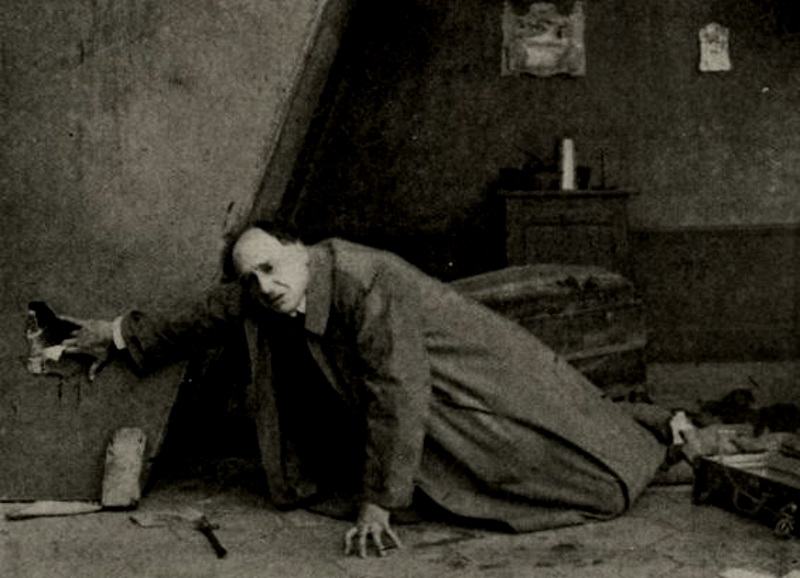
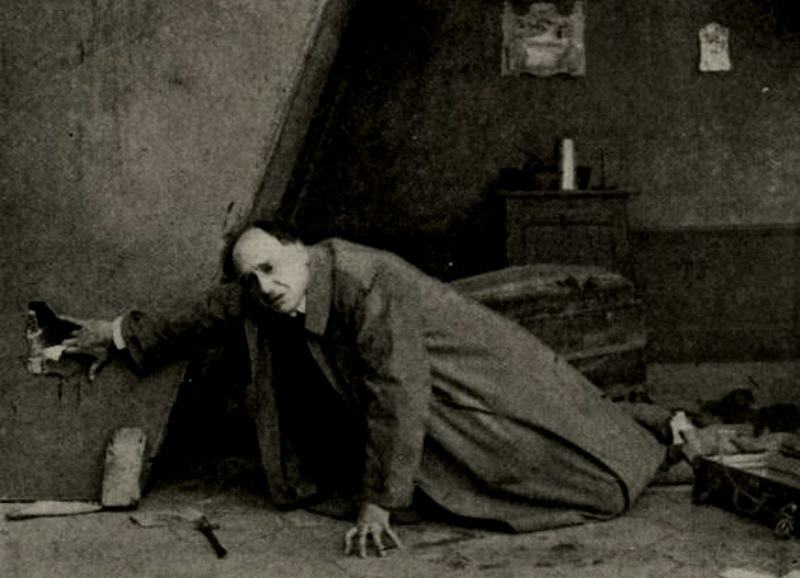
While Renaud recovers, the widow and her son are dispossessed, forced to seek shelter in Renaud's humble garret, a poignant symbol of their shared plight. The film's climax is set in this confined, suffocating space. Renaud returns from the hospital just in time to rescue the widow, who has been overcome by the fumes of a charcoal fire – another symbolic representation of the suffocating weight of poverty and despair. In a parallel development, Villebrun, desperate to retrieve the incriminating receipt, sneaks into Renaud's garret. He finds it, but the very fumes that nearly claimed the widow also overcome him. He collapses, unconscious, the weight of his past literally suffocating him.
It is in this moment of vulnerability, amidst the distress of those he has ruined, that Villebrun's conscience, long dormant, is finally awakened. The film suggests a flicker of humanity, a recognition of the terrible consequences of his actions. He offers a check to the widow, a partial attempt to repair the devastation he wrought. But the true reckoning is yet to come. The vision of the murdered Captain Bernier appears to Villebrun, a spectral accuser, his hand outstretched in silent condemnation. This supernatural element elevates the narrative beyond mere crime drama, hinting at a cosmic justice. Backing away from the haunting apparition, Villebrun stumbles, plunging through an open window to his timely, and perhaps inevitable, death. It's a conclusion that resonates with a profound sense of poetic justice, a final, inescapable consequence for a lifetime of deceit and murder.
The Reckoning is a powerful exploration of several universal themes. At its core is the destructive nature of greed, demonstrating how an insatiable desire for wealth can corrupt the soul and lead to heinous acts. Villebrun's character is a chilling embodiment of this, his initial act of embezzlement escalating to murder and repeated betrayals. The film also delves deep into the concept of justice – not just legal justice, but a moral and karmic one. The fifteen-year gap emphasizes that while justice may be delayed, it is rarely denied. Renaud's journey, from reluctant accomplice to an instrument of fate, highlights the intricate dance between personal responsibility and the pursuit of retribution.
The stark contrast between the lives of the rich and the poor, the powerful and the vulnerable, is another poignant aspect. Bernier's widow and son represent the innocent victims, their suffering a constant reminder of the human cost of Villebrun's avarice. The film's use of coincidence and fate is particularly striking. The improbable encounters – Renaud meeting the widow, then recognizing Villebrun as her landlord – could be seen as narrative contrivances, yet they serve to underscore the idea that certain destinies are intertwined, and that the past, no matter how deeply buried, will always find a way to resurface. The spectral appearance of Captain Bernier at the climax is a powerful symbolic gesture, suggesting that the weight of one's actions transcends the physical realm, demanding a spiritual accounting.

IMDb 5.5
1928
Community
Log in to comment.