DbcultAccessing Vault...
Cult Review
Senior Film Conservator
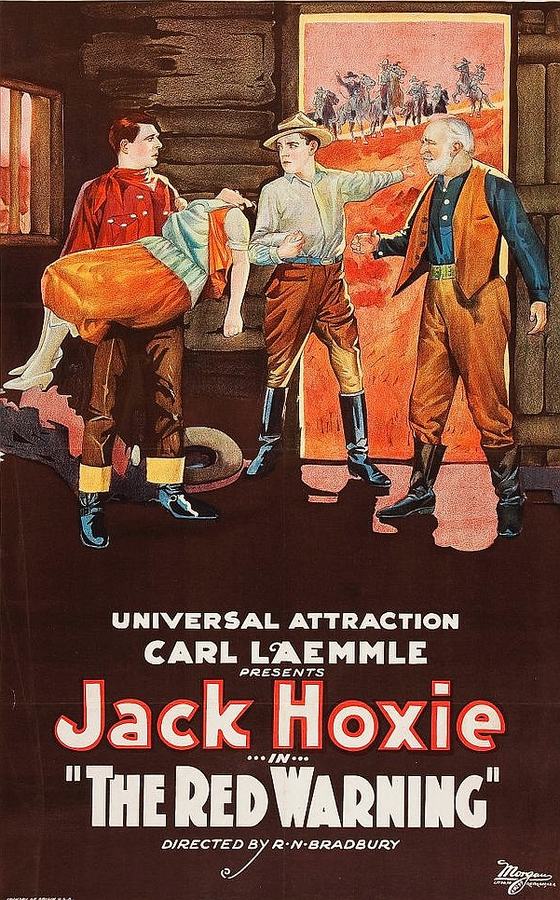
Ah, the silent Western. A genre often overlooked in the grand tapestry of cinematic history, yet one that laid the foundational stones for so much of what we cherish in film today. It’s a world of vast, untamed landscapes, stark moralities, and heroes forged in the crucible of adversity. And in this rugged terrain, The Red Warning, a 1923 release, stands as a fascinating artifact, a testament to the enduring power of simple, yet potent, storytelling. It’s a film that, despite its age and the technical limitations of its era, manages to capture the raw essence of frontier life, painting a vivid picture of desperation, determination, and the relentless pursuit of justice.
Penned by the capable hand of Isadore Bernstein, a writer whose contributions to the silent era are often more significant than widely recognized, The Red Warning plunges us headfirst into the tribulations of David Ainslee. Ainslee, portrayed with a stoic gravitas that perfectly embodies the quintessential Western protagonist, finds his world crumbling around him. His cattle, the very lifeblood of his ranch, are stolen by a band of ruthless rustlers, leaving him on the brink of financial ruin. This isn't just about losing livestock; it's about the erosion of a man's dignity, his livelihood, and the security of his family. The stakes are immediately, brutally clear. This isn't some abstract concept of peril; it’s a tangible, visceral threat that would have resonated deeply with audiences of the time, many of whom were still intimately connected to the struggles of an agrarian society.
But the narrative doesn't simply rest on the theft. It escalates with the insidious machinations of Tom Jeffries, a ruffian whose villainy is as transparent as the desert air. Jeffries, with a predatory glint in his eye, holds Ainslee's daughter, Louise, captive. This dual threat – economic collapse and the abduction of his beloved child – propels Ainslee into a desperate, almost suicidal, quest. He embarks on a solitary journey into the unforgiving desert, not just for gold, but for salvation. The gold mine isn't merely a treasure; it's a symbolic beacon of hope, a last-ditch effort to reclaim what has been cruelly taken from him. It’s a narrative device that, while straightforward, is incredibly effective in establishing the emotional core of the film. We feel Ainslee’s despair, his singular focus, and the immense weight of his burden.
Ainslee’s journey is, predictably, fraught with peril. The desert itself becomes a character, a silent, implacable adversary. He is eventually found near death, a broken man on the verge of succumbing to the harsh elements. This is where the narrative introduces its saviors: Phillip Haver and Toby Jones, two prospectors whose fortuitous appearance shifts the entire dynamic of the story. Their discovery of Ainslee isn't just a rescue; it's the genesis of an unlikely alliance, a partnership forged in the crucible of shared adversity. These aren't polished heroes; they are men of the earth, weathered and pragmatic, but possessing an inherent sense of justice and compassion that drives them to help a stranger in dire straits.
The promise they make – to continue Ainslee’s search for the gold mine, with the explicit understanding that the proceeds will be used to save his ranch – is a pivotal moment. It transforms the individual struggle into a collective endeavor, a small band of good men fighting against overwhelming odds. This theme of camaraderie and mutual support is a recurring motif in classic Westerns, and The Red Warning executes it with an earnest simplicity that feels genuine. It speaks to the frontier spirit, where neighbors, even strangers, often relied on each other for survival.
The cast, though working within the expressive confines of silent cinema, delivers performances that are remarkably effective. Elinor Field, as Louise, embodies the damsel-in-distress archetype with a vulnerability that elicits genuine empathy. Her plight is the emotional engine for much of the film's second half, driving the heroes forward. Ralph McCullough and Fred Kohler, as Phillip Haver and Toby Jones respectively, bring a rugged authenticity to their roles. Their unspoken bond, their determination etched onto their faces, carries a significant portion of the narrative weight. Kohler, in particular, often excelled at playing characters with a certain rough-hewn charm, and here he’s perfectly cast as the pragmatic prospector.
Frank Rice and Al Hoxie, alongside Ben Corbett and Jim Welch, contribute to the ensemble, each adding texture to the frontier world. Jack Hoxie, a prominent figure in silent Westerns, often brought a dynamic physicality to his roles, and his presence, even if in a supporting capacity, typically elevated the action sequences. William Welsh, too, was a reliable presence in many films of the era. The silent film actors had a unique challenge: conveying complex emotions and motivations solely through gesture, facial expression, and physical action. Dialogue cards provided context, but the true artistry lay in the ability of the performers to communicate without uttering a single sound. In The Red Warning, this artistry is evident, allowing audiences to connect with the characters on a deeply non-verbal level.
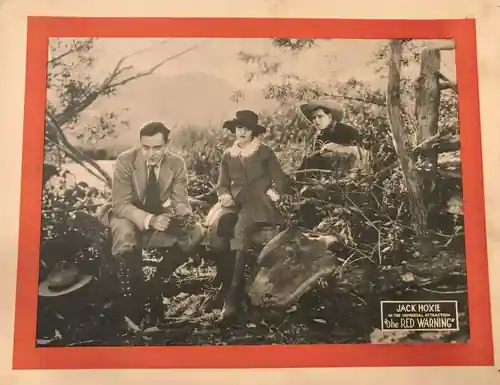
The discovery of the gold mine by Toby Jones marks the turning point. It's a moment of triumph, not just for the characters, but for the audience who have invested in their arduous journey. But the discovery of the gold is merely a means to an end; the true climax lies in the confrontation with Tom Jeffries. This isn't just a simple rescue; it's a dual victory. Phillip and Toby not only defeat Jeffries in a classic Western showdown, but they also expose him as the orchestrator of the cattle theft. This revelation brings a satisfying sense of poetic justice to the narrative. The villain is unmasked, his crimes brought to light, and the wronged are vindicated. Louise is rescued, her ordeal brought to a definitive, joyful close.
The resolution, while perhaps predictable by modern standards, is deeply satisfying within the context of the genre. It reaffirms the core tenets of the Western: that good will ultimately triumph over evil, that justice, however delayed, will be served, and that the bonds of camaraderie can overcome even the most formidable obstacles. The film doesn’t delve into nuanced moral ambiguities, nor does it seek to deconstruct the Western mythos. Instead, it embraces it wholeheartedly, delivering a narrative that is both comforting in its familiarity and compelling in its execution.
Isadore Bernstein's screenplay for The Red Warning exemplifies the robust, no-nonsense storytelling prevalent in silent Westerns. He understood the rhythm of the genre, the need for clear motivations, escalating stakes, and a climactic resolution. While perhaps not as experimental as some of his contemporaries, Bernstein’s strength lay in his ability to craft engaging narratives that resonated with a broad audience. His work here is a masterclass in efficient plotting, ensuring that every plot point serves to advance the core conflict and character arcs. It’s a testament to the idea that sometimes, the most effective stories are those told with clarity and conviction, rather than unnecessary complexity.
Comparing The Red Warning to other films of its era, one can see common threads woven through the fabric of early cinema. While it shares the straightforward heroism of a film like A Gun Fightin' Gentleman, it perhaps leans a bit more into the 'rescue narrative' that was also popular. It avoids the more existential dread or psychological depth found in some dramatic thrillers of the time, such as The Door That Has No Key, opting instead for a clear-cut battle between good and evil. The film's strength lies in its unpretentious embrace of its genre conventions, delivering exactly what audiences expected from a Western: action, adventure, and a triumphant resolution.
It’s also interesting to consider how this film sits within the broader context of Westerns dealing with resource acquisition and frontier survival. Films like Hell's Crater, while perhaps later and with different specific plots, often explored the desperate search for wealth in unforgiving landscapes and the conflicts that arose from it. The Red Warning, with its gold mine plot, is a classic example of this subgenre, where the natural world holds both the key to salvation and the potential for utter destruction. The desert is not just a backdrop; it’s an active participant in the drama, shaping the characters' fates and testing their limits.
Visually, silent Westerns often relied on sweeping vistas and dynamic action sequences to convey their stories. While specific directorial credits for The Red Warning are not immediately prominent in all records, the filmmaking techniques of the era emphasized clear staging, expressive lighting, and editing that built suspense and excitement. The chases across the desert, the tense confrontations, and the physical struggle for survival were all communicated through robust visual language. The absence of synchronized sound meant that every frame, every gesture, every intertitle card had to work harder to convey meaning and emotion. This often resulted in a heightened sense of theatricality, where emotions were writ large on the screen, accessible to all.
The legacy of films like The Red Warning is significant. They weren't just entertainment; they were cultural touchstones, reflecting and shaping the popular imagination of the American West. They established archetypes that would endure for decades: the stoic hero, the dastardly villain, the imperiled maiden, and the loyal sidekick. While some might dismiss them as simplistic, their enduring appeal lies precisely in this clarity of purpose and their ability to tap into universal themes of struggle, courage, and the pursuit of a better life. They offer a window into a bygone era of filmmaking, an era where the magic of cinema was still raw and wondrous.
In conclusion, The Red Warning is more than just a relic; it's a vibrant piece of cinematic history. It’s a film that, through its compelling narrative, earnest performances, and adherence to the beloved conventions of the Western genre, continues to hold a certain charm. It reminds us of a time when stories were told with a directness and passion that can still resonate today. For those interested in the evolution of the Western, or simply curious about the foundational works of silent cinema, this film offers a satisfying glimpse into a foundational period of cinematic art. It’s a testament to the enduring power of a well-told story, regardless of the technological advancements that have followed. A true gem, waiting to be rediscovered by a new generation of film enthusiasts.
IMDb 6.9
1930
Community
Log in to comment.