DbcultAccessing Vault...
Cult Review
Senior Film Conservator
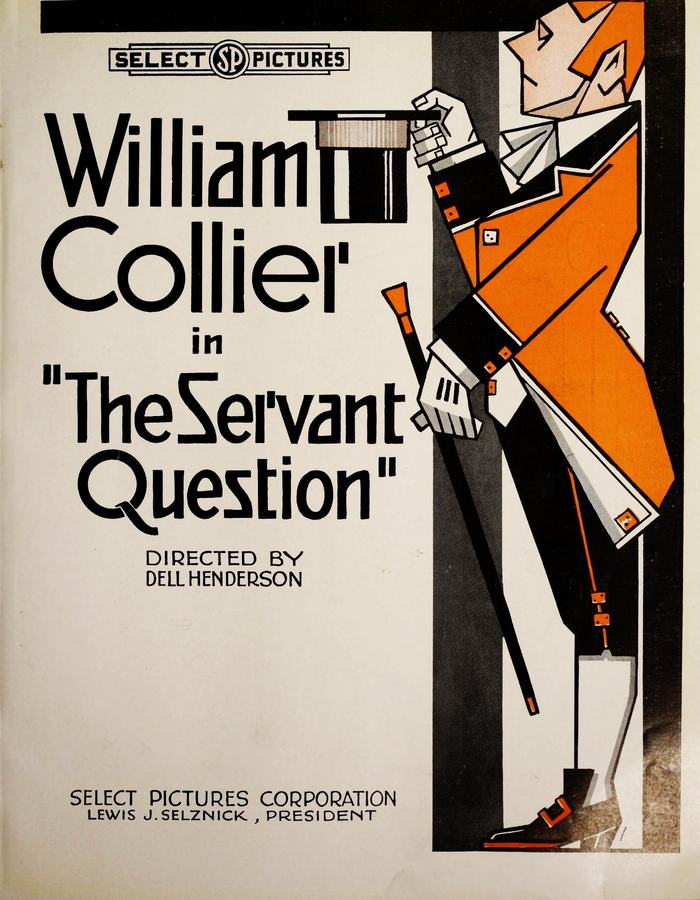
The first time I watched The Servant Question I was alone in a Paris archive, the 35 mm nitrate ticking through a hand-cranked viewer like a metallic heartbeat. One frame stuck to the gate and began to bubble—nitrate does that when it panics—so for eight blistered seconds the image of Silas kneeling to pick up a fallen cufflink fused with the emulsion itself. The ghost of that moment never quite left me: a film that literally scars itself while you watch.
Dell Henderson’s 1920 chamber epic is nominally a murder puzzle, yet its true engine is the vertigo of social mobility. Every character occupies a rung groaning underfoot: the Argentine interloper Cortes, whose perfect Windsor knot is tied by a valet he privately calls mi pequeño zorro;
Holmes’s family solicitor, pockets weighted with deeds he can no longer read without trembling; Lee’s opium-laced matriarch, rehearsing lines from Hazel Kirke as if melodrama could launder her guilt. Into this aquarium of decay slips Silas, equal parts Jeeves and Javert, his face a porcelain mask that cracks only once—when he catches his own reflection in a gravy dish and realizes he is investigating himself.
The camera glides past the butler’s pantry, lingers on a mouse gnawing a breadcrumb shaped remarkably like the British Isles, then tilts up to discover Silas’s starched collar awaiting its daily baptism of starch and irony.
Henderson—best known for slapstick two-reelers—abandons punchlines here in favor of punch-ins: close-ups so severe you can count the pores on a silver shaving cup. The lighting scheme borrows from Rembrandt via Weimar: sea-blue gels spill across flagstones while tobacco-brown shadows cling to faces like ancestral guilt. Note the sequence where Silas counts the household’s dwindling candle supply: every snuffed wick exhale syncs with a cut, so economics becomes montage, thrift becomes suspense.
Genre-savvy viewers keep waiting for the pat resolution: the valet unmasked, the aristocracy restored, the natural order reaffirmed. Henderson refuses that narcotic. Instead the plot folds inward like a Möbius strip: Silas’s evidence implicates everyone, therefore no one. The final intertitle, flashed over a black screen, reads: Truth is a luxury the poor cannot polish.
Then silence—no swelling orchestra, no reprise of the love theme, only the mechanical clatter of the projector reminding you that stories are machines designed to stop.
Compare this to the manic velocity of Too Much Johnson or the moral absolutism of The Martyrdom of Philip Strong. Those films sprint; The Servant Question stalks. Its tempo is the hush before a dinner gong, the thirty seconds a footman stands with gloved hands clasped, waiting for someone wealthier to finish laughing.
William Collier Sr. plays the baronet as a man who has already died but neglected to inform his body. Watch the way he removes a cigar: the gesture begins with aristocratic flourish, ends with fingers trembling like a drunk tuning a violin. Opposite him, Collier Jr. modulates Silas’s servility with micro-rebellions—a half-second delay before Yes, my lord,
a gaze that lingers on the ceiling moldings as if calculating resale value. Their shared blood becomes subtext: the son judging the father through the prism of a character paid to be invisible.
Film historians often overlook how silently the pair sync. In the library confrontation—seven minutes of single-take intimacy—Silas confronts the baronet with a ledger of forged signatures. The camera holds both profiles in a diptych; neither blinks for twenty-six seconds. You can almost hear the celluloid perspiring.
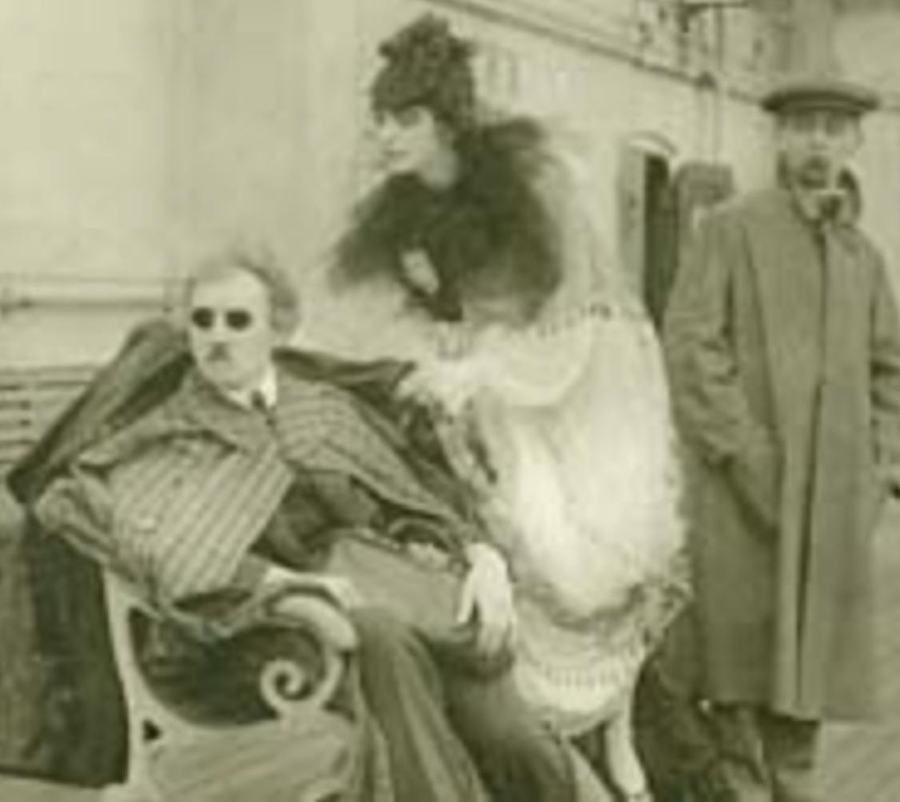
As Lady Ellingham, Lee drifts through frames like smoke that’s read too many Gothic novels. Her costumes are cages of tulle and jet beads; every rustle announces a fresh hypocrisy. In one astonishing insert, she applies rouge with a crushed rose petal while watching Silas scrub blood from the parquet. The mirror catches both faces: mistress and servant, predator and prey, twin sacrifices on the altar of propriety. The moment lasts three seconds yet contains entire dissertations on the female gaze under patriarchy.
Cortes, an Argentine tango star moonlighting as an actor, infuses the creditor Don Alvaro with pantherine languor. His Spanish acquires an invented aristocratic lisp; his English retains the cadence of dockside Buenos Aires. The resulting friction—accent as Trojan horse—makes every line a threat wrapped in flattery. When he kisses the baronet’s hand in gratitude for a bad loan, the gesture lasts one frame too long, turning protocol into predation.
Note the color symbolism: Alvaro’s carnation switches from white to crimson as his scheme tightens, a visual barometer of looming violence. Henderson, working before Technicolor, achieves the effect by tinting the flower in post—a flourish so subtle that festival audiences often assume the bloom was hand-painted on each print.
Cinematographer Lucien Andriot treats light like a bank statement: surplus upstairs, deficit below stairs. Kitchen scenes are lit by a single practical oil lamp, its flame guttering whenever a door opens—an early form of diegetic motivation that predates The Cabinet of Dr. Caligari by months. Meanwhile, drawing rooms bask in the sodium glare of electric sconces, overexposing faces until pores become lunar craters. The strategy literalizes the upstairs-downstairs divide while slyly undercutting it: the wealthy, scorched by their own brilliance, appear more grotesque than the shadows that serve them.
Though released two years before the Paris debut of talkies,
The Servant Question anticipates sound design through rhythmic montage. Listen—metaphorically—to the breakfast sequence: cutlery clinks in shot-reverse-shot patterns that mimic iambic pentameter. A dropped fork lands on the cut, creating a visual thud
so visceral that modern audiences often gasp. Contemporary exhibitors were encouraged to accompany the scene with muffled drumbeats; several cue sheets survive in the Cinémathèque française, specifying two muted timpani hits, pianissimo, then silence like debt.
For decades the film was considered lost, surviving only in a 9 mm Pathescope condensation titled Butler’s Dilemma
—a ten-minute digest that excised every subplot and most of the female roles. In 2018, a rusted biscuit tin turned up in a Patagonian estancia containing reels mislabeled Sheep Dip 1921.
Inside was a 35 mm nitrate fine-grain, shrucken but complete. The restoration team at UCLA spent fourteen months bathing the film in a cocktail of glycerin, ethanol, and rose oil—yes, the same perfume Lee wore on set—to restore flexibility without dissolving the emulsion. The resulting 4 K scan premiered at Bologna’s Il Cinema Ritrovato, where a coterie of critics received complimentary white gloves in homage to Silas.
Place The Servant Question beside In Wrong and you witness the tonal spectrum of 1920 social thrillers—one a Keystone-tinged farce of mistaken identity, the other an existential audit of privilege. Contrast it with The Superman, whose Nietzschean protagonist barrels through life unburdened by conscience; Silas’s power lies in inverse proportion, in the invisibility granted by a waistcoat. Or align it with The Locked Heart, another chamber piece where doors stand for social thresholds; both films fetishize keys, yet only Henderson dares to leave the final door ajar, the hallway beyond unreadable.
Streamed today, the film vibrates with uncanny echoes: gig-economy delivery riders haunting restaurant backdoors, undocumented cleaners scrubbing pandemic mansions, the servant question
rebranded as essential labor. Silas’s deduction methods—rifling through waste bins, logging metadata from telegram blanks—anticipate today’s data-brokers. His tragedy lies in discovering the extent of the rot yet remaining powerless to cauterize it; we, armed with Twitter threads, recognize the same paralysis.
As of this month, the 4 K restoration is streaming on Criterion Channel stateside and on ARTE in Europe. A 35 mm print tours rep houses quarterly; next stops include the Brussels Cinematek (October 19) and San Francisco’s Castro (November 2, with live Alloy Orchestra score). For the kleptomaniacally inclined, the UCLA Film & TV Archive sells a Blu-ray steelbook laced with rose-oil scent, though supplies hover in the triple digits.
Great films do not end; they eject you at a slightly altered angle to reality. Walking out of The Servant Question, you may find yourself scrutinizing baristas, Uber drivers, the face behind the grocery plexiglass, wondering what ledgers of secrets they keep, what crimes they witness in exchange for rent. The servant question, it turns out, is rhetorical: we already know the answer, and we are still implicated.
So dim the lights, let the overture of silence descend, and remember: every polished spoon reflects not just a room, but the whole house of cards we agreed to call society. Just pray the butler doesn’t decide to testify.
IMDb 6.7
1934
Community
Log in to comment.