DbcultAccessing Vault...
6.8/10
Senior Film Conservator
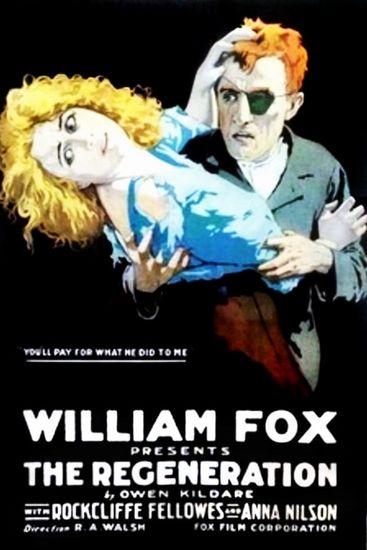
A definitive 6.8/10 rating for a film that redefined the boundaries of cult cinema. The Regeneration remains a cornerstone of transgressive art.
There is a moment—easy to miss if you blink—when the boy Owen, still carrying the sweet-sour stink of riverfront garbage, watches a missionary band march past. A euphonium gleams like a gold tooth in the mouth of the street, and for half a second Walsh allows the child’s eyes to flare with something that might be wonder. Then a cop’s baton cracks across a drunk’s skull, blood spatters the snow, and the band keeps playing. That splice of hope and savagery is The Regeneration in microcosm: a film that believes transcendence and atrocity share the same artery.
Released in September 1915, while Europe was busy rehearsing the apocalypse, Walsh’s picture arrived stateside as both pulp entertainment and social autopsy. Biograph’s publicity department billed it “The TRUE story of a New York gang leader!”—yellow-journalism catnip, yet the finished film feels closer to Jacob Riis’s flash photographs than to the nickelodeon blood-and-thunder norm. Cinematographer George Richter drags his hand-cranked Bell & Howell through actual Bandit’s Roost alleyways, letting mildewed brickwork and laundry rigor mortis seep into every frame. The result scrapes away the stagey lacquer still clinging to The Squaw Man or The Eternal Law; you can almost smell the sardine tins and ruptured sewer pipes.
Walsh doesn’t show crime as glamour; he shows it as scar tissue accumulating on the same tired bones.

Walsh, only twenty-eight but already a studio warhorse, co-wrote the scenario with Walter C. Hackett and ex-newspaperman Owen Frawley Kildare, whose memoirs supplied the raw ore. Kildare’s prose had the subtlety of a nightstick—“The tenement is a breeding-ground of wolves!”—yet Walsh trims the sermonizing, opting for a visual grammar that predates Italian neorealism by three decades. Kids swim in the East River amid bobbing corpses; a saloonkeeper pays protection money with the same resigned inertia he uses to wipe beer suds off the counter. Nothing is explained; everything is shown in the sooty creases of everyday life.
Rockliffe Fellowes, a Canadian import with the profile of a hatchet, plays adult Owen with unnerving stillness. Watch him enter a speakeasy: silk muffler draped like a hangman’s noose, eyes two chips of dirty ice. Other gangsters of the era—see On the Trail of the Spider Gang—telegraph menace via mustache-twirling histrionics. Fellowes shrinks inward; his violence arrives as a hiccup of decision, almost polite, which makes it more terrifying. When he shoots a rival in the thigh and then offers a handkerchief to staunch the wound, you glimpse the boy who once bandaged a stray dog only to stone it later.
Opposite him, Anna Q. Nilsson’s Maggie personifies Progressive-Era idealism without devolving into cardboard saintdom. She first appears in a hull-hole settlement house, teaching immigrant toddlers to fold paper boats—Walsh lingers on her cracked knuckles, hinting at the grind beneath the halo. Their courtship unfolds in grubby stairwells and fog-hung docks, never a tea-room. In one audacious two-shot, Maggie pleads with Owen to quit the rackets while a dead horse floats down the river behind them, its belly bloated like a Zeppelin. The symbolism is unmistakable yet earned, a visual shrug at the notion that love might disinfect a cesspool.

The screenplay’s structural daring lies in its refusal of the rise-and-fall arc codified later by The Great Diamond Robbery or Fantômas. Instead we get a spiral: every tentative ascent drags Owen deeper into the muck. His brief stint as a strikebreaker earns him a police badge—yes, the city finances its own corruption—yet the uniform fits like a shroud. Walsh even lampoons the era’s fetish for uplift, staging a temperance lecture where a reformed drunk touts “the water cure” while Owen pockets donations meant for the needy.
Technically, the film is a bridge between two worlds. Interior sets still sport painted backdrops, but exteriors thrum with documentary verve. Notice the handheld chase through a fish market: Richter’s camera weaves past barrels of twitching eels, children’s faces smeared with newspaper ink, a blind accordionist whose notes get drowned by police whistles. Editing rhythms anticipate Soviet montage: a smash-cut from a Salvation Army tambourine to a blackjack cracking a skull creates an intellectual jolt that would make Eisenstein grin. Meanwhile, intertitles—some penned by Walsh himself—snap with slangy poetry: “He learned his catechism at the school of knuckle-duster theology.”
Performances across the ensemble feel lived-in. James A. Marcus as the corrupt ward boss has a voice like gravel sifted through whiskey; watch how he softens when recalling his own dead son, a flicker that humanizes the machinery of graft. Carl Harbaugh, doubling as co-writer and Owen’s weasely sidekick, supplies comic relief that never undercuts tension—his wide-eyed terror during a warehouse shoot-out is the closest the film comes to a Greek chorus, reminding us that most criminals are cowards rehearsing bravado.
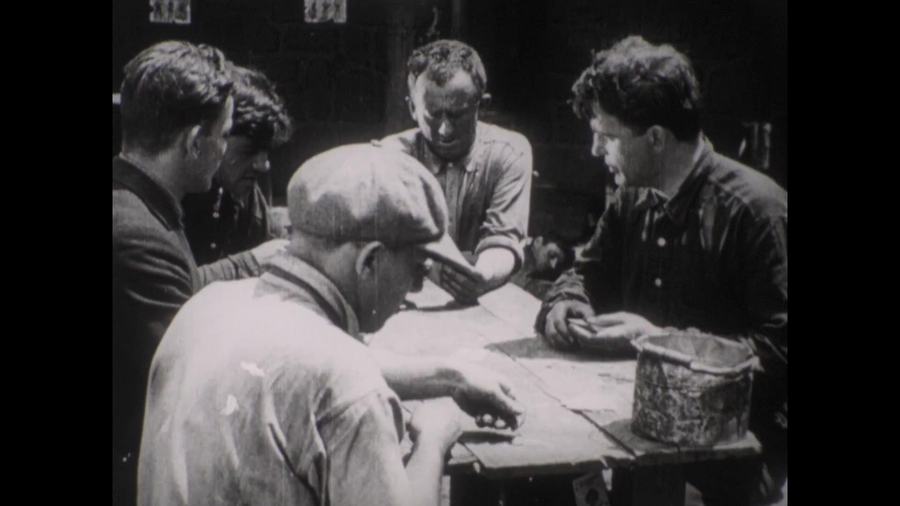
Yet the film belongs to Fellowes and Nilsson, whose final confrontation in a courthouse corridor is a masterclass in micro-acting. She offers him a Bible; he traces a finger along her wrist, hesitation trembling through tendons and time. “I was never afraid of hell,” he whispers, “only of being forgot.” In that instant Walsh reframes the entire gangster mythos: the primal fear isn’t damnation but erasure, the void where memory should be. It’s a sentiment that echoes through War Is Hell and still haunts Tony Soprano a century later.
Contemporary critics missed the nuance. Variety dismissed it as “another five-reel slugfest,” while The New York Times sniffed at the low-born vernacular. Audiences, however, packed 14th Street houses, electrified by the mirror held up to their own alleys. Police departments tried to ban it, proving the movie had hit marrow. Today, when every antihero from Walter White to Jax Teller owes his DNA to Owen’s swagger, the film feels prophetic.
Restoration efforts in 2013 by the Library of Congress revealed textures unseen since 1916: the glint of rain on cobblestones, the lavender dye of a prostitute’s hat, the chalk graffiti reading “Jesus Saves—Moses Invests.” A new score by Donald Sosin layers barrelhouse piano over distant foghorns, underlining the film’s maritime heartbeat. Viewed on 35 mm at the Castro Theatre, the climax—Owen staggering out of court, bullet-riddled yet alive—drew gasps as if the audience had forgotten history’s verdict.

So, does the title’s promise of “regeneration” arrive? Walsh refuses catharsis. Owen survives, broken, to serve a prison term that doubles as monastic retreat. The last shot peers through a barred window: sunrise smears orange across his face, a color that in earlier scenes signaled violence. Has the state’s machine salvaged a soul, or merely archived another predator? The film cuts to black before we decide, leaving us stranded in the liminal glow where salvation and damnation swap masks.
Compare this with Gatans barn, the Swedish morality tale released the same year, which tacks on a churchly conversion so abrupt it feels like divine deus-ex-machina. Walsh trusts neither pulpit nor prison; his cosmos runs on inertia and dumb luck. Even the maternal archetype—usually sacrosanct—here appears as Maggie Weston’s gin-soaked madam who sells girls like day-old bread. The only moment of unfiltered grace occurs when a street urchin offers Owen half a pretzel, no strings attached. The boy’s grin, missing two front teeth, gleams brighter than any cathedral stained glass.
Modern viewers may balk at the racial caricatures—an Irish cop called “Murphy the Mick,” a Chinese laundryman who speaks only in fortune-cookie fragments—but these tropes function as period scar tissue, evidence of the very prejudices the tenement melting pot fermented. They remind us that bigotry was the era’s lingua franca, a currency Owen exploits as deftly as pickpocketing.
Ultimately, The Regeneration endures because it strips the gangster to marrow: not the pinstripe peacock of The Trey o’ Hearts, but the scared kid who learns that tenderness is a commodity, that every embrace hides a shiv. In an age when superhero franchises recycle redemption arcs like plastic, Walsh’s unblinking refusal to comfort feels almost radical. The film doesn’t ask us to forgive Owen; it asks us to recognize the scaffold of indifference we still inhabit.
Watch it late at night, lights off, volume cranked so the streetcar bells feel like tinnitus. When the screen fades, you’ll find yourself checking the window for 1915, half expecting a gas lamp or the distant pop of gunfire. That tremor is the mark of art that refuses to die, a celluloid scar that keeps regenerating—just like the city, just like us.
IMDb 7.2
1932
Community
Log in to comment.