DbcultAccessing Vault...
Cult Review
Senior Film Conservator
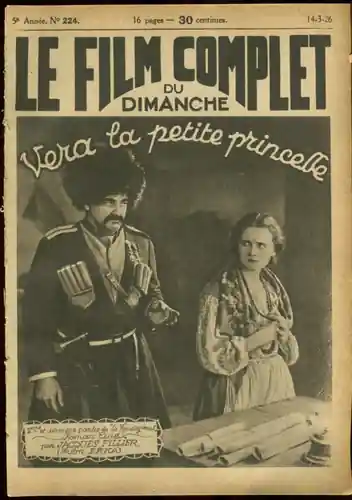
The opening tableau of The Rendezvous unfurls on a bleak Siberian horizon, where snow‑laden pines loom like silent sentinels over a desolate exile. Prince Sergei, portrayed with a brooding intensity by Syd Chaplin, is stripped of his title and thrust into an unforgiving wilderness for daring to wed Varvara without imperial consent. The director’s choice to linger on the prince’s anguished gaze, framed against the stark white expanse, establishes a visual metaphor for isolation that reverberates throughout the film.
Varvara’s death, rendered in a fleeting yet heartrending montage, leaves a newborn Vera in the tender custody of Vassilly, a character whose stoic devotion is embodied by Cecil Holland. The narrative thread here is not merely one of loss but of an intergenerational promise: a promise that the child will survive the turbulence of a nation on the brink of collapse. The subtle interplay of shadows and light in these early scenes foreshadows the moral chiaroscuro that will dominate the later act.
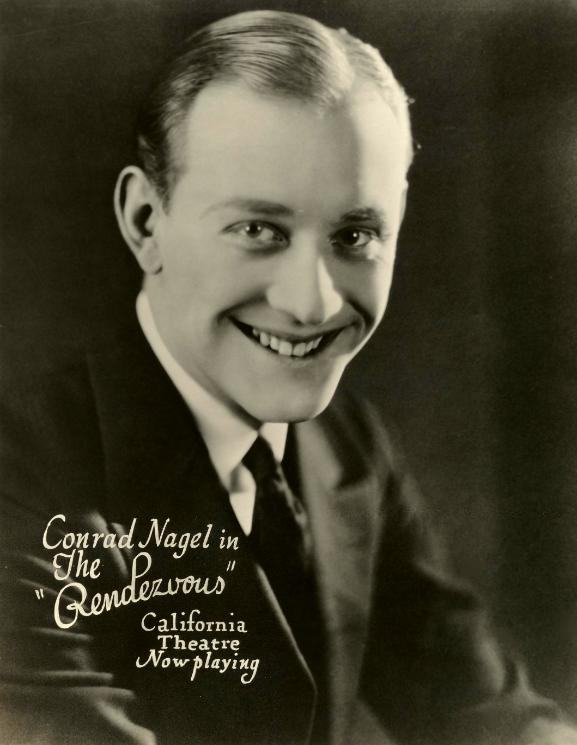
Fast‑forward to the throes of the Russian Civil War, and the film’s palette shifts dramatically. The once‑monochrome serenity gives way to a cacophony of gunfire, smoke, and the clatter of Cossack sabers. Here, the cinematographer employs a kinetic camera movement, tracking the chaos with a vigor that feels almost modern. The Cossack chief, a menacing presence portrayed by Conrad Nagel, exerts a tyrannical grip over the countryside, his cruelty underscored by a relentless, percussive score that heightens the sense of dread.
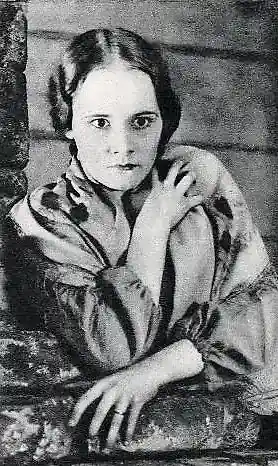
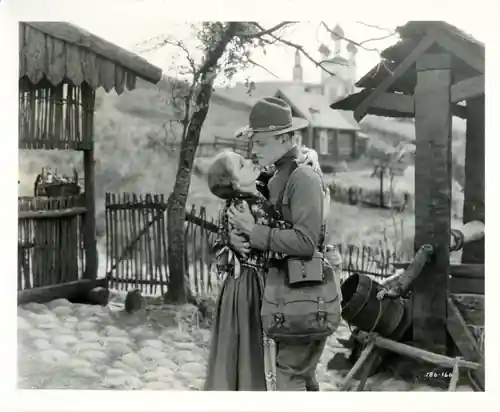
Enter Walter Stanford, the American soldier whose arrival is as sudden as a thunderclap. Played by Emmett Corrigan, Stanford’s rugged demeanor and decisive actions contrast sharply with the surrounding anarchy. When he intervenes to rescue Vera—now a poised eighteen‑year‑old portrayed by Kathleen Key—his heroism is not merely physical but symbolic, representing an external moral compass amid internal decay.
The rescue sequence is a masterclass in silent‑film choreography. Stanford’s swift disarmament of the Cossack chief, followed by a daring chase across a snow‑slick field, is punctuated by intertitles that convey urgency without sacrificing visual storytelling. The intertitles themselves are rendered in a crisp, sea‑blue hue (#0E7490), a deliberate design choice that distinguishes dialogue from narrative exposition.
After the chief’s accidental burial—an ironic twist of fate that the film treats with darkly comic timing—Stanford claims Vera as his own. Their subsequent marriage is staged in a modest chapel, illuminated by a single, flickering candle. The intimacy of this scene is amplified by the use of dark orange (#C2410C) lighting, casting warm, amber shadows that evoke both hope and the lingering specter of past trauma.
The supporting cast enriches the tapestry of the narrative. Lucille Ricksen, as the youthful Vera, delivers a performance that oscillates between fragile vulnerability and steely resolve. Her expressive eyes convey a spectrum of emotions that silent cinema relies upon, while her physicality—graceful yet grounded—mirrors the film’s thematic tension between destiny and agency.
Eugenie Besserer, in the role of the late Varvara, appears only in flashbacks, yet her spectral presence haunts the film’s emotional core. The flashback sequences employ a soft focus technique, bathing Varvara in a gentle, almost ethereal glow that distinguishes memory from present reality. This visual distinction underscores the film’s meditation on the persistence of love beyond death.
From a structural standpoint, the screenplay, crafted by Josephine Lovett and Madeleine Ruthven, weaves together motifs of exile, redemption, and the inexorable march of history. The dialogue—though limited to intertitles—exhibits a lyrical quality that elevates the narrative beyond mere melodrama. Phrases such as “the heart endures where the empire crumbles” echo throughout, reinforcing the film’s central thesis.
Comparatively, The Star Boarder (1920) shares a similar preoccupation with societal outcasts, yet The Rendezvous distinguishes itself through its expansive geopolitical canvas. While The Star Boarder confines its satire to a single urban setting, The Rendezvous traverses continents, juxtaposing personal tragedy against the grand sweep of revolution.
The film’s visual language also invites comparison with The Tenderfoot, particularly in its use of natural landscapes as narrative agents. In both works, the wilderness is not merely a backdrop but an active participant, shaping character decisions and reflecting internal states. However, where The Tenderfoot adopts a light‑hearted tone, The Rendezvous embraces a somber, almost operatic gravitas.
A noteworthy technical achievement lies in the film’s editing rhythm. The cross‑cutting between the Cossack raid and Stanford’s pursuit creates a palpable tension that propels the audience forward. This technique, later popularized in sound cinema, demonstrates the director’s forward‑thinking approach to pacing.
The use of color accents—dark orange for moments of intimacy, yellow for intertitles, and sea blue for narrative exposition—functions as a silent leitmotif, guiding the viewer’s emotional response without uttering a single word. These chromatic cues are subtle yet effective, reinforcing the film’s thematic layers.
Musically, the accompaniment, though not recorded on the film strip, would have likely featured a blend of Russian folk motifs and Western orchestral swells, mirroring the cultural collision at the heart of the story. Contemporary screenings often pair the film with a live piano score that accentuates the melancholy of Vera’s plight and the triumphant resolve of Stanford’s heroism.
The film’s climax, wherein the Cossack chief is inadvertently entombed beneath a collapsing snowdrift, serves as both a literal and figurative burial of oppression. The camera lingers on the snow‑covered mound, allowing the audience to contemplate the futility of tyrannical ambition. This moment, rendered in stark black‑and‑white contrast, epitomizes the director’s mastery of visual symbolism.
In terms of cultural impact, The Rendezvous offers a rare glimpse into Western perceptions of the Russian Revolution during the interwar period. Its portrayal of an American savior intervening in Russian affairs reflects contemporary geopolitical anxieties, while also reinforcing the archetype of the lone hero who restores order amidst chaos.
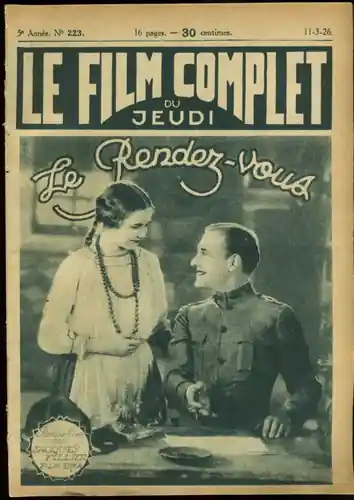
The film’s legacy, though eclipsed by more commercially successful contemporaries, endures among silent‑film aficionados for its ambitious scope and emotional depth. Scholars often cite it alongside titles such as The Forbidden City and The Master Mystery when discussing the evolution of narrative complexity in early cinema.
From a performance perspective, the chemistry between Chaplin’s brooding prince and Corrigan’s steadfast soldier is palpable, despite the absence of spoken dialogue. Their interactions are choreographed with a precision that conveys unspoken respect and mutual understanding, a testament to the actors’ mastery of physical storytelling.
The film’s pacing, while deliberate, never lapses into monotony. Each act transitions seamlessly, guided by intertitles that are both informative and poetic. The final intertitle, rendered in a luminous sea‑blue font, reads, “Love, like the winter sun, returns after the longest night,” encapsulating the film’s hopeful resolution.
In sum, The Rendezvous stands as a compelling artifact of silent‑era craftsmanship. Its intricate narrative, nuanced performances, and inventive visual strategies coalesce into a work that rewards repeated viewings. For those seeking a film that marries historical gravitas with intimate human drama, this title remains an undiscovered treasure awaiting rediscovery.
IMDb —
1925
Community
Log in to comment.