DbcultAccessing Vault...
5.2/10
Senior Film Conservator
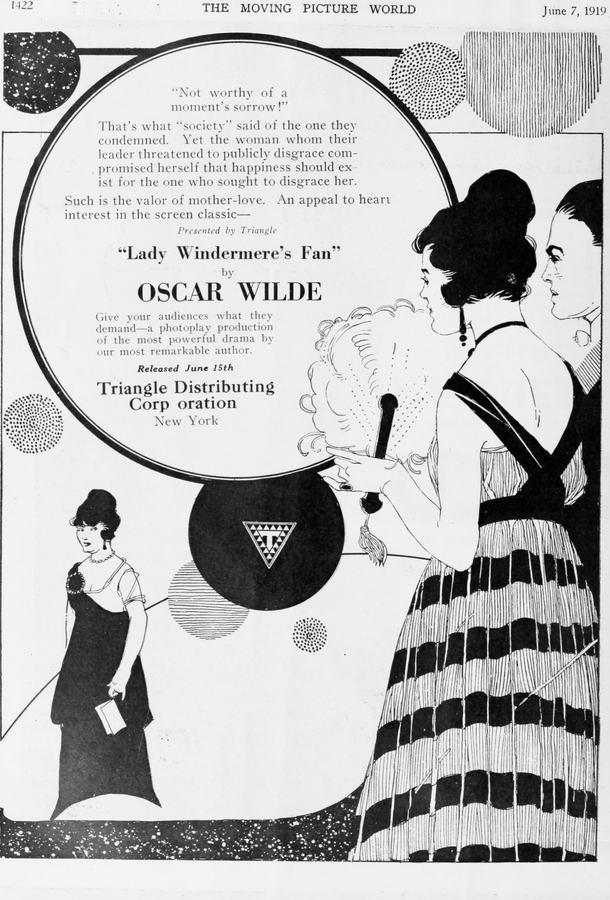
A definitive 5.2/10 rating for a film that redefined the boundaries of cult cinema. Lady Windermere's Fan remains a cornerstone of transgressive art.
There's a peculiar magic to witnessing a silent film adaptation of an Oscar Wilde play. The very essence of Wilde's genius lies in his scintillating dialogue, his rapier wit, and the paradoxes he crafts with such eloquent precision. To strip that away, leaving only the visual narrative, the intertitles, and the raw power of performance, is a daring act. Yet, Benedict James's adaptation of Lady Windermere's Fan, a cinematic relic from an era long past, manages to retain a surprising amount of the original play's biting social commentary and profound emotional depth. It's a testament not just to Wilde's enduring narrative strength, but also to the expressive capabilities of early cinema, proving that even without spoken words, the human heart's complexities can be laid bare with devastating clarity.
The film plunges us into the opulent, yet rigidly structured, world of Edwardian high society, a setting Wilde masterfully dissects in his original work. Our protagonist, the young and ostensibly pure Lady Windermere, played with an exquisite blend of innocence and burgeoning defiance by Netta Westcott, finds herself at the precipice of a personal crisis. Her marriage to Lord Windermere, portrayed by Milton Rosmer with a nuanced blend of affection and exasperated secrecy, appears idyllic on the surface. However, this façade begins to crack under the relentless pressure of societal gossip and the machinations of the Duchess of Berwick, a character who embodies the judgmental, meddling spirit of the era. The seeds of doubt are sown, nurtured by whispers of a mysterious woman, Mrs. Erlynne, who has suddenly re-entered London society and, seemingly, Lord Windermere's life. The very air of the drawing-rooms and ballrooms, rendered in stark black and white, feels thick with unspoken judgments and the suffocating weight of reputation.
The central dramatic engine of Lady Windermere's Fan is a monumental misunderstanding. Lady Windermere, with her youthful idealism and perhaps a touch of privileged naiveté, cannot fathom her husband’s persistent defense of Mrs. Erlynne, played by Irene Rooke with a captivating blend of worldly weariness and hidden sorrow. The audience, especially those familiar with Wilde’s play, is privy to the tragic irony: Mrs. Erlynne is not Lord Windermere’s mistress, but Lady Windermere’s own mother, who abandoned her years ago and is now attempting to re-establish herself in society, albeit anonymously, with Lord Windermere’s financial assistance. This truth, carefully guarded by Lord Windermere to protect his wife from a painful past, becomes the very catalyst for Lady Windermere’s distress. The film brilliantly uses visual cues and the power of suggestion to convey this burgeoning suspicion, relying on close-ups of Westcott’s anguished expressions and Rosmer’s conflicted glances to tell a story that, in the play, would be delivered through sharp exchanges of dialogue.
Feeling betrayed and deeply hurt, Lady Windermere is drawn into the orbit of Lord Darlington, a charming but cynical aristocrat, portrayed by Arthur Wontner. Wontner imbues Darlington with a dangerous magnetism, a suave predator lurking beneath a veneer of sophisticated concern. His smooth pronouncements, though delivered via intertitles, carry the weight of temptation, appealing to Lady Windermere’s wounded pride and her desire for a swift, retaliatory strike against her husband’s perceived infidelity. The stakes are incredibly high; in this society, a woman's reputation is her most valuable, and most fragile, asset. To be seen in the company of a known rake like Darlington, let alone to contemplate elopement, is to invite social ruin. This precarious balance of honor and passion is a recurring theme in Wilde's works, and it's handled with commendable sensitivity in this silent adaptation.
The challenge of adapting Oscar Wilde without his distinctive dialogue is immense. Wilde's plays are often described as symphonies of words, where every epigram and paradox serves a dual purpose: to entertain and to critique. Benedict James, as writer, and the directorial vision behind this film (often uncredited in early cinema, but likely a collaborative effort), had to find cinematic equivalents for verbal wit. This is achieved through several techniques. The exaggerated gestures and facial expressions, characteristic of silent film acting, become a language of their own, conveying emotions that would otherwise be articulated. Netta Westcott’s wide, expressive eyes and the subtle tremor of her hand speak volumes. Irene Rooke’s Mrs. Erlynne delivers a masterclass in controlled emotion, her weary glances and slight, knowing smiles hinting at a complex inner world. The intertitles, rather than simply reproducing dialogue, often provide narrative exposition or summarise key lines, allowing the visuals to carry the emotional weight. While the sparkling repartee is undoubtedly missed, the film manages to convey the underlying tension and the hypocrisy that Wilde so expertly skewers.
Comparatively, other literary adaptations of the era often grappled with similar issues. Films like David Copperfield or Robinson Crusoe, while also drawing from rich literary sources, often focused on episodic adventures or character journeys that were more amenable to visual storytelling without extensive dialogue. Lady Windermere's Fan, however, relies on psychological drama and the nuanced interplay of social mores, making its silent adaptation particularly ambitious. The film succeeds by distilling the emotional core of Wilde's narrative, emphasizing the visual spectacle of high society and the dramatic irony of the plot, rather than attempting a literal translation of every clever line.
The ensemble cast is crucial in a silent film, where every gesture and expression must convey meaning. Netta Westcott, as Lady Windermere, carries the film's emotional arc. Her transformation from a naive, trusting wife to a woman on the brink of social ruin is palpable. Her performance is a delicate dance between vulnerability and defiance, capturing the anguish of a woman trapped by circumstance and misunderstanding. Milton Rosmer's Lord Windermere is equally compelling, his internal struggle between protecting his wife and maintaining Mrs. Erlynne's secret etched onto his face. He is a man caught between two impossible loyalties, and Rosmer conveys this burden with quiet dignity.
But it is Irene Rooke's Mrs. Erlynne that truly anchors the film's pathos. Her character is the enigmatic heart of the story, a woman burdened by a past mistake and now striving for redemption, even at great personal cost. Rooke's portrayal is masterful, conveying a woman of immense strength and weary resignation. Her eyes, in particular, communicate a lifetime of experience and regret, yet also an unwavering, selfless love. Alice De Winton, as the Duchess of Berwick, provides the perfect foil, embodying the judgmental and often hypocritical upper crust with a stiff posture and censorious gaze. Arthur Wontner's Lord Darlington, as mentioned, is captivatingly dangerous, a smooth operator whose charm masks a darker intent. The supporting cast, including Evan Thomas, E. Vivian Reynolds, Joyce Kerr, Sydney Vautier, and Nigel Playfair, all contribute to the rich tapestry of Edwardian society, each playing their part in the intricate social dance.
At its core, Lady Windermere's Fan is a searing indictment of social hypocrisy and the crushing weight of reputation, particularly for women, in the late Victorian and Edwardian eras. Wilde understood that society often demanded an impossible purity from women, while men were afforded far more latitude. Mrs. Erlynne's past 'fall' has forever marked her, despite her attempts at rehabilitation. Lady Windermere, in her youthful indignation, almost mirrors her mother's fate, demonstrating how easily a single misstep could lead to utter ruin. The film, through its dramatic climax, powerfully illustrates the concept of selfless sacrifice. Mrs. Erlynne's final, heroic act to save her daughter's reputation by sacrificing her own, is profoundly moving. It elevates the story beyond mere drawing-room comedy into a poignant exploration of maternal love and the redemptive power of forgiveness.
The fan itself, a seemingly innocuous accessory, becomes a potent symbol. It is the object left behind at Lord Darlington’s rooms, the damning piece of evidence that threatens to expose Lady Windermere’s folly. It represents the fragile nature of reputation, easily dropped, easily misinterpreted, yet holding the power to unravel lives. The retrieval of the fan by Mrs. Erlynne, a silent act of profound love and protection, is one of the film’s most powerful moments, a visual metaphor for a mother shielding her child from the harsh glare of a judgmental world. This focus on symbolic objects and dramatic staging echoes the theatrical origins of the story, translated effectively to the screen.
Even in its silent form, the film reminds us why Oscar Wilde’s work remains so enduringly popular. His insights into human nature, the intricacies of social codes, and the often-painful gap between appearance and reality are timeless. While the specific societal rules of Edwardian London may have faded, the core themes of judgment, forgiveness, the desire for acceptance, and the complexities of familial love resonate deeply. We still grapple with the pressure to maintain appearances, the pain of misunderstanding, and the redemptive power of empathy. The film, in its quiet, visually driven way, highlights these universal truths.
The pacing of the film, typical of early cinema, might feel deliberate to modern audiences accustomed to faster cuts and more frenetic narratives. However, this deliberate pace allows for a more contemplative viewing experience, encouraging the audience to absorb the visual storytelling and the emotional nuances of the performances. It invites us to linger on the expressions, to interpret the subtle shifts in body language, and to appreciate the artistry involved in conveying such a complex plot without the aid of spoken dialogue. In this regard, it stands distinct from action-heavy contemporaries like The Fall of a Nation or Soldiers of Fortune, instead finding its kinship with other character-driven dramas or literary adaptations of the period.
Beyond its narrative merits, Lady Windermere's Fan offers a fascinating glimpse into the nascent art of filmmaking. The sets, though likely constructed on soundstages, effectively evoke the grandeur and claustrophobia of aristocratic homes. The costumes are meticulously detailed, further immersing the viewer in the period. The use of lighting, while perhaps rudimentary by today's standards, is employed to create mood and emphasize dramatic moments. The entire production is a testament to the ingenuity of early filmmakers who were pioneering a new art form, learning to tell stories with a camera and a screen, rather than just a stage and actors. The film serves as a valuable historical document, showcasing how directors and performers navigated the unique challenges of silent storytelling, often relying on melodramatic conventions to ensure clarity of emotion and plot progression. It’s a reminder that even in its infancy, cinema was capable of translating complex theatrical narratives into a compelling visual experience.
While the film cannot replicate the verbal fireworks of Wilde's original play, it carves out its own space as a compelling adaptation. It proves that the universal themes of love, betrayal, sacrifice, and the relentless scrutiny of society can transcend the medium. The performances are heartfelt, the narrative is clear, and the emotional impact is undeniable. For those interested in the evolution of cinema, the adaptation of classic literature, or simply a powerful human drama, Lady Windermere's Fan is a silent gem that continues to resonate. It invites us to reflect on the masks we wear, the judgments we cast, and the profound, often hidden, sacrifices made in the name of love and reputation. It’s a compelling argument for the enduring power of classic storytelling, irrespective of its sonic landscape.
IMDb 5.9
1937
Community
Log in to comment.