DbcultAccessing Vault...
Cult Review
Senior Film Conservator
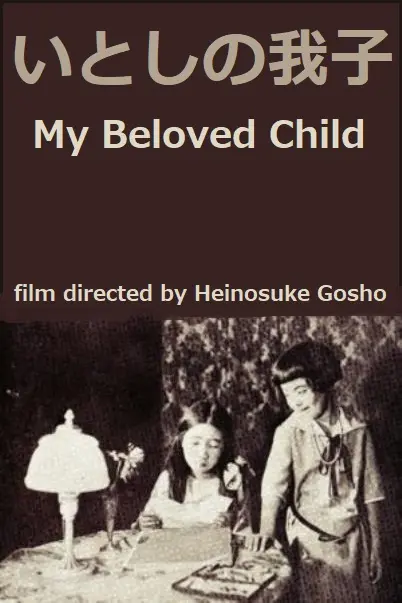
Is 'Itoshino wagako' worth your time today? The short answer is a resounding yes, but with a crucial caveat: this is not a film for casual viewing. It demands patience, reflection, and an appreciation for early cinematic storytelling that prioritizes emotional resonance over rapid-fire plot developments.
This film is for those who cherish historical dramas, particularly those from early Japanese cinema, and viewers interested in the societal pressures and familial complexities of the era. It is decidedly not for audiences seeking action, modern pacing, or lighthearted escapism. It’s a somber, reflective piece that rewards thoughtful engagement.
Heinosuke Gosho and Ayame Mizushima’s 'Itoshino wagako' is a profoundly human drama, stripped bare of frills, focusing instead on the quiet devastations and subtle shifts in power dynamics within a family unit. While the plot summary might seem straightforward, its execution delves into the emotional landscape of its characters with a surprising depth for its time.
At its core, the film presents a powerful commentary on class, gender, and the often-unacknowledged sacrifices made by women in patriarchal societies. It’s a narrative that, despite its age, resonates with a timeless quality, forcing us to confront uncomfortable truths about human nature and societal structures.
This film works because it crafts an emotionally resonant narrative from a simple premise, using understated performances and a clear, if melancholic, directorial vision to explore themes of motherhood, societal expectation, and paternal rights. The quiet dignity of O-Sada, played with remarkable restraint by Yôko Kozakura, grounds the entire experience, making her struggle palpable without resorting to histrionics.
This film fails because its deliberate pacing and lack of conventional dramatic peaks might alienate modern audiences accustomed to faster narratives. There are moments where the narrative feels almost too subtle, leaving significant emotional weight to be inferred rather than explicitly portrayed, which can be a barrier for some.
You should watch it if you appreciate character-driven dramas, particularly those that offer a window into historical social dynamics and the nuanced performances of early cinema. It’s a film that asks you to lean in, to observe, and to feel the quiet desperation of its characters.
The performances in 'Itoshino wagako' are the film’s undeniable backbone. Yôko Kozakura, as O-Sada, delivers a masterclass in subtlety. Her portrayal isn't about grand gestures or tearful outbursts; it's in the downcast eyes, the slight hesitation, the way she holds herself – a woman burdened by circumstance but imbued with an inner strength that never fully breaks. Her performance is the beating heart of the film, radiating a quiet tragedy that lingers long after the credits roll.
Reikichi Kawamura as Hirofumi Kudo presents a fascinating, if sometimes frustrating, figure. His performance captures the societal entitlement of his character without making him a caricature of evil. There's a certain aloofness that perfectly conveys the distance between his world and O-Sada's, and his eventual decision to claim Fumiko feels less like a sudden change of heart and more like a delayed assertion of prerogative. This nuanced portrayal prevents the film from devolving into a simple good-versus-evil narrative, instead presenting a more complex, and thus more realistic, power dynamic.
The young Yôko Kozakura as Fumiko is tasked with portraying innocence caught between two worlds. Her early scenes in the fishing village radiate a simple joy, a stark contrast to her later demeanor in the city. This transformation, conveyed through subtle shifts in posture and expression rather than dialogue, is genuinely affecting and highlights the profound impact of her forced transition.
The film’s strength lies in its ability to tell a deeply emotional story through quiet observation, a testament to the power of understated performances in an era often associated with more theatrical acting styles. It reminds us that sometimes, the most profound emotions are those left unsaid.
Heinosuke Gosho’s direction in 'Itoshino wagako' is characterized by its clarity and its unyielding focus on the emotional truth of the narrative. He employs a visual language that is both direct and evocative, often using stark contrasts to underscore the characters' internal and external realities. The early scenes in the fishing village, for instance, are imbued with a sense of natural beauty and familial warmth, even amidst their humble circumstances. The cinematography here often favors wider shots, emphasizing the open spaces and the community O-Sada and Fumiko share.
Conversely, when Fumiko is taken to the big city, the visual style shifts. The environments become more confined, the architecture more imposing, and the framing often isolates Fumiko within grand, impersonal spaces. This deliberate contrast is not merely aesthetic; it serves as a powerful metaphor for Fumiko’s emotional journey – from the organic freedom of her childhood to the structured, yet isolating, existence dictated by her father's status. It’s a subtle but effective directorial choice that speaks volumes without a single line of dialogue.
The pacing of the film is deliberate, almost meditative. Gosho allows scenes to unfold at a natural rhythm, giving the audience time to absorb the emotional weight of each moment. This slow burn approach, while potentially challenging for some, is crucial to building the film's profound sense of melancholy and the underlying tension of O-Sada's predicament. It’s a testament to Gosho's confidence in his story and his actors that he allows these moments to breathe.
'Itoshino wagako' is more than a simple melodrama; it's a social commentary disguised as a personal tragedy. The stark class divide is central to the narrative. O-Sada, as a maid, has no legal or societal standing to challenge Hirofumi's actions, even though she is the primary caregiver. This power imbalance is meticulously explored, not through overt political statements, but through the lived experiences of the characters.
The film also raises challenging questions about identity. Fumiko is stripped of her upbringing and thrust into a new, unfamiliar world, expected to adapt to a life of privilege she never knew. Her identity, once rooted in her mother and the fishing village, is forcibly redefined by her biological father. This exploration of a child's fractured identity is handled with a delicate touch, highlighting the vulnerability of children caught in adult conflicts.
Paternal authority, particularly in a historical context, is another significant theme. Hirofumi's decision to take Fumiko, years after her birth, is presented as an almost unquestionable right. The film doesn't necessarily condemn him outright, but rather observes the societal framework that enables such actions. This makes the film a compelling artifact for understanding the social mores of its period, offering a glimpse into the legal and ethical landscapes of early 20th-century Japan.
Absolutely, 'Itoshino wagako' is worth watching, especially for cinephiles and those interested in the evolution of dramatic storytelling. It offers a powerful, albeit somber, look at human relationships under societal pressure. The film might not offer the immediate gratification of contemporary blockbusters, but its quiet power and emotional depth are immensely rewarding.
It's a foundational piece of Japanese cinema that showcases early directorial talent and compelling performances. While its pacing requires patience, the emotional payoff is significant. It works. But it’s flawed. Its brilliance lies in its ability to evoke profound feeling from simple, tragic circumstances. Consider it an essential historical viewing, particularly when juxtaposed with films like Are Parents People? which explored similar themes of family and societal expectations in a different cultural context.
'Itoshino wagako' is a compelling, if melancholic, journey into the heart of a broken family and the rigid structures of society. It’s a film that speaks volumes in its quiet moments, allowing the audience to truly feel the weight of its characters’ struggles. While it may demand a certain level of commitment due to its age and pacing, the rewards are substantial. It’s a powerful testament to the enduring human spirit and the silent sacrifices made for love and survival. A must-see for serious film enthusiasts, it serves as a crucial reminder of cinema's power to transcend time and shed light on universal human experiences. It may not be a 'feel-good' film, but it's a 'feel-deeply' film, and that's often far more valuable. Its impact is undeniable, echoing themes found in other early dramas like The Tides of Fate, which also explored the inexorable forces shaping individual destinies. A definite recommendation for those willing to engage with its profound emotional landscape.

IMDb 7
1927
Community
Log in to comment.