DbcultAccessing Vault...
6.3/10
Senior Film Conservator
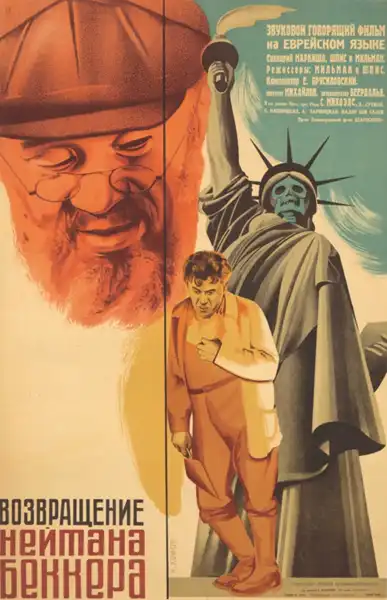
A definitive 6.3/10 rating for a film that redefined the boundaries of cult cinema. The Return of Nathan Becker remains a cornerstone of transgressive art.
Okay, so *The Return of Nathan Becker*... it’s not a movie you just stumble into. If you’re a film history buff, especially into Soviet cinema from way back when, this one’s a real find. It’s a fascinating look at a specific moment in time, packed with a very particular kind of hope. But if you’re looking for a fast-paced story or a nuanced character study, you might find yourself checking your watch.
It’s about Nathan, a Jewish bricklayer in Depression-era America. Things are bad, really bad. So, he decides to leave the capitalist mess for the shining promise of Soviet Russia. You know, the worker’s paradise. It’s a straightforward setup, but the film, it leans *hard* into that ideal.
The early scenes in America are kinda grim. Lots of grey, people just trying to get by. You feel the weight of it. Then Nathan makes his decision, and suddenly, there’s this shift. It’s like the film breathes a little easier once he’s on his way to Russia. Yelena Kashnitskaya, who plays his wife, she’s got a quiet strength that really comes through here, even when the script is pushing a lot of big ideas.
When Nathan finally gets to Russia, oh boy, does the movie want you to know how great it is. Everything is brighter, the factories hum, everyone’s smiling and building. It’s almost a little *too* perfect, honestly. Like someone turned up the saturation on a propaganda poster.
There’s this one shot of him, Nathan, just looking at a construction site. Boris Babochkin, as Nathan, he’s got this wide-eyed, almost child-like wonder. It feels genuine for a second, like he truly believes he’s found it. Then the camera lingers just a beat too long, and it kinda pulls you out. You can almost feel the movie trying to convince *you* this moment matters more than it probably does to him deep down.
The workers, they’re always collaborating, always happy. It’s a stark contrast to the individual struggles shown in America. This film, it really wants you to see the difference, to understand what “progress” looks like.
Sometimes the acting feels a bit stiff, like everyone’s hitting their marks for the camera rather than just living in the moment. David Gutman, in particular, plays a sort of mentor figure, and while he delivers his lines with conviction, it’s all very… declamatory. You know, like he’s giving a speech, not talking to a person. It’s a product of its time, sure, but it can be a bit jarring.
The film doesn’t spend much time on any real internal conflict for Nathan. He just *knows* this is the right path. There are no doubts, no quiet moments of reflection where he questions if he made the right choice. It’s all forward momentum. Which is, I guess, the point of the message. But it makes him feel less like a person and more like an idea walking around.
You can tell this film was made with a purpose. It’s not subtle. It’s a cheerleading session for a new way of life. The ending, especially, just hammers that home. It’s all very triumphant, very “we did it!” 🥳
Look, *The Return of Nathan Becker* is important for what it represents. It’s a window into the past, into a time when big ideas held immense sway. It’s clunky sometimes, a bit on the nose, but it’s never boring if you approach it as a historical document. Don’t expect a Hollywood blockbuster, or even a nuanced indie drama. Expect a **piece of history**, showing exactly what Soviet filmmakers wanted their audiences to believe about their new world. And for that, it’s worth seeing.
It certainly makes you think about The White Eagle, and how different films portray national identity, though that one was way more about internal struggle. This one's all outward conviction.
IMDb —
1919
Community
Log in to comment.