DbcultAccessing Vault...
Cult Review
Senior Film Conservator
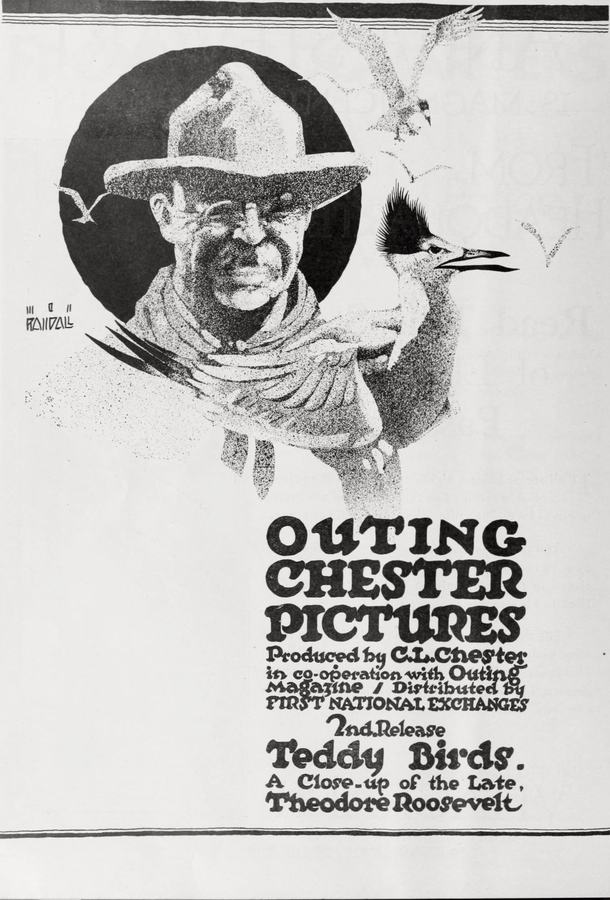
To witness Teddy Birds is to step into a temporal rift, a moment where the burgeoning medium of cinema collided with the frantic urgency of American environmentalism. In the early 20th century, the Gulf Coast was not merely a geographical boundary but a battleground for the soul of the American wilderness. C.L. Chester, a filmmaker whose name often lingers in the periphery of silent era discussions, provides here something far more profound than a simple nature reel. He offers a hagiography of the wild, filtered through the rugged conservationist ethics of Colonel Theodore Roosevelt. Unlike the melodramatic artifice found in contemporary works like The Seventh Sin, Chester’s work eschews moralizing through fiction, opting instead for the stark, unvarnished truth of the plumage and the nest.
The film’s aesthetic is one of patient observation. In an era where the camera was often static and bound to the stage-like constraints of interior sets—as seen in the domestic tensions of The Martinache Marriage—Chester takes his equipment into the humid, unpredictable elements of the Gulf. The result is a grainy, visceral texture that feels more alive than many of the polished dramas of its day. We see the birds not as distant specimens, but as protagonists in a grand, ecological drama. The flickering frames capture the light bouncing off the waves with a shimmering quality that rivals the atmospheric depth of The Light That Failed, though Chester’s light is one of discovery rather than tragic loss.
One cannot disentangle the imagery of Teddy Birds from the looming specter of its namesake. Theodore Roosevelt’s obsession with the 'strenuous life' and the preservation of the American 'frontier' is the silent narrator of every frame. While the film lacks a traditional protagonist like the titular character in Dan, the birds themselves become proxies for a national identity. They represent a purity that Roosevelt feared was being eroded by the soot of the Industrial Revolution. In this sense, the film is a political document as much as a biological study. It lacks the overt propaganda found in some early social dramas like Slander, yet its message is unmistakable: the beauty of the natural world is a precarious gift that requires the iron fist of the law to survive.
Chester’s cinematography employs a primitive but effective form of kineticism. As the birds take flight en masse, the screen becomes a chaotic swirl of white and grey, a visual cacophony that predates the avant-garde experiments of the later 1920s. This isn't the structured, rhythmic beauty of a film like The Nightingale; it is the raw, unedited pulse of the earth. The contrast between the fragile eggs in the sand and the vast, indifferent sky creates a tension that is almost palpable. It reminds the viewer of the inherent vulnerability of life, a theme explored through human lenses in Children of the Feud, but here translated into the language of the wild.
Consider the logistical nightmare of filming on a Gulf Coast island in the 1910s. The heat, the corrosive salt air, and the sheer weight of the hand-cranked cameras would have defeated a less determined filmmaker. Chester’s ability to maintain focus and exposure in such harsh conditions is a testament to his technical mastery. He manages to capture the intricate details of feathers and beaks with a clarity that was rarely achieved in non-fiction cinema of the period. While the narrative scope might seem narrow compared to the sprawling international intrigue of The Mystery of the Black Pearl, the depth of Chester’s focus provides a different kind of immersion. He doesn't need a pearl to find value; he finds it in the glint of a pelican’s eye.
The film also serves as a fascinating counterpoint to the era's obsession with human conflict and social hierarchy. While films like Brother Officers or The Midnight Wedding were busy dissecting the intricacies of class and decorum, Teddy Birds looks outward, toward a world that operates on instinct and survival. There is a democratic quality to the bird colony; there are no kings or peasants here, only the collective effort to endure. This lack of hierarchy is a refreshing departure from the rigid structures of early 20th-century drama, offering a glimpse into a world that exists entirely outside the human ego.
The Gulf Coast islands are presented as a liminal space—a threshold between the terrestrial and the celestial. Chester captures the way the birds inhabit both worlds with effortless grace. The transition from the grounded, clumsy movements of the birds on land to their majestic soaring in the air is a visual metaphor for the transformative power of nature. It evokes a sense of wonder that is often missing from more grounded, cynical works like Chimmie Fadden Out West. In Chester’s lens, the West isn't a place to be conquered or joked about; the coast is a place to be revered and left untouched.
Furthermore, the film’s pacing is uniquely modern. It doesn't rush to a climax; it allows the viewer to soak in the atmosphere. There is a meditative quality to the long shots of the horizon, a stillness that is occasionally shattered by a burst of avian activity. This rhythmic ebb and flow mirrors the tides themselves. In contrast to the frantic, sometimes exhausting slapstick of Feet and Defeat, Teddy Birds invites a state of contemplative observation. It asks us to look, and then to look again, until we see the individual within the flock.
Watching Teddy Birds today carries an inherent sense of melancholy. We are aware of the ecological challenges that have faced the Gulf Coast in the century since Chester stood on those dunes. The pristine islands he captured have been battered by oil spills, hurricanes, and rising sea levels. This gives the film a ghostly quality, similar to the haunting emotional resonance of Le crépuscule du coeur. It is a record of a world that was, and a reminder of what we stand to lose. The birds in the film are long dead, yet their descendants continue the same ancient rituals, provided we continue the work Roosevelt started.
Chester’s work also stands as an important milestone in the evolution of the documentary voice. Before the advent of synchronized sound or the poetic modes of the 1930s, films like this had to rely entirely on the power of the image to convey an argument. There are no talking heads to explain the importance of the pelican; the pelican explains itself through its sheer existence. This visual-first approach is something that even modern nature documentaries, with all their high-definition technology, sometimes struggle to replicate. They often bury the image under a mountain of narration, whereas Chester lets the wind and the wings do the talking. It shares a certain stoic resilience with the protagonist of Bogdan Stimoff, standing firm against the elements and the passage of time.
In the final analysis, Teddy Birds is more than a historical curiosity. It is a vital piece of the cinematic puzzle, bridging the gap between the 'cinema of attractions' and the modern documentary. It shares the environmental reverence found in Joan of the Woods, but strips away the mythic elements to reveal the biological reality beneath. C.L. Chester did not just film birds; he filmed the idea of protection, the concept of sanctuary, and the enduring power of the natural world to inspire awe in the human heart.
As we look back at this silent masterpiece, we are reminded that the camera is a tool of preservation as much as it is a tool of entertainment. By capturing these 'Teddy Birds' for posterity, Chester ensured that the vision of a wilder, more vibrant America would never truly fade from our collective memory. The salt air may have long since corroded the original negatives, but the spirit of the Gulf Coast, as seen through Chester’s lens, remains as soaring and indomitable as ever. It is a testament to the fact that sometimes, the most revolutionary thing a filmmaker can do is simply point their camera at the sky and wait for something to fly.
Reviewer Note: This analysis seeks to elevate the discourse surrounding early non-fiction film, recognizing it not as a precursor to 'real' cinema, but as a fully realized art form in its own right.
IMDb 7.3
1919
Community
Log in to comment.