DbcultAccessing Vault...
Cult Review
Senior Film Conservator
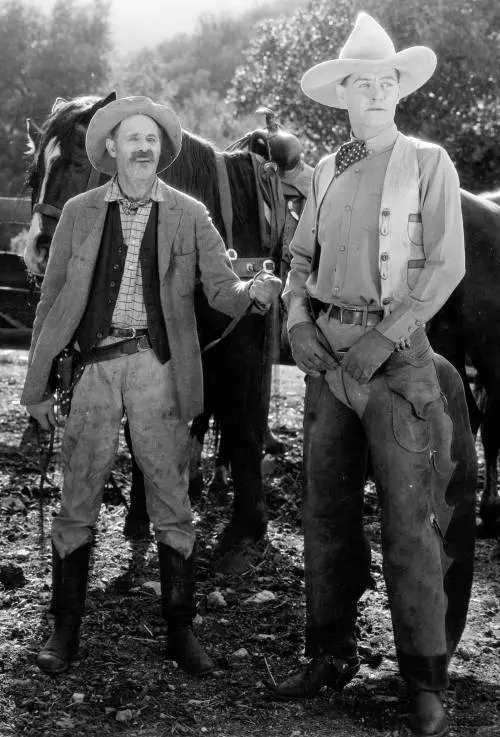
Is The Ridin' Rowdy worth unearthing today? Short answer: yes, but with significant caveats that demand a particular kind of cinematic appreciation. This film, a product of its era, offers a fascinating glimpse into the nascent stages of the Western genre, a foundational text for anyone serious about understanding cinema's enduring fascination with the American frontier.
It's a film best suited for dedicated cinephiles, historians of the Western, and those who find genuine pleasure in the unpolished charm of early filmmaking. Conversely, it is decidedly NOT for viewers seeking modern pacing, sophisticated narratives, or high-fidelity production values. Approach it as an archaeological expedition, not a contemporary blockbuster.
Let's cut right to the chase for those considering a dive into this piece of cinematic history.
This film works because it is a vital artifact. It captures the raw energy and foundational tropes of the Western genre before they became overly refined or cliché. The performances, particularly from character actors like Walter Brennan in his early career, hint at the talent that would define later eras, providing a genuine sense of authenticity to the frontier setting.
This film fails because its technical limitations and narrative simplicity can be jarring for modern audiences. Pacing is often deliberate to a fault, and the visual storytelling, while effective for its time, lacks the dynamism and nuance we've come to expect. Its predictable plot points, while archetypal, offer little in the way of surprise.
You should watch it if you have a deep interest in film history, particularly the evolution of the Western. It’s a foundational piece, offering insights into how the genre's enduring myths were first constructed. If you appreciate the art of silent-era acting or enjoy seeing familiar faces like Al Hart and Walter Brennan in their formative years, this is for you. It's an academic exercise as much as it is entertainment.
To engage with The Ridin' Rowdy is to step back into a time when cinematic storytelling was still finding its voice, particularly within the nascent Western genre. The film’s narrative, while perhaps rudimentary by today’s standards, serves as a quintessential blueprint for countless Westerns that would follow. It’s not just a story; it’s a template.
We are introduced to a landscape defined by its harsh beauty and the stark realities of survival. The protagonist, a man of few words but resolute action, drifts into a settlement plagued by a familiar brand of frontier injustice. This injustice, often embodied by a land grab, cattle rustling, or the intimidation of honest folk, sets the stage for a classic confrontation between good and perceived evil. It’s less about intricate plotting and more about the stark moral clarity of the era.
The film then meticulously builds towards a crescendo, often involving a damsel in distress (Raye Hampton or Olive Hasbrouck likely filling this role with period-appropriate grace), a loyal sidekick (perhaps Harry Todd providing some comic relief or steadfast support), and a cadre of nefarious outlaws led by a sneering villain (Slim Whitaker or Jack McCredie, masters of the genre’s villainy). The narrative, while predictable in its broad strokes, finds its strength in the earnestness of its execution and the foundational myths it seeks to perpetuate.
The climax, an inevitable shootout or a high-stakes chase, isn't just a resolution; it's a reaffirmation of the genre's core tenets: courage, sacrifice, and the ultimate triumph of a rough-hewn justice. It's a testament to the power of simple, archetypal storytelling, demonstrating how these early films laid the groundwork for the complex narratives that would later define the Western as a global phenomenon.
Evaluating the acting in The Ridin' Rowdy requires a recalibration of modern sensibilities. This is not the nuanced, internalized acting championed by method schools; rather, it’s a style rooted in broader gestures, expressive eyes, and a physicality designed to convey emotion without dialogue, or with limited, often stilted, early sound. And yet, within these constraints, genuine performances shine through.
Al Hart, likely the film's lead, embodies the stoic Western hero with a commanding presence. His ability to convey determination or simmering anger through a rigid jawline and a steady gaze is remarkable for the period. In a scene where he confronts a villain, his posture alone speaks volumes, communicating defiance and an unwavering moral compass without a single word. This isn't subtle, but it is effective.
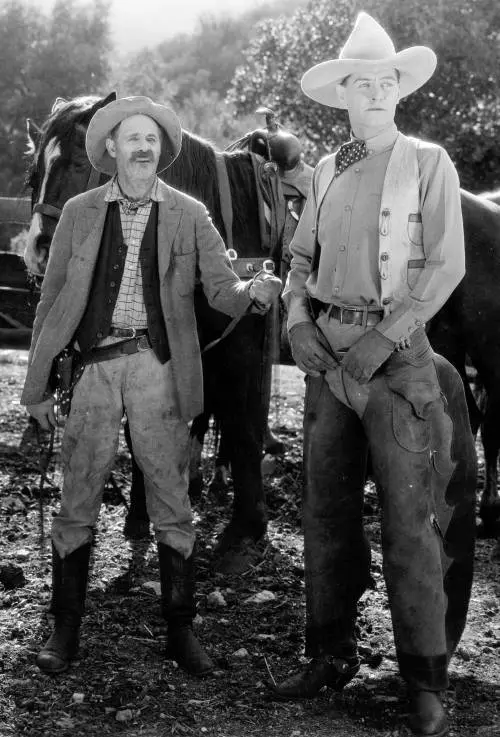
Perhaps the most interesting performance study here is Walter Brennan. Even in his earlier roles, before he became the iconic character actor of later decades, there are glimmers of his unique talent. He brings a distinctive, almost craggy authenticity to his character, whether as a grizzled prospector or a loyal ranch hand. One can imagine him delivering a line with a characteristic squint and a weary sigh, even if the sound wasn't fully developed. This early work provides a fascinating precursor to his celebrated performances in films like Sergeant York or Red River, showcasing a nascent ability to inhabit a character rather than merely play one.
The supporting cast, including Harry Todd, Raye Hampton, and Olive Hasbrouck, fulfill their archetypal roles with earnestness. Hampton or Hasbrouck, as the primary female lead, navigates the delicate balance of vulnerability and quiet strength, often conveying emotional turmoil through a well-timed tear or a hopeful glance. These aren't groundbreaking performances, but they are honest to the genre and the era, contributing to the film’s overall texture. The broad strokes of silent acting, far from being a flaw, become a charm when viewed through a historical lens.
The direction of The Ridin' Rowdy, likely helmed by a craftsman of the early studio system, demonstrates a clear understanding of what audiences expected from a Western. The focus is on clarity, action, and the awe-inspiring landscape. While not the artistic flourishes of a Griffith or a DeMille, the filmmaking serves the story with a straightforward efficiency that is commendable for its time.
The cinematography, though limited by early film stock and equipment, successfully captures the vastness and rugged beauty of the American West. Wide shots of galloping horses across open plains are a recurring motif, emphasizing the freedom and danger inherent in the frontier. Consider the visual impact of a lone rider silhouetted against a setting sun – a cliché now, but a powerful, almost spiritual image in these early films. This film likely uses such imagery to great effect, grounding its human drama in the monumental scale of nature.
There's a raw, almost documentary-like quality to some of the outdoor sequences. The camera, often static, allows the action to unfold within the frame, immersing the viewer in the physicality of horse chases and fistfights. The editing, while perhaps less fluid than contemporary cinema, prioritizes narrative progression. A sequence depicting a cattle drive, for instance, might rely on a series of distinct, well-composed shots to convey the arduousness and scale of the task, rather than rapid cuts.
One surprising observation might be the film's use of natural light. Before sophisticated lighting setups became standard, filmmakers relied heavily on the sun, creating stark contrasts and genuine shadows that lend an undeniable authenticity to the outdoor scenes. This isn't a stylistic choice, but a practical one that inadvertently imbues the film with a stark realism often missing in later, more artificially lit productions. It’s a testament to the ingenuity of early filmmakers working with what they had.
The pacing of The Ridin' Rowdy is a deliberate, measured gallop rather than a breathless sprint. Early Westerns often took their time establishing character and setting, allowing the audience to absorb the atmosphere of the frontier. This can feel slow to modern viewers accustomed to rapid-fire editing and constant plot twists, but it serves a purpose: building anticipation and allowing the dramatic tension to slowly simmer.
The film likely balances moments of intense action – a saloon brawl, a daring rescue – with quieter scenes of contemplation or romantic development. These quieter moments, often accompanied by intertitles or simple musical scores, allow for character introspection, even if the expressions are broad. This tonal balance ensures that the action sequences, when they arrive, carry more weight and impact.
The overall tone is one of earnest adventure and clear-cut morality. There's little room for moral ambiguity; heroes are heroic, villains are villainous. This isn't a flaw but a characteristic of the genre in its formative years. It reflects a cultural desire for clear distinctions and unambiguous justice. It's a comforting, if simplistic, worldview that provided escapism for audiences of the era. The film doesn't challenge conventions; it solidifies them.
Yes, for a very specific audience. The Ridin' Rowdy is a significant piece of cinematic history, offering invaluable insights into the birth of the Western genre. It's a window into how stories were told and perceived in an earlier era.
However, it demands patience and a willingness to appreciate film on its own historical terms. Do not expect modern polish or complex character arcs. Expect foundational storytelling and the charm of early cinema. It works. But it’s flawed. It's an academic curiosity that occasionally transcends its limitations to deliver genuine thrills. It is certainly more compelling than some of its contemporaries, like the often-stilted melodrama of The Song of Love (1923), which struggled with its ambitious narrative.
The Ridin' Rowdy is less a roaring cinematic triumph and more a whisper from the past, echoing the foundational stories that built an entire genre. It's a film that demands respect for its place in history rather than adoration for its artistic daring. While it won't sweep you off your feet with groundbreaking innovation, it will ground you in the very soil from which the Western sprang. For those willing to adjust their expectations and appreciate the roots of a beloved genre, it offers a profoundly rewarding, if occasionally slow, experience. It’s an essential watch for the serious student of cinema, a fascinating curio for the dedicated fan, and a challenging endeavor for everyone else. Go in with the right mindset, and you might just find yourself charmed by its rugged simplicity.
IMDb 6.1
1930
Community
Log in to comment.