DbcultAccessing Vault...
Cult Review
Senior Film Conservator
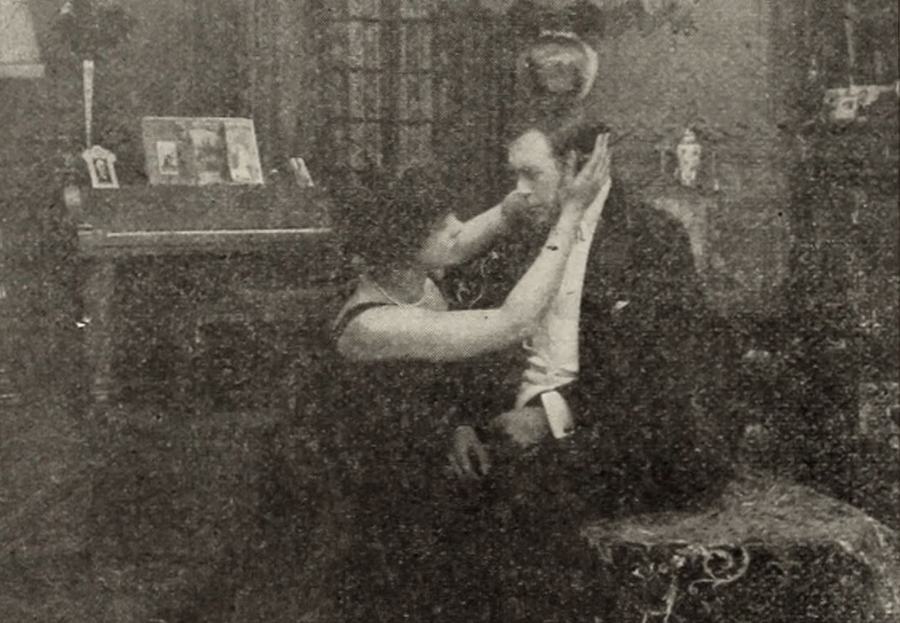
If you breathe too deeply while watching The Ring of the Borgias, you may taste bitter almonds—cinema’s tell-tale scent of cyanide romance.
William Addison Lathrop’s 1914 one-reeler unfolds like a perfumed threat: a single whiff and the bloodstream of your moral certainties begins to clot. The film never bothers to announce its era; instead, art-direction slathers everything in sea-blue nitrate shadows so that flapper gowns and corseted waists feel interchangeable, as though history itself were a costume trunk left open for scavengers.
From the first iris-in, poverty is shot like a crime scene. Lola (Cora Linton) enters frame left, her hem ragged yet posture regal—think Anna Karenina stripped of imperial insulation. Valasquez (Richard Tucker) lounges nearby, shuffling cards with the languid menace of a man who trusts gravity more than god. Their dialogue is, of course, missing; yet the intertitles—written in a curl of florid exposition—bleed poetry into the vacuum. When Lola mouths the word money, her lips purse as though ready to kiss a bullet.
Archibald Rivers (Augustus Phillips) is introduced in a café that reeks of brass polish and desperation. Lighting renders his face half gilded, half cadaverous—an aesthetic split that foreshadows every decision he will make. The man is solvent only in the way a twig is buoyant: briefly, and at the mercy of currents. Once he becomes trustee to Mary Harrison’s fortune, the ethical floorboards begin to splinter. Notice how cinematographer Harold Sintzenich frames Rivers through tilted mirrors: each reflection fractures the banker into a kaleidoscope of potential felons, none complete, all complicit.
Margaret Prussing plays Mary with moon-eyed stillness, yet watch her hands—she fondles a locket the way shipwrecked sailors fondle driftwood. Her affection for Donald (Carlton S. King) grows not in stolen glances but in the negative space where chaperones fail to intervene. Their love story is shot almost entirely in medium-wide: the universe crowding them together while social propriety pretends to hold them apart. The result feels less like courtship and more like two moths aligning flight paths inside a jar already corked.
Horror arrives masked as revelry. Production design drapes the ballroom in deep-sea indigos and arterial golds, evoking both Renaissance decadence and underwater drowning. Lola’s domino mask is a black butterfly wing; when she lifts her gloved hand to greet the hostess, the camera jump-cuts to an extreme close-up of the ring—its prong glistening like a star on the verge of collapse. The assassination itself obeys the Hays Code avant la lettre: we never see the puncture, only the aftermath—Mrs. Rivers (Helen Strickland) gliding to the floor as music boxes slow their tines. Death, filmed in a single take, lasts three seconds yet feels like three centuries.
Linton’s Lola predates Hamlet’s existential soliloquies; she externalizes motive through posture alone. Watch her spine coil when Rivers mentions his wife—an elastic tension that makes furniture seem nervous. Conversely, Phillips lets Rivers’ shoulders sag millimeter by millimeter, a landslide in extreme slow motion, until the once-erect tycoon resembles a marionette whose strings have been replaced with cooked spaghetti.
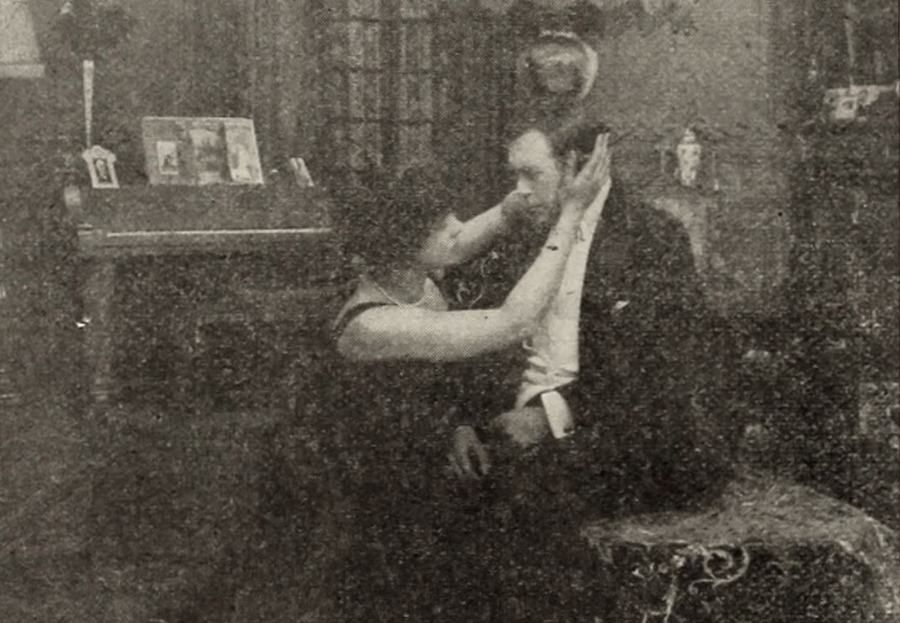
That reptilian bauble deserves co-star billing. Introduced in a candle-lit insert drenched in dark-orange ember-glow, it reappears each time desire outruns conscience. Lathrop’s script literalizes the Borgia mythos: the ring is not merely a weapon but a wedding band for those wedded to annihilation. When Lola finally turns it on herself, the film loops back to its opening image—predators and prey trapped inside the same ouroboros.
Where The Three Musketeers celebrates camaraderie against corruption, Ring charts the inverse: corruption devouring camaraderie. Its DNA also shares strands with Michael Strogoff’s race-against-time tension, though here the enemy is internal solvency. And while Chained to the Past externalizes guilt via convict chains, Borgias locks guilt inside jewelry—portable, stylish, lethal.
Cinematographer Sintzenich alternates between tenebrism worthy of Caravaggio and over-exposed halations that bleach faces into guilty silhouettes. Notice a pivotal moment: Rivers signs a promissory note; the inkwell casts a shadow shaped like a coffin lid. Later, as Donald pieces together clues, the lighting flips—key-light blares from below, turning the amateur sleuth into a campfire storyteller. The audience, complicit voyeurs, must decide whether illumination clarifies or distorts.
Contemporary attention spans might balk, yet the reel’s runtime mirrors the average fainting spell—fitting for a narrative drunk on its own toxicity. Transitions deploy whip-pans so brisk they feel like ledger pages slapped by a creditor. Intertitles arrive every 90 seconds, but instead of expository ballast they function as incantations, each card a wafer of arsenic-dipped scripture.
After the double suicide, Donald and Mary reunite in a garden bleached by dawn. The camera retreats to an overhead crane shot—an angel’s-eye view of two ant-sized humans clutching a promissory note of hope. It’s the inverse of the opening café tableau: where greed once metastasized, now fragile seedlings of solvency push through soil. Yet even sunrise is suspect; the film ends on a freeze-frame, denying us the comfort of movement. Love survives, but only as a still life—an exhibit labeled Pending Further Collapse.
Modern thrillers fetishize complexity—nested timelines, unreliable narrators, algorithmic puzzles. The Ring of the Borgias achieves devastation through simplicity: a circle of metal, a drop of venom, a heart that mistakes possession for devotion. In an age where financial malfeasance hides inside spreadsheets, the film’s tactile cruelty feels almost quaint—yet its emotional calculus is immortal. Watch it, and every push-notification from your banking app may carry the faint aroma of bitter almonds.
Verdict: 9/10—A lethal miniature that proves silent cinema can scream louder than Dolby surround.
IMDb 5.9
1931
Community
Log in to comment.