DbcultAccessing Vault...
Cult Review
Senior Film Conservator
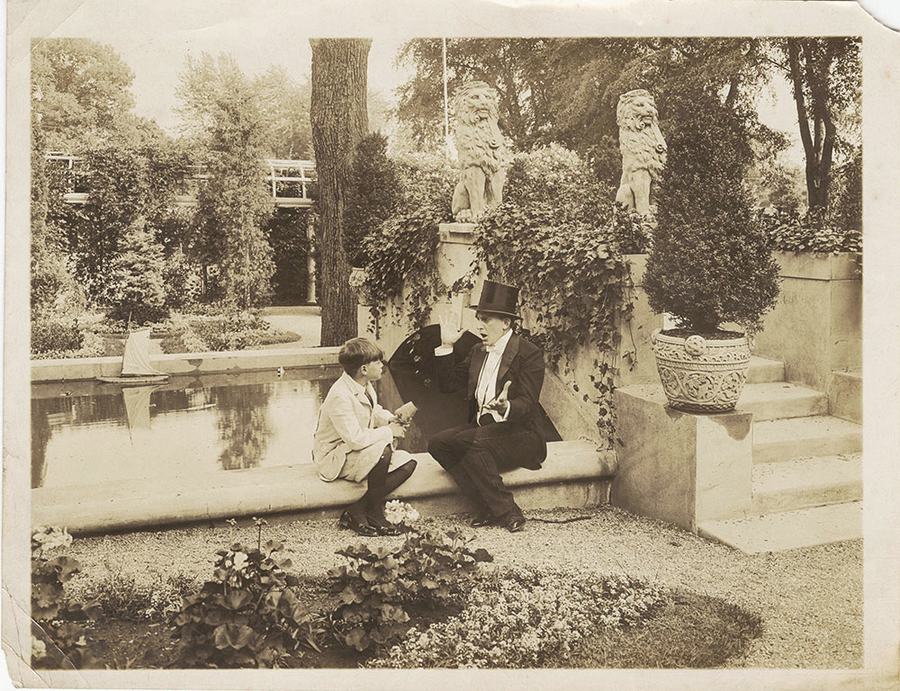
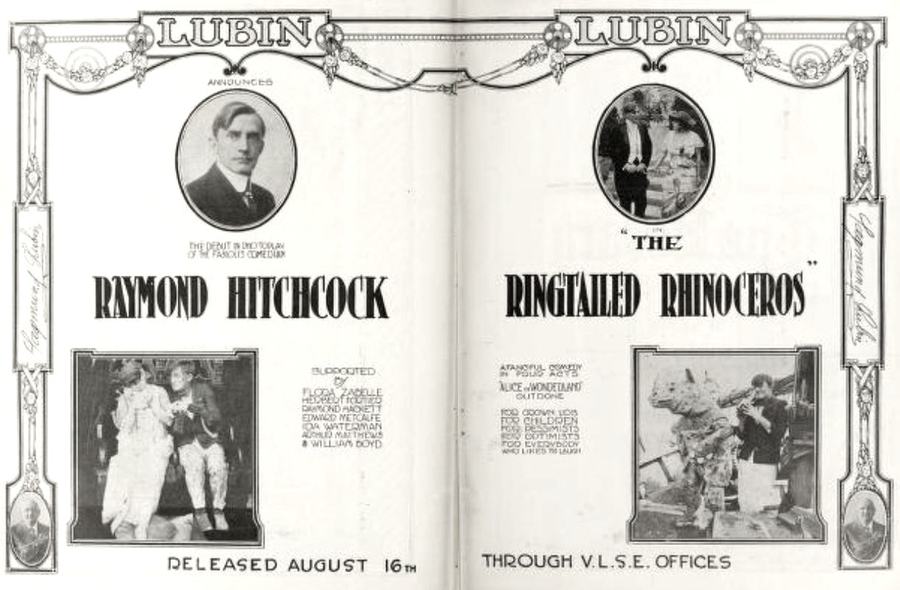
To witness The Ringtailed Rhinoceros is to step into a cinematic time capsule that predates the high-concept surrealism of Dalí or Cocteau, yet manages to capture a remarkably similar sense of psychological disorientation. Released in 1915, a year when the film medium was still wrestling with its own identity as an art form rather than a mere novelty, this work emerges as a sophisticated, albeit didactic, exploration of human frailty. It is a film that uses the logic of dreams to dismantle the facade of social respectability, specifically targeting the 'good fellow' archetype—a man whose joviality is merely a mask for a pernicious habit.
The protagonist, John Carter, portrayed with a curious blend of slapstick energy and genuine pathos by Raymond Hitchcock, is a man defined by his invitations. He is the life of the party, the first to raise a glass, and the last to recognize the wreckage he leaves in his wake. Unlike the more somber morality plays of the era, such as Hypocrites, which utilized nudity and stark symbolism to critique societal rot, The Ringtailed Rhinoceros opts for a whimsical, almost Lewis Carroll-esque approach to its moralizing.
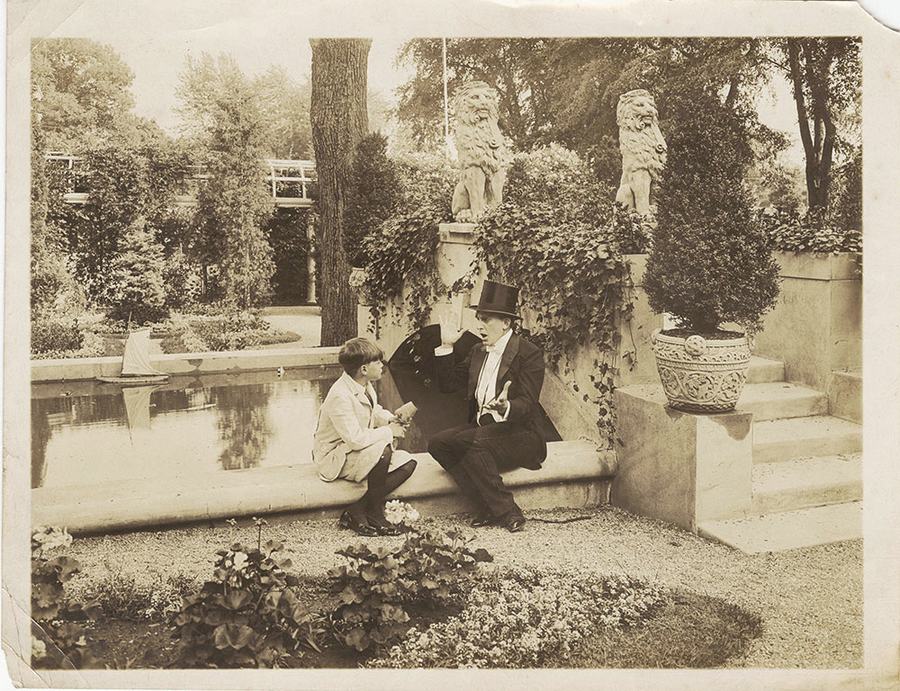
The titular creature is not a literal animal but a linguistic shield. When Carter is confronted by his fiancée Marybelle’s little brother, Billie, he invents the 'Ringtailed Rhinoceros' as a scapegoat for the sadness he causes. It is a brilliant narrative device; the rhino represents the 'pink elephant' of delirium tremens, but it carries a more aggressive, charging weight. It is not just an hallucination; it is a predator that devours relationships and reputations. This linguistic sleight of hand sets the stage for the film's second act, where the metaphor takes on a physical, albeit dream-bound, reality.
The film’s structure is fascinatingly bifurcated. The first half is a traditional domestic drama, albeit one punctuated by Carter’s increasing unreliability. When he arrives intoxicated at his own engagement dinner, the fallout is swift and brutal. The parents of Marybelle (the luminous Flora Zabelle) are not merely offended; they are terrified for their daughter’s future. This scene echoes the social anxieties found in Sweet Alyssum, where the fragility of familial ties is tested by the vices of the patriarchy.
The transition into the dream sequence is where the film truly finds its aesthetic footing. As Carter falls into a drunken stupor with young Billie at his side, the screen dissolves into a world of pirates and high-seas adventure. This isn't just a flight of fancy; it's a subconscious processing of his own guilt. Being shanghaied by pirates and forced to scrub decks is a literalization of the 'bum' status predicted by his creditors. It is a stark contrast to the 'good fellow' he imagines himself to be. The pirate ship serves as a floating purgatory, a theme often explored in early maritime dramas like Captain Starlight, or Gentleman of the Road, though here it is imbued with a much more surrealist texture.
When the rhino appears on the ship to lead him to the captain’s rum, the film brilliantly illustrates the seductive nature of relapse. Even in his nightmares, the vice calls to him, disguised as a companion. The subsequent sequence—walking the plank, floating endlessly, and arriving on a magical island—is a masterclass in early special effects and set design. The soldiers appearing by 'magic' to chase Carter reflect the overwhelming pressure of societal judgment. Every turn he takes, he is pursued, until he finds sanctuary at the feet of a little prince.
The introduction of the Weeping Princess and the King and Queen brings a fairy-tale gravity to the proceedings. The Princess’s sorrow is tied directly to the existence of the rhinoceros, a clear parallel to Marybelle’s grief in the waking world. To save her, Carter must slay the beast. But how does one slay a habit? The film provides an answer in the form of Resolution, an eight-legged horse. This is perhaps one of the most striking visual metaphors in silent cinema. The extra legs suggest a stability and power far beyond the ordinary—a literalization of the monumental effort required to change one's nature.
However, the film avoids a simplistic 'hero’s journey' path. Carter initially fails. He meets the rhino and, instead of fighting, they share a bottle in the king’s wine cellar. This 'partying' night after night, while deceiving the royal family, is a devastatingly accurate depiction of the functional alcoholic’s life. He maintains the appearance of 'hunting' the problem while secretly indulging it. It takes the 'squealing' of the Counsellor Bird to break the cycle. The use of animal avatars to represent conscience and temptation gives the film a fable-like quality that reminds me of the moral complexities in Life Without Soul, where the creator must face the monstrosity of his own making.
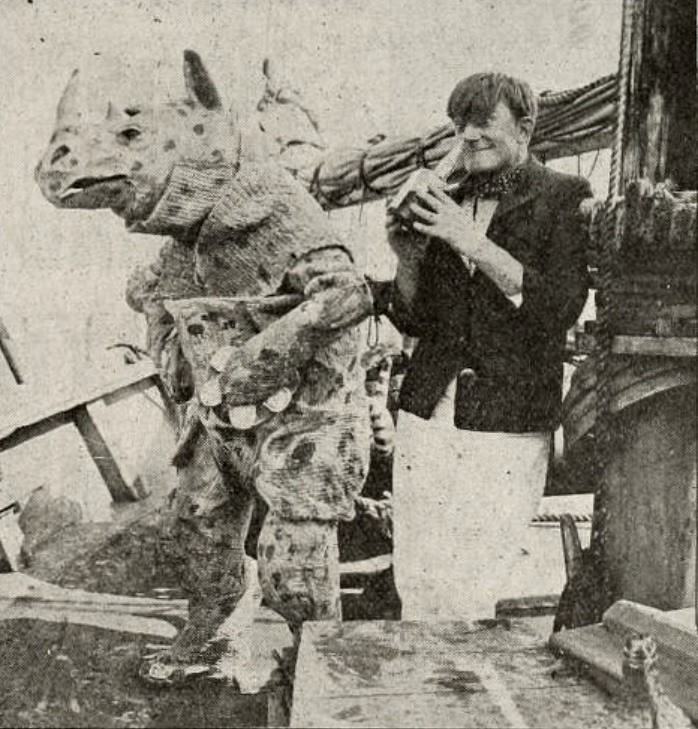
The climax in the throne room is nothing short of spectacular for its time. As the rhino and his 'cronies' cajole and threaten Carter, the influence of the little prince (representing Carter’s remaining innocence and his promise to Billie) becomes the deciding factor. The 'River of Drinks' sequence is a particularly vivid piece of cinematography, showing the physical lure of the vice as a landscape feature. When Carter finally rejects a bottle of wine and hurls it at the charging rhino, the beast dies not by the sword, but by the very object of its obsession. The bottle becomes the weapon of its own destruction.
The resolution—the princess ceasing her tears and the court hailing Carter as a hero—is the wish-fulfillment of the addict. But the film’s true strength lies in the 'real world' awakening. Carter wakes up not just with a headache, but with a clarity of purpose. He has conquered the 'Ringtailed Rhinoceros' in the realm of the mind, and thus he is equipped to face it in the realm of the flesh. It’s a sophisticated take on the 'it was all a dream' trope, using it as a psychological breakthrough rather than a narrative cop-out.
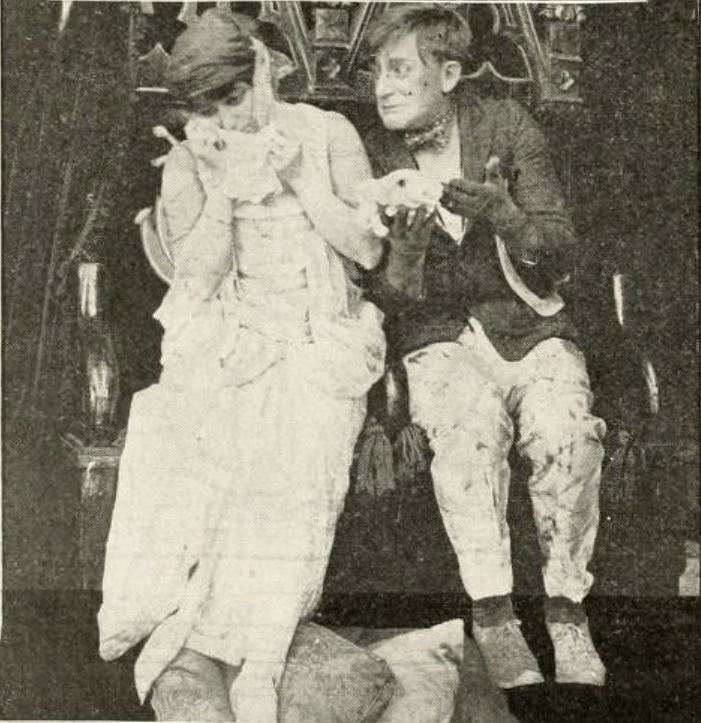
Directorially, the film is a marvel of its era. The use of double exposures and practical effects to create the magical soldiers and the eight-legged horse demonstrates a high level of technical ambition. While films like The Avalanche focused on more realistic spectacles, The Ringtailed Rhinoceros pushes the boundaries of the imaginary. The pacing is deliberate, allowing the audience to soak in the strange logic of the dreamworld before moving to the next set piece.
The performances are equally noteworthy. Raymond Hitchcock carries the film with his expressive physicality. In an era where overacting was the norm, Hitchcock finds moments of quiet desperation that ground the fantastical elements. Flora Zabelle, though given less to do in the dream world, provides the emotional stakes necessary to make Carter’s journey matter. The chemistry between the leads, who were married in real life, adds an extra layer of poignancy to their reconciliation.
In the broader context of 1915 cinema, The Ringtailed Rhinoceros stands as a unique outlier. It lacks the grimness of Sealed Orders or the melodrama of A Change of Heart, opting instead for a vibrant, imaginative landscape. It is a film that respects the intelligence of its audience, trusting them to follow the leaps in logic and the shifts in tone. It suggests that while our vices may be monstrous, they are also, ultimately, creations of our own minds—and what the mind creates, the mind can also destroy.
For the modern viewer, the film offers a fascinating glimpse into the early 20th-century psyche. It reflects a world on the brink of Prohibition, yet it approaches the subject of alcoholism with more nuance and creativity than many of the dry, 'educational' films of the same period. It is a testament to the power of storytelling and the enduring nature of the human struggle for self-control. Whether you are a student of silent film or simply a lover of surrealist fable, The Ringtailed Rhinoceros is a journey well worth taking. It reminds us that every hero needs a horse like Resolution, and every rhino, no matter how ringtailed or formidable, can be laid to rest with a single, decisive act of will.
Reviewed by the Editorial Staff. For more deep dives into the silent era, explore our archives on The Springtime of Life or the mysterious narratives of A Melbourne Mystery.
IMDb —
1930
Community
Log in to comment.