DbcultAccessing Vault...
Cult Review
Senior Film Conservator
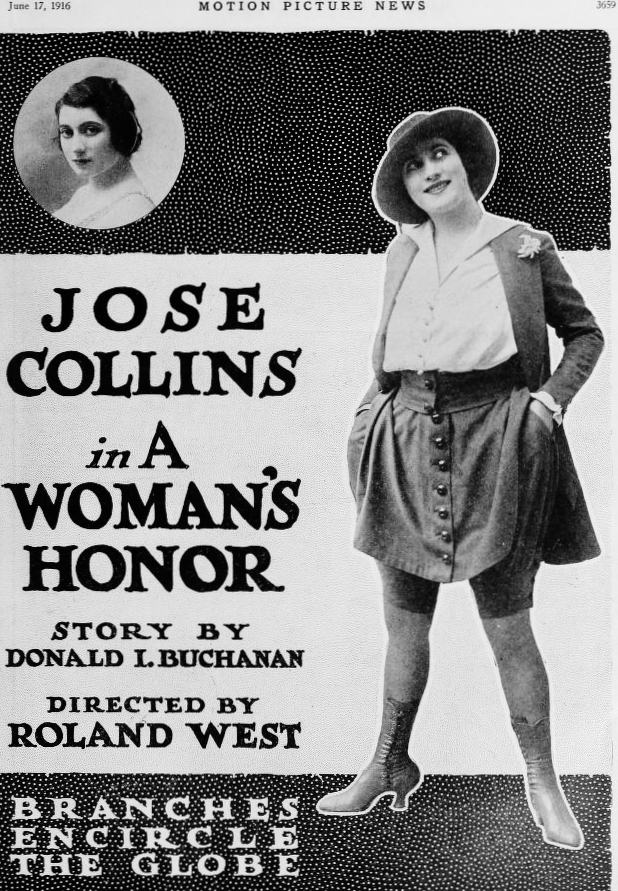
Stepping back into the nascent days of cinematic storytelling, one encounters a fascinating landscape of melodrama, moral fables, and the burgeoning power of the moving image. Among these early gems, the 1916 production, A Woman's Honor, stands as a compelling artifact, a testament to the era's dramatic sensibilities and its often-unflinching gaze at the precarious position of women in society. While the film might not be as widely recognized as some of its contemporaries, its narrative depth and the committed performances of its cast offer a rich vein for critical exploration, revealing a timeless struggle against societal judgment and the quiet strength of personal integrity.
At its core, 'A Woman's Honor' is a meticulously crafted melodrama, a genre that, despite its occasional excesses, provided a vital mirror for the anxieties and aspirations of the early 20th century. The screenwriters, George L. Knapp and Donald I. Buchanan, demonstrate a keen understanding of the dramatic arc, weaving a tale of virtue imperiled, reputation shattered, and eventual, hard-won redemption. Their screenplay, while adhering to the conventions of the period, manages to imbue its characters with enough psychological nuance to transcend mere archetypes, allowing for a deeper emotional investment from the audience, even a century later.
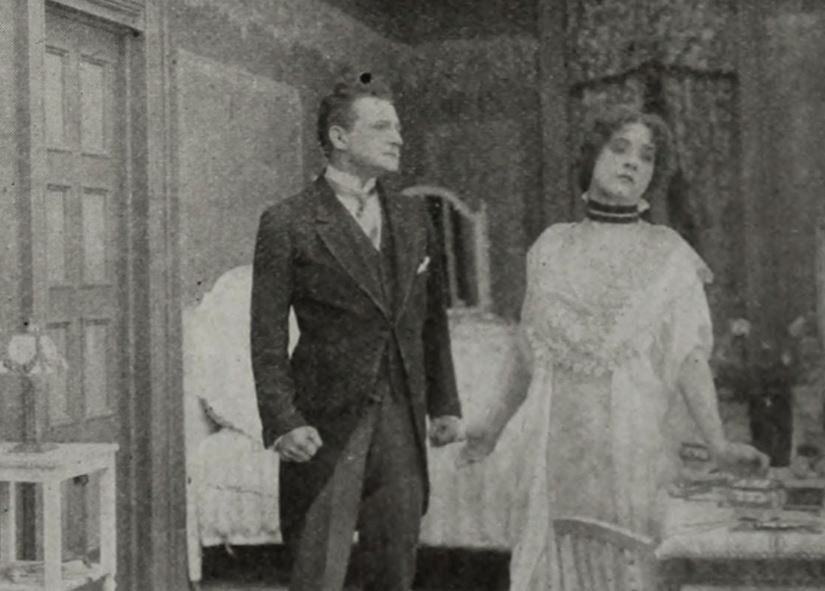
The film’s plot, a veritable crucible of calumny, introduces us to Eleanor Vance, a character brought to life with remarkable pathos by Ruby Hoffman. Hoffman, a prominent figure in early cinema, imbues Eleanor with a quiet dignity and an almost ethereal innocence that makes her subsequent trials all the more agonizing to behold. Eleanor is a woman of impeccable standing, beloved by her community and engaged to the honorable John Sterling, portrayed with earnest conviction by DeVore Palmer. Their idyllic existence, however, is shattered by the insidious machinations of Reginald Blackwood, a rejected suitor whose wounded pride curdles into a malignant desire for revenge. Armand Cortes, in the role of Blackwood, delivers a performance that is chilling in its calculated malevolence, crafting a villain who is not merely mustache-twirling but genuinely menacing, his actions driven by a festering resentment rather than simple greed.
Blackwood's scheme is diabolically simple yet devastatingly effective: he meticulously fabricates a scandal, creating a web of false evidence that implicates Eleanor in an affair, thus tarnishing her unblemished reputation. The genius of Knapp and Buchanan’s script lies in Eleanor’s response. Rather than immediately defending herself, she makes a profound sacrifice to protect her younger sister, Alice (Saba Raleigh), from the social stigma that would inevitably cling to their family name. Alice, depicted with a touching vulnerability by Raleigh, becomes the innocent catalyst for Eleanor’s agonizing decision. Eleanor’s silent acceptance of the blame, her willingness to sacrifice her own honor for another’s well-being, is the film's emotional anchor, a powerful exploration of altruism in the face of ruin.
This central conflict resonates deeply with the societal norms of the era, where a woman’s reputation was often her most valuable, yet most fragile, asset. The film deftly illustrates the devastating power of rumor and the swiftness with which society could condemn an individual without due process. It’s a theme that finds echoes in other melodramas of the time, though 'A Woman's Honor' distinguishes itself through the sheer stoicism of its protagonist. While a film like The New Exploits of Elaine might focus on a more active, adventurous heroine, Eleanor Vance’s heroism is internal, a battle fought not with fists but with unwavering moral fortitude.
In the silent era, the burden of conveying complex emotions fell squarely on the actors’ shoulders, demanding a mastery of facial expression, gesture, and physicality. Ruby Hoffman rises to this challenge magnificently. Her portrayal of Eleanor is a masterclass in controlled agony, her eyes often conveying volumes that intertitles could only hint at. We witness her initial shock, her heartbreaking decision, and her subsequent endurance of social ostracism with an almost visceral empathy. It’s a performance that, even today, feels remarkably nuanced, avoiding the theatrical excesses that sometimes plagued early cinematic acting.
Armand Cortes, as the villainous Blackwood, provides the perfect foil. His sneering expressions and calculated movements project an aura of sinister charm that makes his transgressions all the more reprehensible. He is not a cartoonish villain but a man driven by a plausible, if twisted, motivation, making his eventual comeuppance all the more satisfying. DeVore Palmer, as the wronged fiancé John Sterling, skillfully navigates the emotional turmoil of a man torn between his love and his belief in damning evidence. His internal struggle is palpable, adding another layer of human complexity to the drama.
The supporting cast, too, contributes significantly to the film's overall impact. Saba Raleigh, as the innocent Alice, evokes sympathy and provides a clear motivation for Eleanor's sacrifice. Bradley Barker, Anna Reedor, Jose Collins, and Arthur Donaldson, though perhaps given less screen time, each contribute to the rich tapestry of characters that populate this world, from the gossiping townspeople to the individuals who ultimately aid in Eleanor’s vindication. Their collective efforts ensure that the world of 'A Woman's Honor' feels populated and authentic, despite the heightened reality of melodrama.
While specific directorial credits are often less emphasized in early cinema analyses, the visual language of 'A Woman's Honor' is undeniably effective. The film employs a clear and concise visual grammar, utilizing close-ups to emphasize emotional states and wider shots to establish the social context. The pacing, while deliberate by modern standards, builds tension effectively, allowing the audience to fully absorb the unfolding tragedy and the subsequent struggle for justice. There's a particular artistry in how the film uses light and shadow to underscore emotional shifts, a common technique in silent films that is employed here with considerable skill.
The set designs and costumes, while perhaps not extravagant, are period-appropriate and contribute to the film's immersive quality. They subtly reinforce the social strata and expectations that govern the characters' lives. The film's visual narrative often relies on symbolic imagery – a dropped locket, a significant glance, a letter clandestinely exchanged – to propel the plot forward, demanding active engagement from the viewer. This reliance on visual cues over extensive intertitles speaks to the sophistication of early film language, a form of storytelling that prioritized evocative imagery.
The foundational strength of 'A Woman's Honor' lies in its well-structured screenplay by George L. Knapp and Donald I. Buchanan. They understood the mechanics of suspense and emotional payoff, carefully constructing a narrative that builds to a satisfying, if sometimes predictable, conclusion. Their characters, particularly Eleanor and Blackwood, are drawn with sufficient depth to carry the dramatic weight of the story. The plot avoids excessive contrivance, instead focusing on the logical progression of cause and effect, even within the heightened reality of melodrama.
Knapp and Buchanan’s ability to craft a story that explores themes of honor, sacrifice, and the destructive nature of deceit, while remaining accessible and engaging for a mass audience, is commendable. They manage to infuse the dramatic proceedings with a moral core, offering a commentary on the importance of truth and the resilience of the human spirit. Their work here stands as an excellent example of how early screenwriters navigated the demands of a new medium, adapting theatrical conventions for the unique capabilities of film. One might draw parallels to the narrative complexities found in The Mystery of the Double Cross, though 'A Woman's Honor' leans more into emotional drama than pure intrigue, or the social commentary present in The Active Life of Dolly of the Dailies, albeit through a more personal, less professional lens.
Viewing 'A Woman's Honor' today is more than just an exercise in historical appreciation; it's an opportunity to engage with enduring human themes through the lens of a nascent art form. The film, despite its age and the stylistic differences of silent cinema, retains a surprising emotional power. It reminds us of the timeless struggle for justice, the profound weight of reputation, and the quiet heroism found in personal sacrifice. It serves as a valuable document of early cinematic techniques and societal values, offering insights into how audiences of the time understood morality, villainy, and virtue.
The film’s ultimate triumph lies not just in its narrative resolution, but in its ability to evoke genuine empathy for its protagonist and to provoke reflection on the nature of honor itself. Is honor merely the absence of public scandal, or is it a deeper, internal integrity that can withstand even the most vicious assaults? 'A Woman's Honor' unequivocally argues for the latter, presenting Eleanor Vance as a beacon of unwavering moral strength. This makes the film a compelling watch for anyone interested in the evolution of cinema, the social history of the early 20th century, or simply a well-told story of resilience against adversity. It certainly holds its own against other character-driven dramas of the era, such as Rosemary or The Mad Lover, by focusing on a more profound, less romanticized, form of emotional struggle.
In conclusion, 'A Woman's Honor' is far more than a historical curiosity. It is a vibrant piece of cinematic history that speaks to the power of storytelling, the enduring strength of the human spirit, and the timeless relevance of moral dilemmas. It deserves to be rediscovered and appreciated for its contributions to the art of film and its poignant reflection on the human condition.
IMDb —
1927
Community
Log in to comment.