DbcultAccessing Vault...
6/10
Senior Film Conservator
A definitive 6/10 rating for a film that redefined the boundaries of cult cinema. Torgus remains a cornerstone of transgressive art.
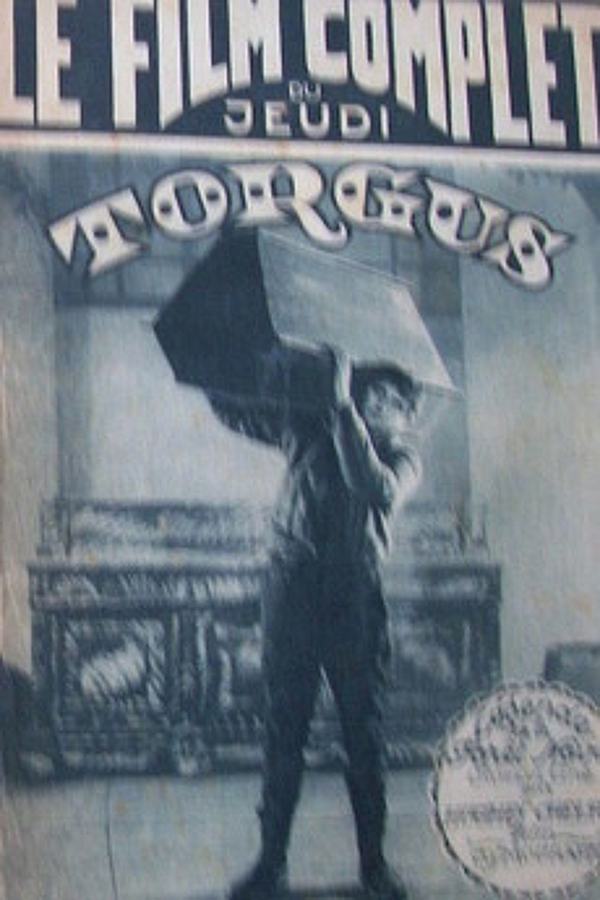
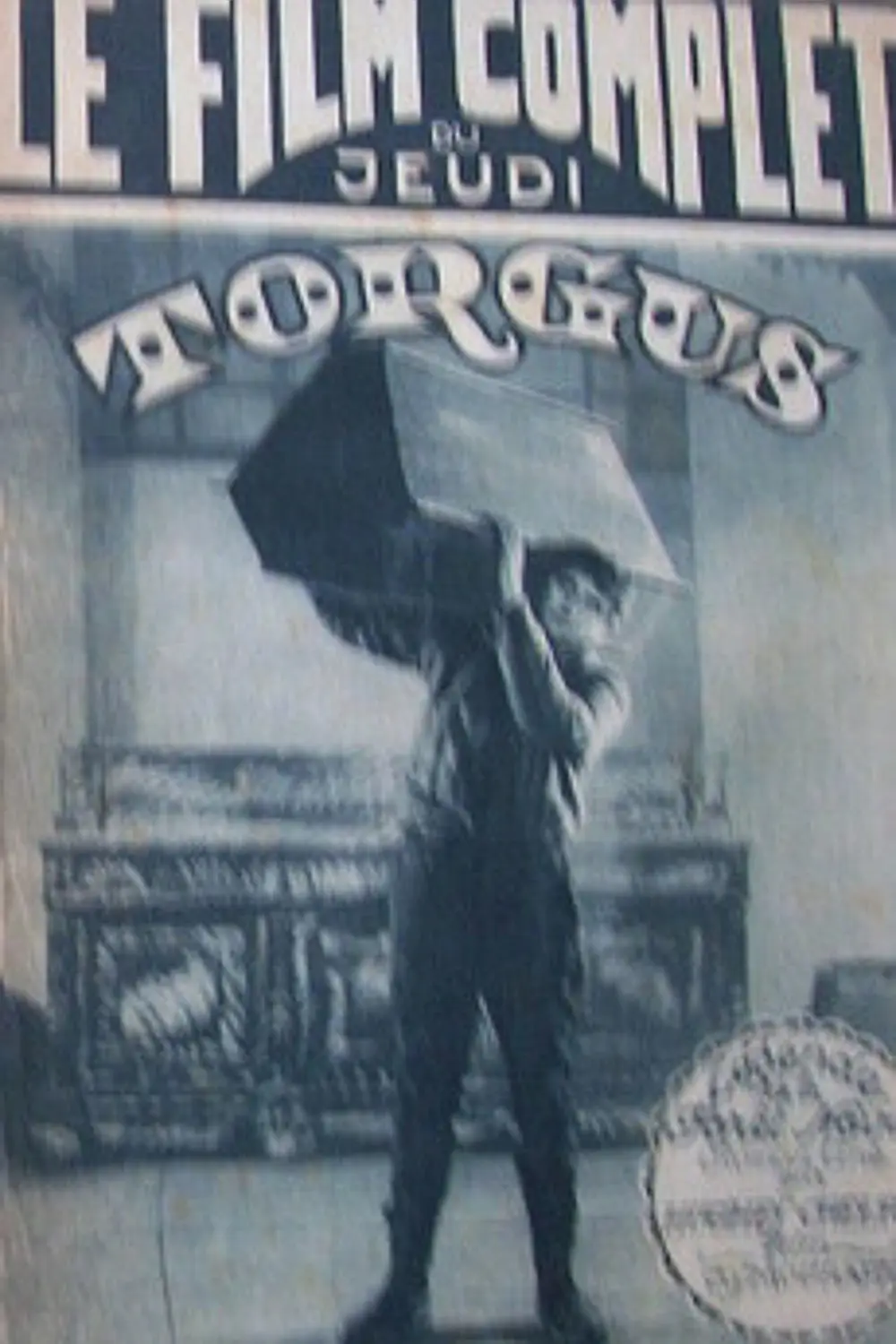
Torgus (1920), a German silent film directed by Carl Mayer, emerges as a stark, shadow-drenched parable of love, control, and societal decay. Its narrative, though set in a pre-war European context, resonates with timeless echoes of power dynamics and personal agency. The film’s brilliance lies not in grand action but in the quiet devastation of its characters, framed by Mayer’s masterful use of architectural symbolism and Expressionist aesthetics.
The story orbits John, a young man whose life is ensnared by his aunt’s iron-fisted dominance. His love for Anna, a servant girl pregnant with his child, becomes the catalyst for a tragic sequence of separations. The aunt, a figure of cold pragmatism, orchestrates John’s enrollment at a distant university, while Anna is consigned to the workshop of Torgus, a towering, almost inhuman figure whose role as a coffinmaker—both literal and metaphorical—anchors the film’s gothic undertones. Mayer’s script, with its stark contrasts between light and shadow, transforms Torgus’s workshop into a mausoleum of emotional stasis, where Anna’s vulnerability is juxtaposed against the craftsman’s gruff tenderness.
What elevates *Torgus* beyond its melodramatic premise is its exploration of agency through the lens of its female characters. Anna, though physically confined, becomes a silent rebel against the forces aligning to erode her autonomy. Her relationship with Torgus—marked by a mix of fear and reluctant camaraderie—serves as a microcosm of the broader societal constraints. Torgus himself is a fascinating character: his golemesque presence (evoking both menace and protectiveness) mirrors the film’s themes of objectification and redemption. The coffinmaker’s fascination with Anna is not predatory but almost paternal, a complexity that Mayer conveys through subtle close-ups and the interplay of industrial textures against her delicate fragility.
Visually, *Torgus* is a triumph of Expressionist design. The workshop’s jagged angles and the looming, unfinished coffins create a sense of claustrophobic inevitability, while the use of chiaroscuro in Anna’s scenes underscores her emotional isolation. The film’s pacing is deliberate, allowing moments of tension to simmer before erupting into quiet despair. One particularly striking sequence involves Anna’s daily routine: her hands, a recurring motif, are shown both as a vessel of labor (polishing wood) and of vulnerability (clutching a photo of John). These details, amplified by the absence of spoken dialogue, speak volumes about the human cost of repression.
The performances, though constrained by the era’s technical limitations, are deeply affecting. Marija Leiko’s portrayal of Anna is a masterclass in physical expression—a glance, a tremor of the hand, a hunched posture that conveys a universe of unspoken anguish. Eugen Klöpfer’s Torgus, with his stooped gait and cavernous eyes, embodies a man trapped between his role as a maker of death and his desire to defy it. The chemistry between the two is understated but potent, a testament to the film’s reliance on subtext over spectacle.
Thematic parallels can be drawn to other works of the silent era. Like *What Happened to Mary* (1923), *Torgus* interrogates the intersection of class and moral judgment, though Mayer’s film is more introspective in its critique. The workshop’s oppressive atmosphere also evokes *Beauty in Chains* (1919), where domestic spaces become prisons for women. Yet *Torgus* distinguishes itself through its focus on male complicity in these systems; John’s aunt is not merely a villain but a product of her time, her actions rooted in a belief in inherited hierarchy.
The film’s most daring structural choice is its refusal to offer catharsis. John’s eventual return to Anna is not a climax but an anti-climax—a reunion that underscores the futility of his struggle. Mayer strips the narrative of traditional resolution, leaving the audience with a lingering unease. This ambiguity is heightened by the film’s final act, in which Anna’s seclusion becomes a self-contained world, her child’s impending birth a symbol of both hope and the cyclical nature of oppression.
In the broader context of silent cinema, *Torgus* stands as a bridge between German Expressionism and the emerging social realism of the 1930s. Its focus on marginalized characters—domestic servants, the working poor—and its critique of patriarchal authority align it with films like *The Plow Girl* (1937) and *Freckles* (1935), though Mayer’s approach is far more abstract. The film’s visual language, however, is distinctly European, with its angular shadows and stark compositions influencing later works like *The Last of His People* (1914) and *The Wonder Man* (1921).
Critics today may debate whether *Torgus* is a masterpiece or a product of its time, but its emotional honesty and technical precision secure its place in film history. Mayer’s script, with its layered metaphors and unflinching gaze at human frailty, invites repeated analysis. For modern audiences, it serves as both a historical artifact and a cautionary tale. The film’s greatest triumph is its ability to make the personal political, to transform a love story into a meditation on power, class, and the cost of freedom.
Fans of *Torgus* might also explore Beauty in Chains for its exploration of domestic servitude, or What Happened to Mary to see another narrative of societal judgment. For a contrasting take on paternal figures, Caino delves into familial betrayal with a similarly Expressionist flair. Each of these films, in its own way, grapples with the weight of legacy and the struggle for autonomy.
In conclusion, *Torgus* is a film that challenges the viewer to linger in discomfort. Its beauty lies in its refusal to simplify its characters or its themes, presenting instead a mosaic of human complexity. It is a testament to the power of silent cinema to convey the inexpressible, and a reminder that the most profound stories often emerge from the spaces between words.
IMDb 4.8
1932
Community
Log in to comment.