DbcultAccessing Vault...
6.4/10
Senior Film Conservator
A definitive 6.4/10 rating for a film that redefined the boundaries of cult cinema. The Road to Ruin remains a cornerstone of transgressive art.
If you’re looking for a lost masterpiece of silent cinema, keep moving. But if you want to see exactly what people in 1928 thought was going to destroy the youth of America, The Road to Ruin is a fascinating, if incredibly clunky, relic. It’s the kind of movie you watch today mostly to marvel at how little the 'moral panic' playbook has changed in a hundred years.
It’s worth watching if you enjoy the unintentional comedy of heavy-handed propaganda. If you’re looking for genuine character development or a plot that doesn't feel like it was written by a grumpy Sunday school teacher, you’ll probably hate it. It’s short, which is a mercy, but it still manages to feel like it’s wagging its finger at you for the entire runtime.
Helen Foster plays Sally, and to be fair, she’s actually trying. She has this frantic, wide-eyed energy that makes her look like she’s constantly on the verge of a panic attack even before she starts 'sinning.' The movie blames her parents for everything, and honestly, the scenes of the parents are some of the weirdest in the film. They’re so aggressively oblivious. There’s a moment where Sally’s mom is more concerned with her social life than the fact that her daughter is clearly falling apart, and the actress plays it with this stiff, robotic indifference that feels more like a rehearsal than a finished performance.
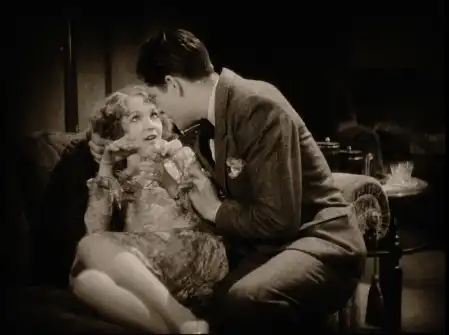
The 'descent' into darkness starts with things that feel pretty tame now—mostly just a lot of people sitting around in small rooms holding cigarettes like they’re trying to figure out which end to light. The makeup on the 'bad' girls is laid on so thick they look like they’ve been in a coal mine. It’s that classic silent movie shorthand: dark eyeliner equals a lost soul.
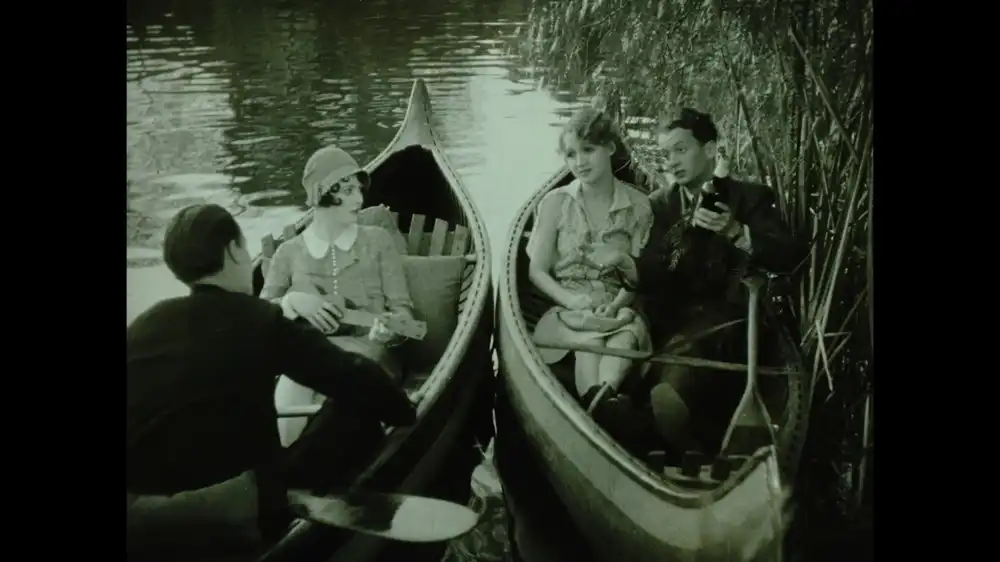
The strip poker scene is the centerpiece, and it’s about as awkward as you’d expect. The editing is choppy here. You can tell the filmmakers wanted to show enough to get people into the theater—this was an exploitation film, after all—but they had to keep it 'moral' enough to avoid the censors. The result is a lot of shots of people looking nervously at each other and then suddenly someone is in their slip. There’s one guy in the background of the party who just stares at the camera for a second too long, and it completely breaks the illusion that this is a wild NYC party. It feels like a bunch of extras who are worried they won’t get paid.
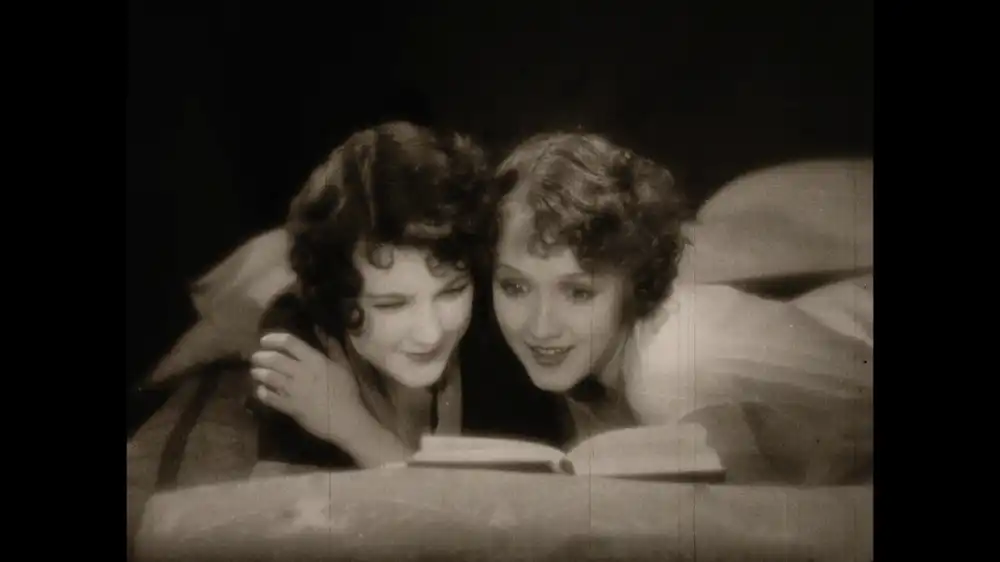
I kept thinking about A Soul for Sale while watching this, mostly because both films treat the 'fall' of a young woman with this weird mixture of pity and 'I told you so.' But The Road to Ruin is much more aggressive about its message.
The pacing is all over the place. We spend way too much time watching people walk in and out of doors, and then suddenly, Sally is pregnant and her life is over in the span of about two minutes. The movie just decides it's time for the tragedy to start, so it hits the gas. There’s no real flow to it; it’s just a series of 'bad things' that happen because the script says they have to.
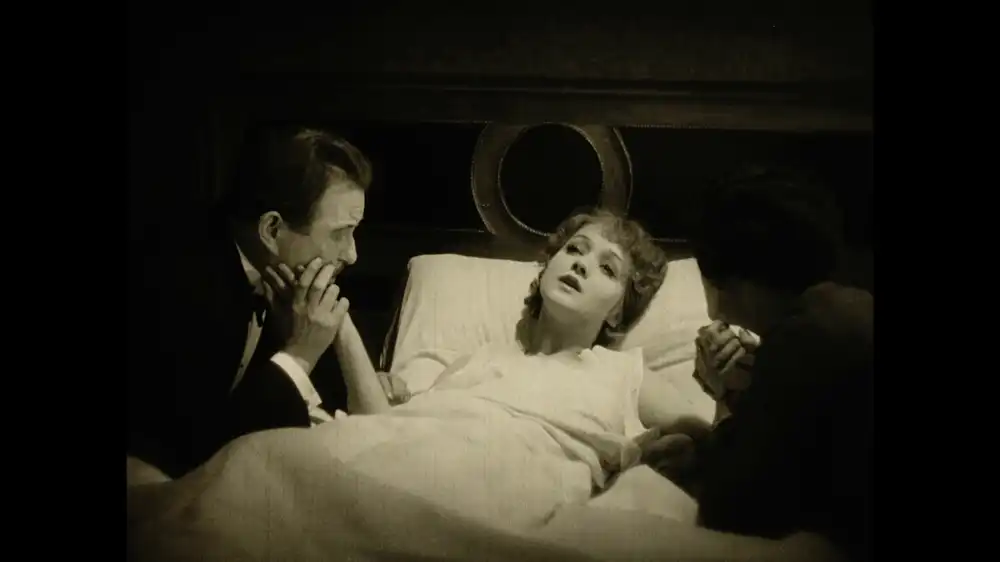
And then there’s the ending. It is easily the most literal thing I’ve seen in a silent film. Sally is lying in bed, and the words 'The Wages of Sin Is Death' literally appear in fire over her. It’s not a metaphor. It’s just right there. It’s so over-the-top that it stops being dramatic and becomes genuinely funny. It reminded me a bit of the heavy-handedness in Prohibition, where the movie just stops being a story and starts being a lecture.
The men Sally hangs out with are all terrible, obviously. They all have these thin little mustaches and look like they’re about forty-five years old, which makes the whole thing even more uncomfortable to watch. There’s no chemistry between Sally and any of them; they just kind of loom over her while she looks distressed. Grant Withers is in this, and he’s fine, but nobody is really given room to act. They’re just archetypes: The Victim, The Cad, The Neglectful Mother.
One small thing I noticed: the costumes for the 'good' girls are so much more restrictive-looking than the 'bad' girls. It’s like the movie is saying that being a moral person means you have to wear a collar that goes up to your chin. It’s a tiny visual detail, but it makes the 'ruin' look a lot more comfortable than the 'virtue.'
Is it a good movie? No. Is it an interesting one? Yeah, in a 'look at this weird time capsule' kind of way. It’s a movie that is terrified of the 20s while it’s living in them. It’s the cinematic equivalent of a loud sigh from someone who thinks the world ended when people started dancing the Charleston.
IMDb 7.1
1929
Community
Log in to comment.