DbcultAccessing Vault...
Cult Review
Senior Film Conservator
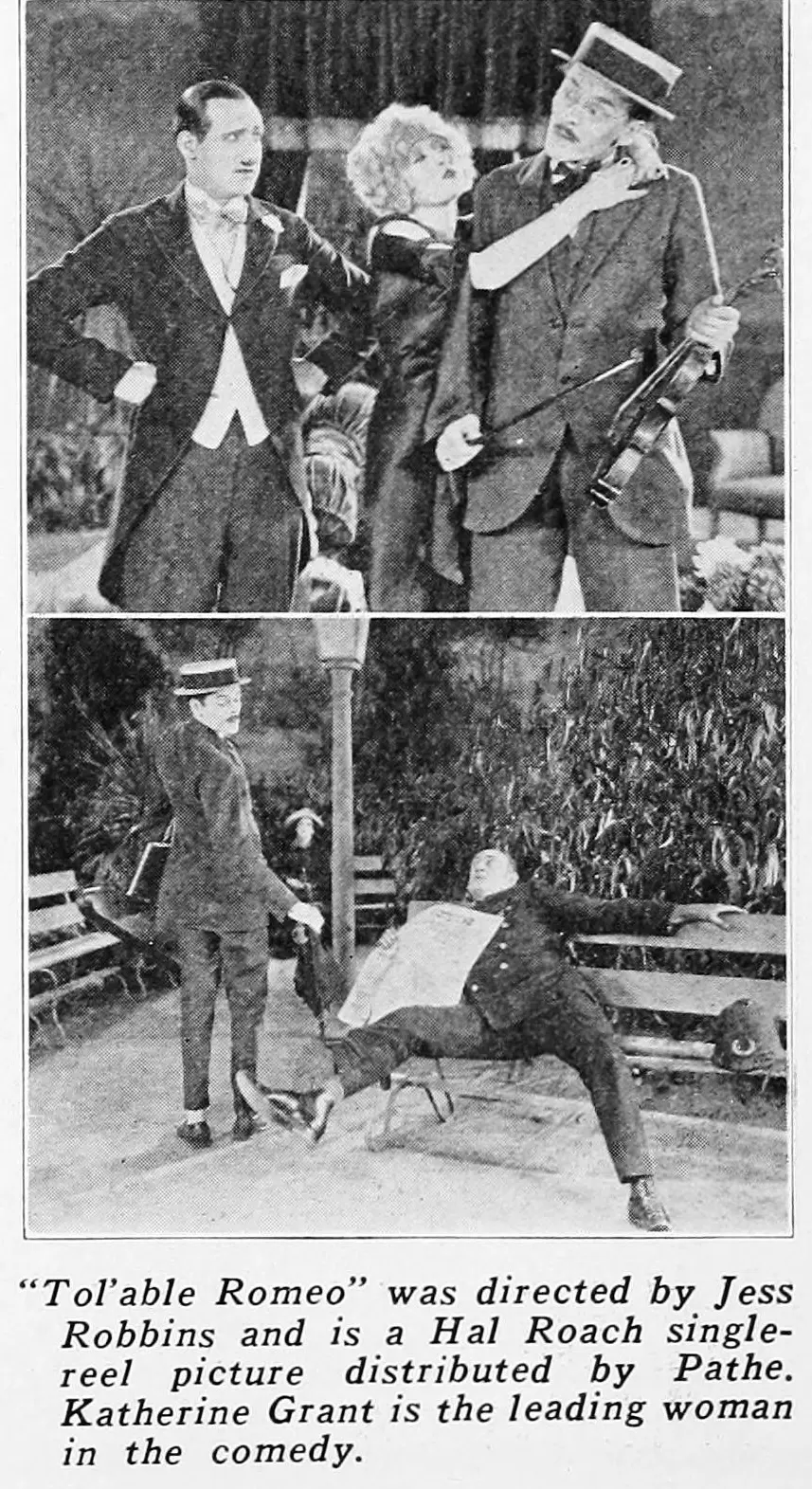
Short answer: Yes, but only for those who find joy in the dusty, frantic energy of the silent era. This film is for history buffs who want to see the bard stripped of his prestige, but it is NOT for anyone seeking a genuine emotional connection to the characters of Verona.
This film works because it treats the most famous love story in history as a playground for low-stakes physical comedy rather than a sacred text.
This film fails because the second half loses its narrative momentum, relying on repetitive sight gags that feel dated even by the standards of 1922.
You should watch it if you are a fan of the Hal Roach style of comedy or want to see a rare example of early 20th-century literary subversion.
In 1922, the film industry was still grappling with its identity. On one hand, you had sweeping dramas like Reputation that aimed for prestige. On the other, you had shorts like Tol'able Romeo that existed purely to poke a finger in the eye of the establishment. This film doesn't just adapt Shakespeare; it mocks the very idea of adapting Shakespeare.
The 'mirth' promised in the plot summary is delivered through a series of increasingly absurd variations on the play's key scenes. Take the balcony scene, for instance. In a standard production, it is a moment of whispered longing. Here, it is a masterclass in architectural failure. The ladder Romeo uses is flimsy, the window is too small, and the romantic gestures are replaced by exaggerated facial contortions that would make a mime blush.
It works. But it’s flawed. The comedy is rooted in the physical, and while Frank Butler handles the leading role with a certain elastic charm, the film occasionally forgets that even a parody needs a heartbeat. It’s a relic, not a revelation. Yet, there is something inherently satisfying about seeing the Montague-Capulet feud reduced to a series of pratfalls and missed cues.
The cast, led by Frank Butler and Katherine Grant, understands the assignment perfectly. In silent comedy, the body is the primary tool of communication. Butler’s Romeo is not a tragic hero; he is a bumbling opportunist. His timing during the duel scenes—which are less about swordplay and more about avoiding injury—shows a high level of coordination that was the hallmark of the era’s best performers.
William Gillespie and Sammy Brooks provide the necessary support, filling the frame with the kind of chaotic energy found in other contemporary works like Amor e Boemia. There is a specific moment where the feud boils over into a street brawl that feels less like a fight and more like a choreographed dance of errors. This is where the film finds its stride, leaning into the absurdity of the conflict.
However, Katherine Grant’s Juliet feels somewhat sidelined. While she has moments of comedic brilliance, the script focuses heavily on the male-driven slapstick. This is a common trope of the time, seen in films like The Rough Lover, where the female lead often serves as the straight-person to the male lead's antics. It’s a missed opportunity to see a more balanced comedic dynamic.
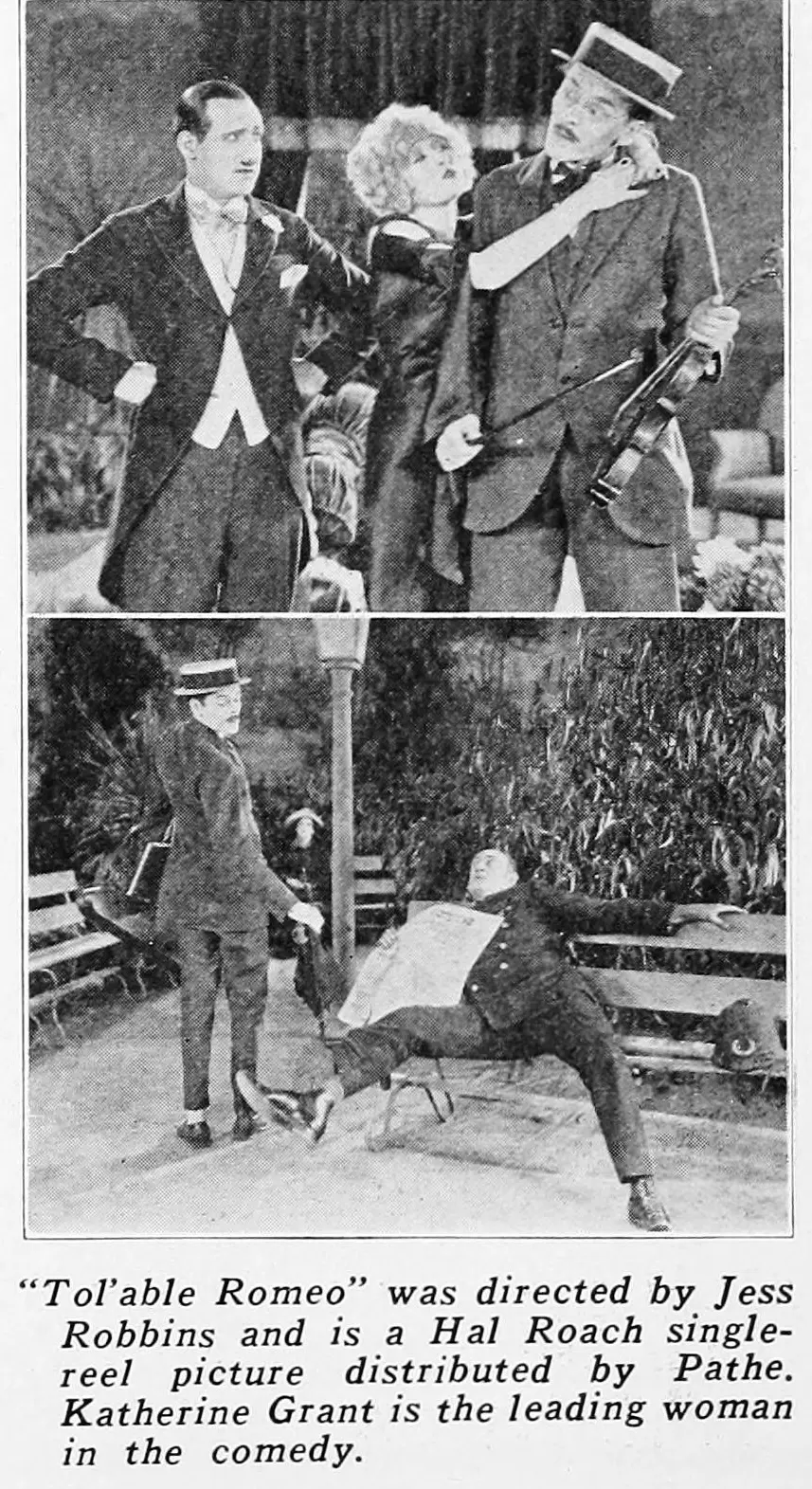
Technically, Tol'able Romeo is a product of its time. The cinematography is largely static, with the camera acting as a front-row observer to a stage play. This lack of dynamic movement can make the film feel stagnant to modern eyes. However, the use of intertitles is surprisingly clever, often using puns and wordplay to bridge the gap between the 'high art' of Shakespeare and the 'low art' of the comedy short.
The sets are clearly low-budget, which actually adds to the film's charm. It feels like a troupe of actors decided to put on a play in a backyard and things went horribly wrong. This DIY aesthetic contrasts sharply with the more polished productions of the time, such as Tess of the D'Urbervilles, which took its source material with a deadly seriousness.
The lighting is flat, which is typical for 1922 shorts, but it serves the purpose of ensuring every gag is visible. In a film where a character’s expression is the punchline, shadows are the enemy. The pacing, while generally brisk, does suffer in the middle act. There is a sequence involving a mistaken identity that goes on for several minutes too long, losing the sharp edge that the opening established.
Tol'able Romeo is worth watching if you have an interest in the evolution of film comedy. It is a functional silent short that succeeds as a historical artifact. It does not reinvent the genre, nor does it offer the sophisticated wit of later silent masters like Keaton or Chaplin. Most viewers will find it mildly amusing rather than hilarious, but its brevity ensures it never becomes a chore to sit through.
"The film’s greatest strength is its refusal to respect the source material. By turning Romeo into a clown, it highlights the inherent melodrama of the original play in a way that feels surprisingly modern."
Pros:
Cons:
To understand Tol'able Romeo, one must look at what else was happening in 1922. This was the year of Eye for Eye and The Blue Moon, films that were trying to push the boundaries of visual storytelling. In contrast, this short feels like a throwback to the nickelodeon era. It isn't trying to be art; it's trying to be a distraction.
Comparing it to other literary adaptations of the time, like A Bit of Jade, you can see how the industry was split between high-society dramas and the rowdy comedies of the masses. Tol'able Romeo firmly belongs to the latter. It is a populist take on a story that was, at the time, often reserved for the elite theater-going public.
There is a debatable opinion here: Shakespeare is actually better suited for silent slapstick than for talking dramas. Without the dialogue to carry the weight, the inherent absurdity of two teenagers killing themselves over a weekend of bad communication becomes the central focus. The silent medium forces the story to be about action, and in Tol'able Romeo, that action is purely ridiculous.
Tol'able Romeo isn't a lost masterpiece, but it is a charming piece of cinematic history. It captures a moment when Hollywood was beginning to realize that nothing—not even Shakespeare—was off-limits for a laugh. The performances are spirited, the gags are classic, and the runtime is merciful. If you go in expecting a deep critique of the human condition, you will be disappointed. If you go in expecting a man to fall off a ladder while trying to woo a woman in a wig, you’ll have a great time.
IMDb 7
1934
Community
Log in to comment.