DbcultAccessing Vault...
Cult Review
Senior Film Conservator
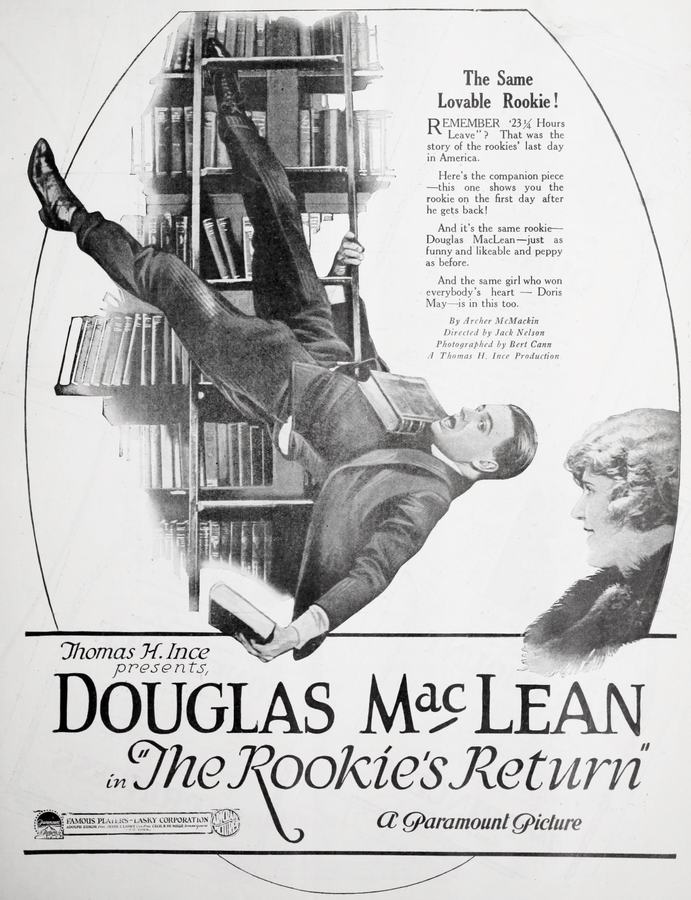
The annals of silent cinema are replete with narratives that, despite their antiquated presentation, resonate with an astonishing contemporaneity. Archer MacMackin’s ‘The Rookie’s Return’ stands as a testament to this enduring power, a cinematic artifact that, while steeped in the sensibilities of its era, offers a profoundly relevant commentary on the human condition. Released at a time when the world was grappling with the aftermath of profound global upheaval, this film delves into the often-overlooked psychological and societal repercussions faced by those returning from conflict, only to find the battle for survival far from over on home soil.
MacMackin, with a nuanced hand, orchestrates a narrative that transcends mere melodrama, elevating it to a poignant character study. The protagonist, a young soldier whose name we discover to be Jim, portrayed with earnest vulnerability by Douglas MacLean, is thrust back into a world that seems to have forgotten his sacrifices. His discharge, rather than a gateway to peace, becomes an entry point into a labyrinth of economic hardship and social alienation. The initial sequences paint a stark picture of destitution, a man adrift in a sea of indifferent faces, his military training rendered obsolete in the cutthroat civilian marketplace. This portrayal of post-service struggle finds a somber echo in films like The Common Cause, which similarly grappled with the societal fabric in wartime and its immediate aftermath, though ‘The Rookie’s Return’ zeroes in on the individual's desperate fight for livelihood.
The narrative’s pivotal turning point arrives with the unexpected inheritance of a substantial fortune. This twist, a classic silent film trope, is handled here with a degree of psychological realism that elevates it beyond simple plot device. Jim’s initial relief is palpable, a fleeting moment of respite from the relentless grind. Yet, MacMackin masterfully subverts the conventional rags-to-riches fairy tale. This sudden influx of wealth, far from being a panacea, acts as a catalyst for a new, more insidious set of challenges. It introduces him to a world of avarice and superficiality, where genuine connections are overshadowed by opportunistic machinations. This exploration of the corrupting influence of unearned wealth draws parallels with the moral quandaries depicted in The Spendthrift, though Jim’s predicament is less about personal profligacy and more about navigating the treacherous waters of newfound societal status.
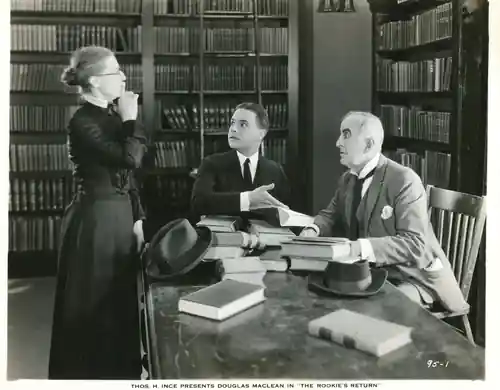
The film excels in illustrating how prosperity can paradoxically breed isolation. Jim, once struggling in anonymity, now finds himself a target, surrounded by sycophants and schemers. The screenplay, penned by Archer MacMackin himself, demonstrates a keen understanding of human nature, particularly the way material possessions can distort perceptions and relationships. His journey from an earnest, if naive, soldier to a man burdened by his own fortune is heartbreakingly rendered, a testament to MacLean’s understated yet powerful performance.
The supporting cast forms an integral part of this intricate tapestry. Wallace Beery, known for his commanding presence, likely brings a formidable, perhaps even menacing, energy to his role, which in films of this era often involved antagonists or characters with complex moral compasses. His ability to convey menace or authority without uttering a single word would have been crucial in shaping the film’s dramatic tension. Doris May, often cast in roles embodying innocence or romantic interest, would have provided a vital counterpoint to the moral decay Jim encounters, perhaps representing a beacon of genuine affection or integrity amidst the superficiality.
Kathleen Key and Kathleen Kay, alongside Aggie Herring and Elinor Hancock, undoubtedly contribute to the tapestry of characters surrounding Jim, each playing a part in either exploiting his newfound wealth or offering him solace. William Courtright and Leo White, often celebrated for their comedic timing or character roles, would have added layers of texture, perhaps as comedic relief or as figures highlighting the eccentricities of the wealthy class. Frank Clark and Frank Currier, seasoned performers, would have lent their gravitas to the proceedings, grounding the more melodramatic elements in believable human interactions. The collective strength of this ensemble ensures that Jim’s journey is not a solitary one, but rather a reflection of the societal forces at play.
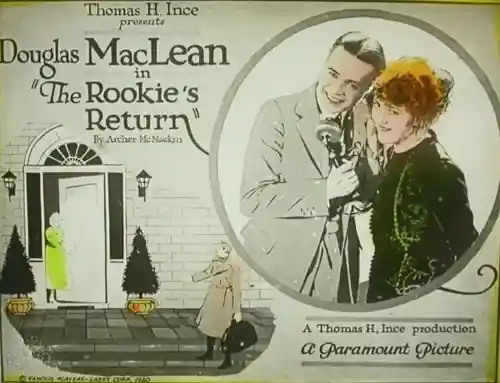
One of the film’s most compelling themes is the struggle for identity post-service. Jim’s military experience, while defining, doesn’t equip him for the nuances of civilian life, especially not for the complexities of managing sudden wealth. He is a 'rookie' not just in the military sense but in navigating the treacherous terrain of high society and financial responsibility. This theme of a character grappling with a new, unfamiliar world, and the inherent dangers it presents, can be glimpsed in the adventurous spirit of The Adventures of a Madcap, though ‘The Rookie’s Return’ grounds its adventure in a more existential, rather than purely physical, struggle.
The film subtly questions whether true happiness lies in material accumulation or in the simpler virtues that Jim perhaps left behind. His journey becomes a quest not for more money, but for a semblance of peace and authenticity that his wealth seems to deny him. This moral quandary, the choice between superficial prosperity and genuine contentment, mirrors the ethical dilemmas explored in The Desire of the Moth, where characters are often forced to confront the true cost of their desires.
MacMackin's directorial approach is characterized by a clear, unpretentious storytelling style, which allows the emotional core of the narrative to shine through. The pacing, crucial in silent films, is expertly handled, building tension and sympathy for Jim without resorting to excessive histrionics. The use of intertitles is judicious, serving to advance the plot and reveal character motivations rather than merely explain action. Cinematographically, the film employs techniques common to its era, yet with an eye for framing that emphasizes the protagonist’s isolation or his entanglement in social webs. The visual language speaks volumes, conveying emotions and relationships through gesture, expression, and spatial dynamics.
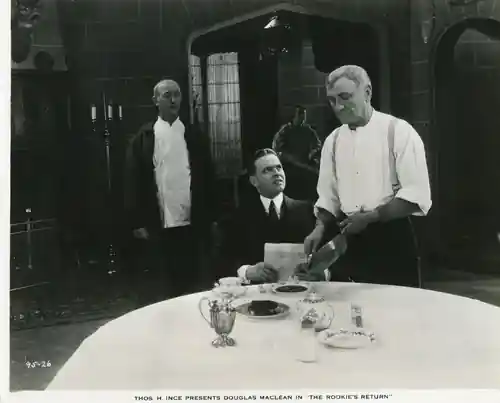
The narrative’s progression from initial hardship to unexpected fortune, and then to the unforeseen tribulations that accompany it, is a masterclass in dramatic irony. It forces the audience to confront the uncomfortable truth that sometimes, the solutions to our problems can become the source of new ones. This complex interplay of fate and consequence is a hallmark of compelling drama, and ‘The Rookie’s Return’ navigates it with admirable skill.
Beyond the individual's plight, the film offers a piercing commentary on societal values. It subtly critiques a world that celebrates wealth above all else, often at the expense of integrity and genuine human connection. The figures who gravitate towards Jim post-inheritance are caricatures of greed, highlighting the superficiality that money can foster. This social critique, while perhaps less overt than in films like The Land of Promise, which directly addressed social stratifications, is nonetheless powerful in its portrayal of individual moral compromise.
The challenges Jim faces in managing his inheritance—the legal entanglements, the constant demands, the difficulty in discerning true friends from opportunists—are depicted with a realism that transcends the silent film era. It’s a timeless exploration of the burdens of wealth, a theme that continues to resonate in contemporary society. The film implies that true freedom isn't found in financial abundance but in moral fortitude and self-awareness, lessons that are often learned through adversity rather than prosperity.
While distinct in its focus, ‘The Rookie’s Return’ can be appreciated within the broader context of silent cinema’s diverse offerings. Its dramatic intensity and exploration of moral dilemmas might invite comparisons to the stark choices presented in Love or Justice, where characters are often trapped between conflicting ideals. Similarly, the underlying theme of a character striving to make sense of a confusing, often hostile, world can be found in the more action-oriented The Hazards of Helen, though the dangers Jim faces are largely social and psychological rather than physical. Even the darker undertones of human nature, albeit presented in a different aesthetic, might draw a distant parallel to the expressionistic anxieties of Nachtgestalten, illustrating the universal concerns of the human psyche across different cinematic traditions.
The film’s portrayal of a protagonist attempting to rebuild his life after a significant life event also aligns with narratives like The Convict Hero, where redemption and the struggle for acceptance form the central thrust. Here, Jim is not seeking redemption for a past crime, but rather a reintegration into a society that doesn't quite know how to accommodate his new status or his past experiences. This nuanced approach to character development is one of the film’s quiet strengths.
In conclusion, Archer MacMackin’s ‘The Rookie’s Return’ is far more than a historical curiosity; it is a profound and engaging piece of cinema that offers a timeless reflection on the human experience. It masterfully dissects the seductive yet often destructive nature of wealth, the arduous journey of post-war reintegration, and the perennial search for authentic identity. The film’s strength lies in its ability to tell a deeply personal story against a backdrop of universal themes, making it as relevant today as it was upon its initial release. Douglas MacLean’s compelling performance, supported by a talented ensemble and MacMackin’s astute direction, ensures that Jim’s struggles and triumphs resonate long after the final frame. It serves as a potent reminder that true riches often lie beyond the material, in the resilience of the human spirit and the integrity of one’s character.
IMDb —
1918
Community
Log in to comment.