DbcultAccessing Vault...
Cult Review
Senior Film Conservator
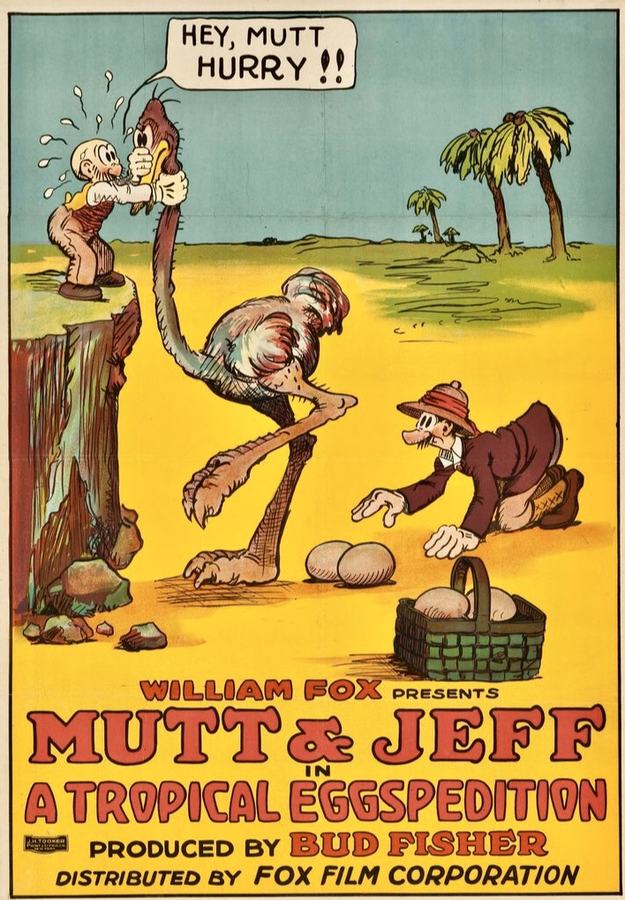
Stepping back into the nascent days of cinematic artistry, one encounters a peculiar charm, an earnest enthusiasm for experimentation that often feels refreshingly unburdened by the conventions that would later ossify into industry standards. Bud Fisher’s A Tropical Eggs-pedition, a delightful animated short, stands as a vibrant testament to this pioneering spirit. It’s a film that, despite its apparent simplicity, offers a rich tapestry of early animation techniques, character-driven humor, and an imaginative scope that belies its brief runtime. To truly appreciate its genius, one must contextualize it within an era where the very concept of moving drawings was still a novel, almost magical, endeavor.
Fisher, a name synonymous with the early comic strip phenomenon Mutt and Jeff, brought a distinct sensibility to the animated screen. His characters, often archetypal figures of bumbling ambition and bewildered resignation, translate seamlessly into the kinetic medium. In A Tropical Eggs-pedition, we are introduced to Professor Phileas Fowl and Barnaby Beak, a duo whose names alone hint at the avian absurdity awaiting us. Fowl, with his perpetually furrowed brow and an unshakeable belief in the grand, the mythical, and the utterly impractical, embodies the adventurous spirit of the age – a spirit often lampooned in popular culture but nonetheless driving genuine exploration and discovery. Beak, his long-suffering assistant, serves as the audience surrogate, a silent, expressive counterpoint to Fowl’s manic energy, often reacting with a beautifully animated shrug or a wide-eyed stare of disbelief that communicates volumes more than any intertitle card ever could.
The premise itself is a stroke of whimsical genius: a quest for the Ornitho-Titan Egg on the fabled Isle de Yolk. This isn't merely a treasure hunt; it's a delightful send-up of the exotic adventure narratives popular in both literature and early cinema. While films like The Silver King or Stranded might have offered dramatic tales of peril and redemption in far-flung locales, Fisher subverts the gravitas, transforming the tropical setting into a playground for animated mischief. The Isle de Yolk is not just a backdrop; it's a character in itself, animated with a vibrant, almost sentient life. Trees sway with exaggerated theatricality, flowers unfurl with an almost mischievous glee, and the very ground beneath their feet, in the form of bubbling quicksand, seems to conspire against our heroes.
The animation style, characteristic of Fisher's work, is fluid yet deliberately simplistic, allowing for maximum expressiveness with minimal lines. This economy of design is a hallmark of early cartooning, where the speed of drawing directly impacted production. Yet, within these constraints, Fisher achieves remarkable feats. The monkeys, in particular, are animated with a chaotic energy that perfectly encapsulates their role as mischievous antagonists. They don’t just steal; they orchestrate elaborate pranks, demonstrating a surprising degree of cunning that challenges the explorers at every turn. This anthropomorphic portrayal of nature adds another layer to the film’s charm, blurring the lines between the natural world and the fantastical realm of animation.
The humor in A Tropical Eggs-pedition is quintessential silent-era slapstick, but elevated by the unique possibilities of animation. Unlike the physical comedy of live-action performers in films like Wild Oats, where falls and tumbles are grounded in reality, Fisher’s characters can stretch, squash, and defy gravity with impunity. A fall into quicksand becomes an elastic struggle, a tree branch can bend impossibly to catapult a character, and the very laws of physics are cheerfully ignored for the sake of a good gag. This freedom allows for a surrealism that live-action cinema of the time, even with its nascent special effects, could only dream of. The film's gags are not merely isolated incidents but build upon one another, creating a cumulative effect of escalating hilarity. The rival egg-collector, for instance, isn't a menacing villain but a recurring source of comedic frustration, his nefarious plans invariably backfiring in spectacularly undignified ways.
The absence of dialogue, a characteristic of silent cinema, forces a reliance on visual storytelling and exaggerated character expressions. Fisher excels here, conveying fear, surprise, determination, and exasperation through simple yet effective facial animations and body language. Beak's reactions, in particular, are a masterclass in non-verbal communication, often mirroring the audience's own incredulity at Fowl's unwavering optimism in the face of impending doom. This universal language of visual comedy ensures the film's enduring appeal, transcending linguistic barriers and offering a timeless form of entertainment.
To truly grasp the significance of A Tropical Eggs-pedition, one must place it within the broader context of Bud Fisher's prolific output and the early history of animation. His work, including shorts that might be considered A Fisherless Cartoon (though perhaps an apocryphal title, it speaks to his distinct style), laid crucial groundwork for the medium. While contemporaries were exploring dramatic narratives in live-action, such as the social commentary found in Nine-Tenths of the Law or the intricate character studies of Therese, Fisher was pushing the boundaries of what could be achieved with simple drawings. He understood that animation's true power lay not in replicating reality but in distorting it, exaggerating it, and creating entirely new realities.
The film’s climax, where the Ornitho-Titan Egg finally hatches, is a moment of pure, unadulterated delight. The creature that emerges is not a fearsome beast or a wish-granting genie, but something utterly unexpected and charmingly absurd. This subversion of expectation is a comedic masterstroke, a narrative payoff that solidifies the film’s commitment to whimsicality over grandeur. It’s a gentle reminder that sometimes, the greatest treasures are not what we seek, but what we stumble upon, often in the most improbable of circumstances. This lighthearted resolution stands in stark contrast to the often somber or dramatic endings of many live-action films of the era, such as the poignant conclusion of Madame Butterfly or the moralistic lessons of The House Built Upon Sand.
Technically, A Tropical Eggs-pedition showcases the burgeoning sophistication of animated filmmaking. While it predates the multiplane camera and synchronized sound, the fluidity of movement, the effective use of squash and stretch, and the inventive background designs speak to a growing mastery of the craft. Fisher's animators, working with limited resources and nascent techniques, managed to imbue their drawings with genuine personality and kinetic energy. The use of repeating cycles for character walks and background elements, while a practical necessity, also lends a hypnotic, almost dreamlike quality to the film, enhancing its fantastical atmosphere.
Comparing it to the ambitious serials of the time, like Homunculus, 4. Teil - Die Rache des Homunculus, which relied on complex narratives and dramatic cliffhangers, A Tropical Eggs-pedition offers a refreshing counterpoint. It proves that compelling cinema doesn't always require intricate plots or grand dramatic stakes; sometimes, pure, unadulterated fun and visual invention are enough. It's a reminder that the early days of film were a melting pot of ideas, where everything from actualities like The Joe Gans-Battling Nelson Fight to social dramas such as A Corner in Cotton coexisted with the emerging art of animation, each carving out its own niche.
The film’s legacy lies not just in its entertainment value but in its contribution to the evolving language of animation. It demonstrated that cartoons could sustain a narrative, develop endearing characters, and deliver consistent humor without relying on live-action tropes. It paved the way for future generations of animators, showing the boundless potential of the medium to craft worlds limited only by imagination. While we might analyze the social commentary in The Fettered Woman or the romantic escapism of A Venetian Night, A Tropical Eggs-pedition offers a different kind of escapism: one into the joyful, anarchic world of pure cartooning. It’s a film that, even a century later, retains its power to charm, amuse, and remind us of the simple pleasures of a well-told, beautifully animated story.
Ultimately, A Tropical Eggs-pedition is more than just a historical artifact; it's a vibrant piece of cinematic art that continues to resonate. Its unpretentious storytelling, coupled with Fisher's distinctive visual flair, creates an experience that is both historically significant and endlessly entertaining. It’s a foundational text for anyone interested in the genesis of animation, showcasing the raw talent and inventive spirit that defined its formative years. The film doesn't preach, doesn't moralize, and doesn't strive for grand dramatic statements like To the Highest Bidder or The End of the Tour. Instead, it offers a refreshing plunge into a world where logic is secondary to laughter, and the pursuit of a mythical egg is a perfectly valid reason for a grand, tropical adventure. This enduring appeal, this ability to transport audiences to a world of whimsical possibility, is arguably its greatest achievement. It reminds us that sometimes, the most profound cinematic experiences come from the simplest, most imaginative strokes of a cartoonist's pen.
IMDb 4.7
1935
Community
Log in to comment.