DbcultAccessing Vault...
Cult Review
Senior Film Conservator
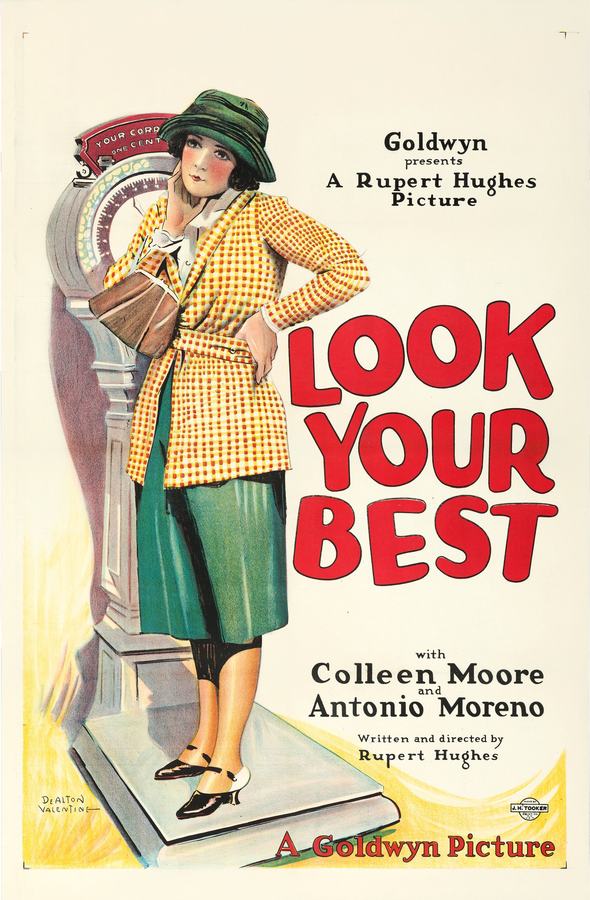
Ah, the silent era. A time when narratives unfurled with a grand, often melodramatic, flourish, relying on expressive physicality and stark intertitles to convey the human condition. Among the myriad forgotten and rediscovered treasures of this period, Rupert Hughes’s screenplay for 'Look Your Best' emerges as a particularly intriguing specimen. Released in 1916, this film isn't merely a quaint historical artifact; it's a surprisingly nuanced, if occasionally peculiar, exploration of ambition, body image, betrayal, and the curious foundations upon which relationships can be built. It offers a window into the nascent entertainment industry's brutal demands and the lengths to which individuals would go to achieve, or maintain, their place in the spotlight.
Our story introduces us to Perla Quaranta, portrayed with a compelling blend of fragility and resolve by Orpha Alba. She is depicted as a "daughter of Little Italy," a phrase that immediately conjures images of immigrant struggles, tight-knit communities, and the grinding poverty that often fueled an unyielding drive for upward mobility. Perla is not merely poor; she is described as "half-starved," a detail that becomes profoundly ironic and central to the film's thematic core. This inherent leanness, a consequence of deprivation, is precisely what makes her a suitable candidate for Carlo Bruni's famed "Butterfly Act." The previous chorus girl, having committed the cardinal sin of the performing arts – growing "too fat" – has been summarily dismissed, leaving a vacancy that Perla's naturally slender physique is perfectly poised to fill. This opening sequence immediately establishes the ruthless, almost predatory, scrutiny of physical form that defined a significant portion of the entertainment world, a pressure that, depressingly, continues to resonate in contemporary society.
Perla's entry into Bruni's act is her first step into a world of dazzling spectacle, but also one fraught with peril and jealousy. She forms an initial, seemingly innocuous, friendship with Krug, the wire-man, a character brought to life by Francis McDonald. Krug, a man whose proximity to the aerial performers gives him a unique, if often overlooked, power, develops an infatuation with Perla. His advances, however, are met with rejection. This is where the film pivots from a simple tale of ambition to a darker exploration of male entitlement and vengeful spite. Wounded by her refusal, Krug decides to exact a cruel retribution. His plan is insidious: he sabotages Perla's wire, hoping that its breakage will be interpreted as a sign of her having gained weight, thus leading to her dismissal, mirroring the fate of her predecessor. It’s a chilling act, revealing the fragile position of performers and the ease with which their careers could be derailed by malicious intent. This particular plot point could be seen as an early cinematic precursor to the psychological thrillers that explore workplace sabotage, albeit with a unique physical twist.
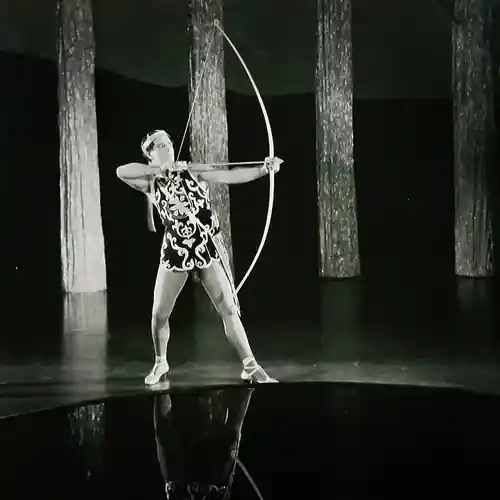
What Krug fails to anticipate, however, is the fiery temperament and protective instinct of Carlo Bruni, portrayed by the charismatic Antonio Moreno. Bruni, an impresario whose artistic vision is matched only by his volatile nature, doesn't fall for Krug's deceit. Instead, he unleashes a brutal thrashing upon the wire-man, an act of passionate, if unlawful, justice that lands Bruni himself in jail for thirty days. This incident is pivotal. It transforms Bruni from a mere employer into a protector, a figure willing to sacrifice his freedom for the integrity of his act and, implicitly, for Perla. It also highlights the stark realities of justice in that era, where personal vengeance could swiftly lead to incarceration, even if the motive was righteous in the eyes of some.
Upon his release, Bruni, far from being defeated, emerges with renewed vigor. He channels his experience and artistic drive into creating a new, even more spectacular dance act, with Perla Quaranta, now a symbol of resilience and talent, as its undisputed star. This post-incarceration triumph is a classic narrative arc, where adversity fuels greater success. The act becomes a resounding hit, cementing Perla's status and Bruni's reputation. But the most intriguing development, and indeed the film's most unique contribution to cinematic romance, is the culmination of their professional partnership into a marital union. They marry, not perhaps in a conventional romantic blaze, but rather in a bond forged in shared experience and an almost conspiratorial understanding. The film explicitly states that they marry, "each encouraging the other in his struggle against food." This is where 'Look Your Best' truly distinguishes itself. It’s a love story predicated not on grand gestures or poetic declarations, but on a mutual, almost ascetic, discipline. This shared "struggle against food" can be interpreted in several ways: as a practical necessity for maintaining their performance physiques, as a symbol of their shared commitment to their art, or even as a peculiar, perhaps unhealthy, foundation for intimacy. It speaks to a deeper understanding of the pressures they face and a mutual resolve to conquer them together.
The cast, though operating within the expressive confines of silent cinema, delivers performances that, through pantomime and subtle (and sometimes not-so-subtle) facial cues, convey a rich tapestry of human emotion. Orpha Alba as Perla Quaranta is central to the film's success. Her journey from a "half-starved" ingenue to a confident star is portrayed with a quiet dignity. She embodies the often-unseen sacrifices made by performers, the constant battle against natural urges in pursuit of an aesthetic ideal. Her rejection of Krug isn't just a plot device; it's a statement of her burgeoning self-worth and her refusal to be defined by anything other than her aspirations. This nuanced portrayal elevates her beyond a mere damsel in distress.
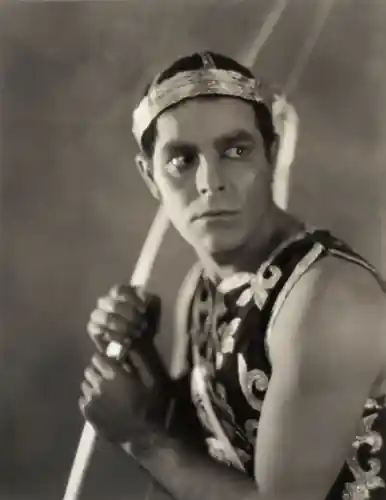
Antonio Moreno, as Carlo Bruni, brings a powerful presence to the screen. His character is a fascinating blend of artistic passion and raw, untamed emotion. The violence he inflicts upon Krug, while legally problematic, is presented within the film's context as an act of justified wrath, a testament to his protective nature and his commitment to his art. His transformation from an angry impresario to a devoted husband, bound by an unusual pact, showcases Moreno’s ability to convey complex emotional shifts without uttering a single word. His partnership with Perla is less about conventional romance and more about a shared destiny, a mutual understanding of the unique demands of their lives.
Francis McDonald's Krug is a wonderfully detestable villain. His motivations—rejected affection leading to malicious sabotage—are tragically human, making him a more compelling antagonist than a purely evil one. He represents the dark undercurrents of jealousy and resentment that can fester in any competitive environment, amplified here by the intimate, almost familial, setting of a performance troupe. The physical comedy or drama of the wire-man's role is often overlooked, but McDonald brings a sinister gravitas to it, making him a memorable, if loathsome, character.
While the primary focus is on these three, the film also features a notable supporting cast. Earl Metcalfe, William Orlamond, Martha Mattox, and the legendary Colleen Moore, even in smaller roles, would have contributed to the film's texture and authenticity. Colleen Moore, who would later become a flapper icon, might have brought a youthful energy or a contrasting character dynamic, even in a brief appearance, hinting at the broader world of performers and the various personalities that populated the early film industry. Their collective presence helps to flesh out the world of the "Butterfly Act," making it feel more vibrant and lived-in.
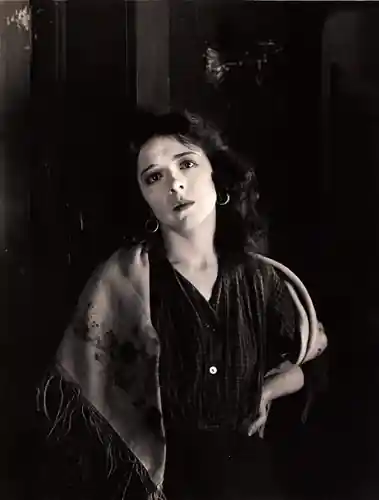
'Look Your Best', penned by Rupert Hughes, delves into themes that remain remarkably pertinent. The most striking is, of course, the relentless pressure of body image within the performing arts. The opening premise – a chorus girl dismissed for gaining weight – is a stark, almost brutal, commentary on societal expectations of female aesthetics, particularly for those in the public eye. Perla’s initial "half-starved" state, an accidental advantage, highlights the arbitrary and often cruel nature of these standards. The film suggests that even when one achieves the 'ideal' physique, maintaining it becomes an arduous, lifelong 'struggle,' a shared burden for Perla and Bruni. This resonates with modern discussions around diet culture, eating disorders, and the unrealistic beauty standards promulgated by media, making the film feel surprisingly prescient.
Another compelling theme is ambition and the sacrifices it demands. Perla's journey from the shadows of Little Italy to the bright lights of the stage is a classic rags-to-riches narrative, yet it’s tinged with the constant threat of failure and betrayal. Her ambition isn't portrayed as purely selfish; it's a means of survival and self-actualization. This drive is a powerful force, capable of inspiring both great loyalty (Bruni's defense) and bitter resentment (Krug's sabotage). The film implicitly asks: what is the true cost of success, and how much of oneself must be sacrificed at the altar of aspiration?
The element of revenge and justice is also central. Krug's act of sabotage is a clear crime, born of personal slight rather than professional rivalry. Bruni's violent response, while legally punishable, is presented as a primal, protective instinct, an immediate restoration of order in a world where formal justice might be too slow or ineffective. This dynamic offers a glimpse into the moral ambiguities often explored in early cinema, where audiences might have sympathized with the avenger despite his lawbreaking. It echoes the vigilante justice seen in other melodramas of the era, where personal honor often superseded legal niceties.
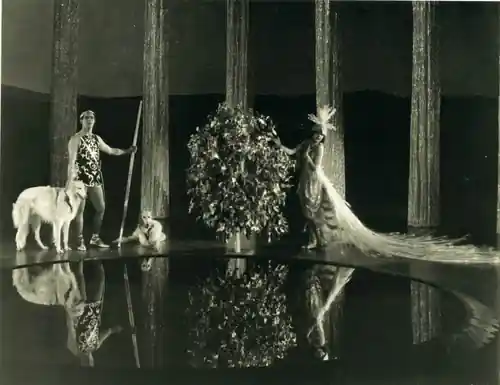
Finally, the unconventional romance between Perla and Bruni is perhaps the film's most unique contribution. Their marriage, founded on a mutual encouragement in their "struggle against food," is a fascinating deviation from typical cinematic love stories. It's a bond of shared discipline, mutual understanding of professional demands, and a tacit agreement to navigate life's challenges, particularly those related to physical maintenance, as a united front. This isn't a passionate, whirlwind romance; it's a partnership built on a shared, almost ascetic, purpose. This particular aspect sets 'Look Your Best' apart, hinting at the diverse forms that intimacy can take, especially within specific professional contexts.
As a product of 1916, 'Look Your Best' stands as a testament to the burgeoning artistry of silent film. Rupert Hughes’s screenplay, while adhering to the narrative conventions of the time, injects a degree of psychological depth and social commentary that elevates it beyond mere spectacle. The visual storytelling, characteristic of the era, would have relied heavily on exaggerated expressions, dramatic staging, and the evocative power of intertitles to convey the story's emotional weight and plot intricacies. The director, though not explicitly named in the provided information, would have orchestrated these elements to create a cohesive and engaging narrative, using the limited technical capabilities of the time to maximum effect.
The film's portrayal of the "Butterfly Act" itself would have been a spectacle, capitalizing on the public's fascination with aerial artistry and the glamour of the stage. The contrast between the gritty reality of Perla's origins in Little Italy and the fantastical world of the performance is a classic cinematic device, highlighting the transformative power of entertainment and the allure of escaping one's circumstances. This narrative arc, where a character rises from obscurity to fame through talent and sheer will, is a timeless one, seen in countless films, but here it's imbued with a particular focus on physical discipline that makes it distinctive.
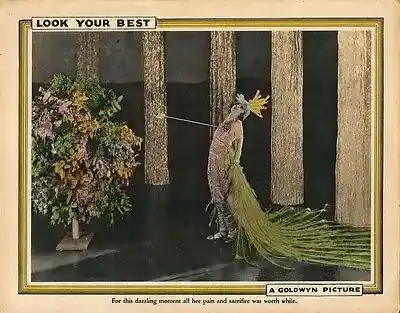
While direct comparisons to other films with precisely the same "struggle against food" theme are difficult to pinpoint, the broader themes of ambition, betrayal, and the harsh realities of show business connect it to a lineage of dramatic narratives. The intense personal rivalry and professional stakes could, in a way, be distantly echoed in the melodramatic tension of a film like Under Suspicion, where characters navigate complex personal relationships fraught with mistrust. The journey of a protagonist from humble beginnings to a new life or status, often facing adversity, is a common thread in early cinema, much like the transformative narrative found in Drifting or even the moral quandaries faced in Confesión trágica, though the specifics of Perla's struggle are unique. The film's commentary on the physical demands of performance, and the societal gaze upon women's bodies, also offers an interesting historical counterpoint to modern narratives that explore similar pressures.
'Look Your Best' is more than just a relic of early cinema; it's a fascinating and surprisingly complex film that tackles themes of ambition, betrayal, body image, and unconventional romance with a distinct voice. Its narrative, while rooted in the melodramatic conventions of its time, offers layers of interpretation, particularly around the central "struggle against food" that defines the protagonists' bond. The performances, especially from Orpha Alba and Antonio Moreno, convey a depth of character that transcends the limitations of silent acting, making their journey compelling.
For silent film enthusiasts and those interested in the evolution of cinematic storytelling, 'Look Your Best' provides a valuable insight into the social anxieties and entertainment values of the early 20th century. It reminds us that even in an era often characterized by simplicity, filmmakers were grappling with sophisticated ideas about human nature, societal pressures, and the peculiar ways in which individuals connect. It's a testament to Rupert Hughes's writing and the cast's dedication that a story so specific in its details can still resonate with universal truths about striving, surviving, and finding connection in the most unexpected of shared battles. This film, with its unique blend of drama, romance, and social commentary, truly encourages us to look beyond the surface and appreciate the enduring power of early cinematic narratives.
IMDb 7.2
1936
Community
Log in to comment.