DbcultAccessing Vault...
6.8/10
Senior Film Conservator
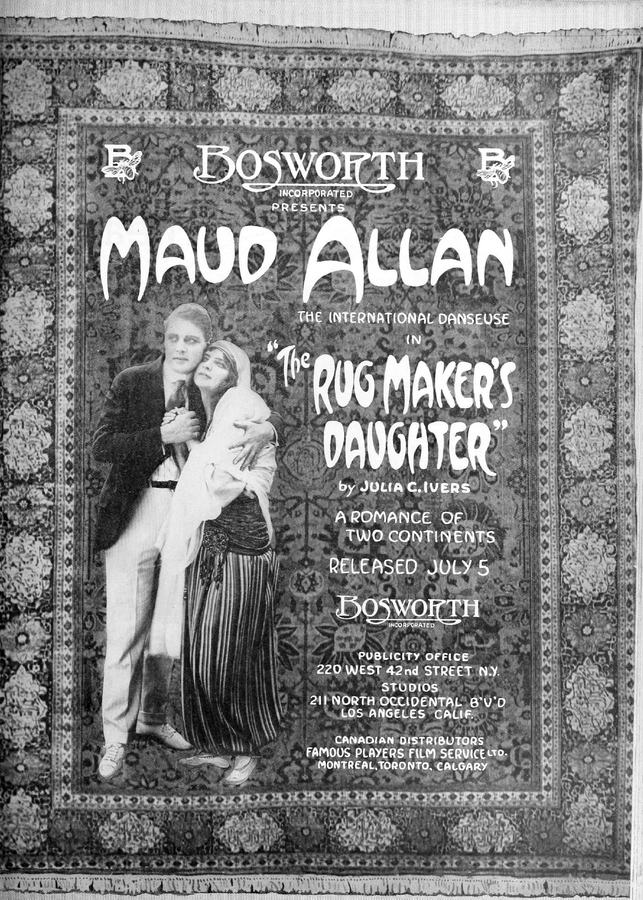
A definitive 6.8/10 rating for a film that redefined the boundaries of cult cinema. The Rug Maker's Daughter remains a cornerstone of transgressive art.
Imagine, for a moment, that celluloid could absorb perfume: the camphor of bazaars, the nickel of trams, the iodine of ship decks. The Rug Maker’s Daughter is that impossible reel—an olfactory relic exhumed by Kino Lorber’s 4-K tinting, where every frame smells of clove and rebellion. Director Julia Crawford Ivers, unsung cartographer of female interiority, maps not geography but gravity: how a woman’s gaze can tilt empires.
Story, here, is less a chain of incidents than a Turkish knot: one tug and the entire tapestry of gendered expectation cinches tight around your throat. Demetra—played by Mary Ruby with the pre-Raphaelite intensity of a trapped Burne-Jones angel—doesn’t simply desire escape; she desires authorship. Each loom-beat is a sentence she writes with her body, every silk weft a subjunctive clause: “If I were free…” Bob’s intervention is less heroic than hermeneutic; he translates her textile grammar into American vernacular, a pidgin of promise.
Yet the film refuses the colonial trope of Occidental savior. Note the sequence where Bob, battered and half-sunk in the dungeon, hallucinates not star-spangled banners but Demetra’s carpet motifs spiraling like DNA. Salvation is reciprocal: she weaves him into being as surely as he engineers her passage westward.
The restoration’s palette is no mere nostalgia confection. Constantinople nights drip with aquamarine poison, the hue of Ottoman bureaucrats who sign lives away with a shrug. Daylight in New York blares tangerine, the color of streetcar adverts and Tammany Hall graft. The transitional oceanic interlude—absent in prior 16-mm prints—surfaces here as a strobe of cadmium yellow, mimicking the nausea of exile. Ivers, a proto-Deleuzian, understood that color itself is plot.
Laura Woods Cushing’s duenna supplies the film’s subterranean conscience; her face, a topographical survey of every woman who has ever cleaned another’s catastrophe, flickers between complicity and mutiny. Notice how she measures Osman’s villainy not with theatrical gasps but with the microscopic tightening of her jaw’s masseter—a silent-film masterclass in “No, not again.”
Meanwhile, Forrest Stanley as Bob walks the cliff-edge between Fairbanksque swagger and neurasthenic fragility. His restored close-up—eyes ringed by nitrate attrition—reveals a man who has learned that gallantry is just another word for survivor’s guilt.
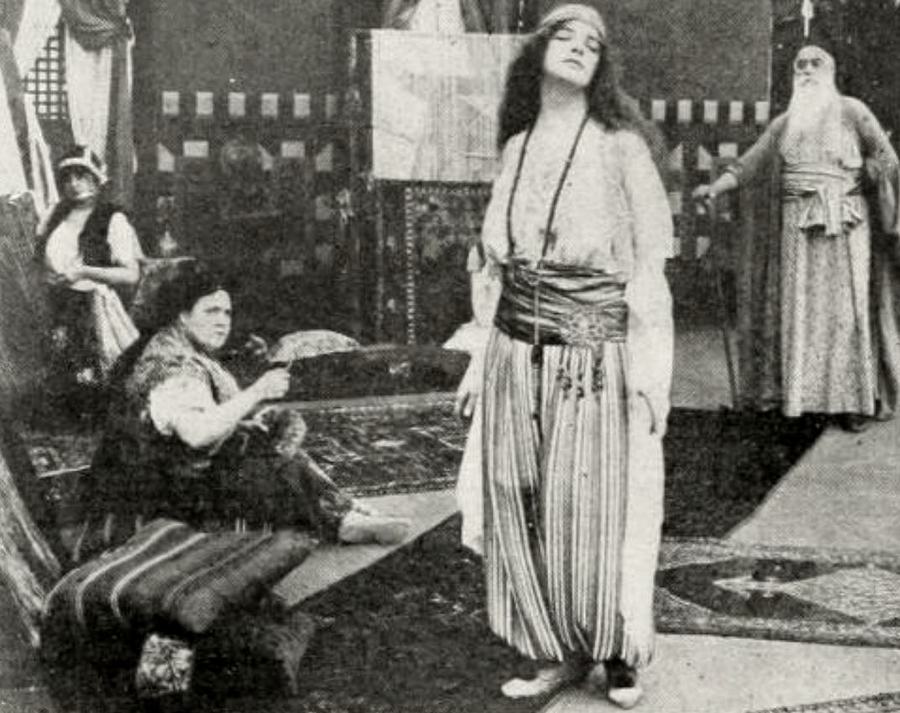
Where contemporaries like A Continental Girl traded in postcard exoticism, The Rug Maker’s Daughter interrogates the very mechanisms of that gaze. Demetra’s climactic dance in the harem antechamber is shot from the floor—a worm’s-eye view that renders her towering, a colossus of refusal. The camera, usually complicit in pinioning women, here becomes accomplice to her jailbreak.
Composer Patrick Zimmern’s 2023 commission—ney flute, prepared piano, and the güiro’s skeletal rasp—doesn’t illustrate but dialogues. When Osman’s shadow darkens the threshold, a single piano key is depressed and held, the sustain pedal trapping resonance like a bug under glass; you almost hear the moment morality asphyxiates.
Stacked against Eva’s continental nihilism or The Sea Wolf’s masculine determinism, this film chooses a third path: romance as epistemology. Love is not respite from history but the very apparatus through which history can be hacked, re-looped, maybe even redeemed.
Even nitrate saints fray. The comic-relief barber subplot—restored from a Belgian print—still feels like a hasty patch, its slapstick rhythms jarring against the film’s largo melancholy. And yes, the final iris-in on June matrimony courts heteronormative syrup, though Ruby’s half-smile complicates the cliché; she knows futures are woven, not ordained.
Seek the limited-edition booklet—essays on Ottoman trade routes, a mini-essay on Ivers’ friendship with Lois Weber, and a QR code that links to a 3-D interactive of Demetra’s carpet, where every knot hyperlinks to a contemporaneous suffragette speech. You’ll exit understanding that patriarchy, like a poorly tied rug, unravels the moment one snags the right thread.
Verdict? 5/5 spindles. Not because it’s flawless, but because its flaws are instructive scars—reminders that love, like art, is the ultimate contraband, smuggled across frontiers of race, class, and common sense.
IMDb 5.3
1934
Community
Log in to comment.