DbcultAccessing Vault...
Cult Review
Senior Film Conservator
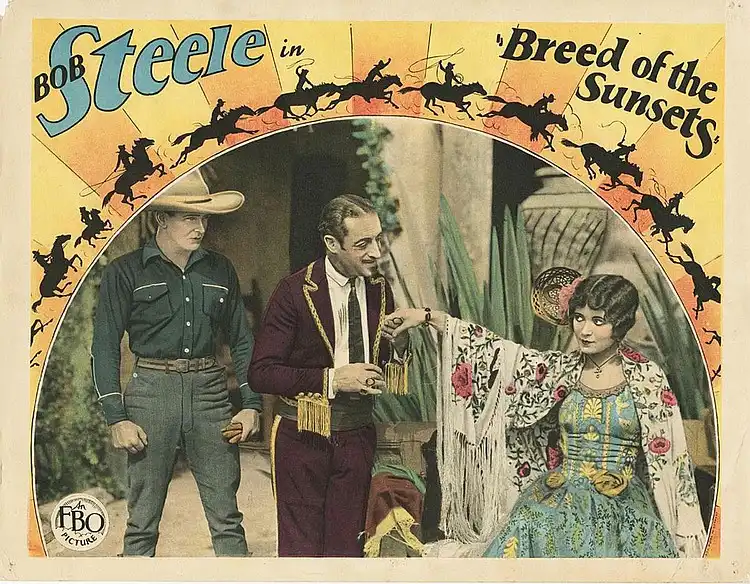
If you’re the type of person who likes watching old silents just to see how much dust a horse can kick up in 1928, Breed of the Sunsets is probably for you. If you want a tight, logical narrative, you might want to skip it. It’s a Bob Steele vehicle, which means you’re here to watch a short, muscular guy with a very intense stare move faster than everyone else on screen. It’s worth a look if you’ve already burned through the bigger titles like The Three Godfathers and you’re looking for something that feels a bit more like a Saturday afternoon artifact.
The first thing that hits you is Bob Steele’s hat. It’s massive. It feels like its own character, casting shadows over his face that the lighting crew clearly didn’t know how to handle. Steele has this specific way of standing—chest out, arms slightly flared—like he’s perpetually waiting for someone to try and punch him. It’s not exactly 'acting' in the modern sense, but he has a presence that makes the other actors look like they’re standing still.
There is a scene early on where Jim (Steele) meets the heroine, played by Nancy Drexel. The chemistry is... polite. They stand about three feet apart, and the intertitles do a lot of the heavy lifting. Drexel has these very wide, expressive eyes that were common for the era, but she spends most of the movie looking slightly worried about the plot. I don't blame her. The transition from 'just met' to 'intense romantic interest' happens in about two minutes of screen time.
The pacing is all over the place. There’s a sequence in the middle involving some cattle and a fence that seems to go on for ten minutes longer than necessary. You can almost feel the director, Leo Maloney, just letting the camera run because they had the film stock and the cows were behaving. It’s a stark contrast to the fight scenes, which are edited with this frantic, almost nervous energy. Some of the cuts are so abrupt you lose track of who is hitting whom. It’s not quite as smooth as something like The Speed Boy, which handled its movement with a bit more grace.
I noticed a weird detail in the background of the ranch house interior. There’s a rug that keeps moving between shots. In one frame it’s centered, and in the next, it’s bunched up against the wall. It’s the kind of thing you only notice because the dialogue scenes (or the silent equivalent) drag enough that your eyes start wandering around the set. The interiors feel very 'staged,' especially compared to the outdoor shots which feel vast and genuinely lonely.
Leo White is in this, and if you recognize him, it’s probably from the Charlie Chaplin shorts. He brings a bit of that vaudeville energy here, which feels totally out of place next to the gritty, dusty ranch drama. It’s a strange tonal shift whenever he’s on screen. One second we’re dealing with land theft and ruined reputations, and the next, there’s a guy doing a double-take that belongs in a slapstick comedy. It doesn't work, but it kept me awake.
The villain, played by George Bunny, is fine, I guess. He does the classic 'foreman who is clearly evil from the first frame' thing. He has a way of leaning against doorways that screams 'I am stealing your money.' There’s no subtlety here. It’s much more direct than the character work in The Phantom Bullet, where you at least have to wonder for a second.
The ending is exactly what you think it is. A lot of riding, a lot of dust, and a final confrontation that feels a bit rushed. Steele does a stunt jumping onto a horse that looks like it actually hurt his ankles, but he plays it off. That’s the real draw of these movies—the sense that these guys were actually out there in the heat, wearing heavy wool and getting kicked by livestock for the sake of a few reels of film.
It’s not a deep movie. It doesn't have much to say about the West or the human condition. It’s just a story about a guy who wants his dad’s ranch back. But there’s a charm in how simple it is, and in the way the sunlight looks on the grainy film during the final chase. It feels real in a way that polished modern Westerns don't, mostly because you can tell the production was probably a bit of a mess.
IMDb 6.2
1923
Community
Log in to comment.