DbcultAccessing Vault...
Cult Review
Senior Film Conservator
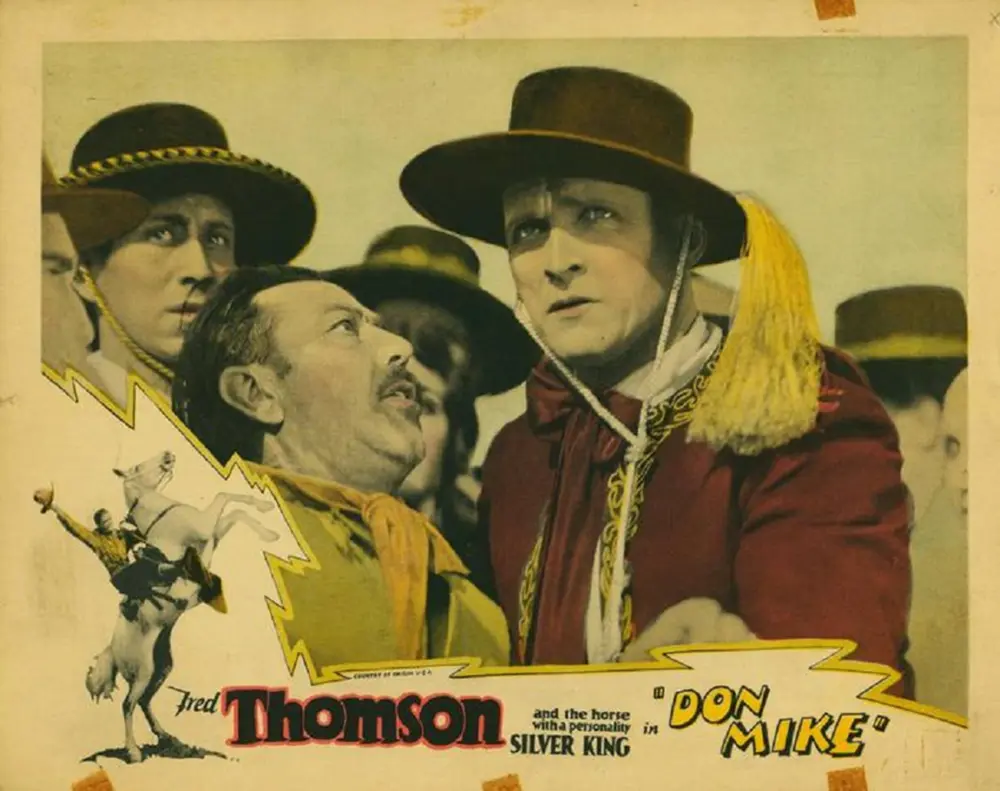
Does Don Mike stand the test of time as a titan of the silent Western era? Short answer: Yes, but only if you value physical bravado over narrative nuance.
This film is specifically for aficionados of the 1920s stunt-heavy Western and those interested in the historical portrayal of 'Californio' culture, but it is certainly not for viewers who demand a fast-paced, modern editing style or a plot devoid of melodrama.
1) This film works because Fred Thomson’s physical charisma and the high-concept 'dagger-rope' climax provide a level of spectacle that few of his contemporaries could match.
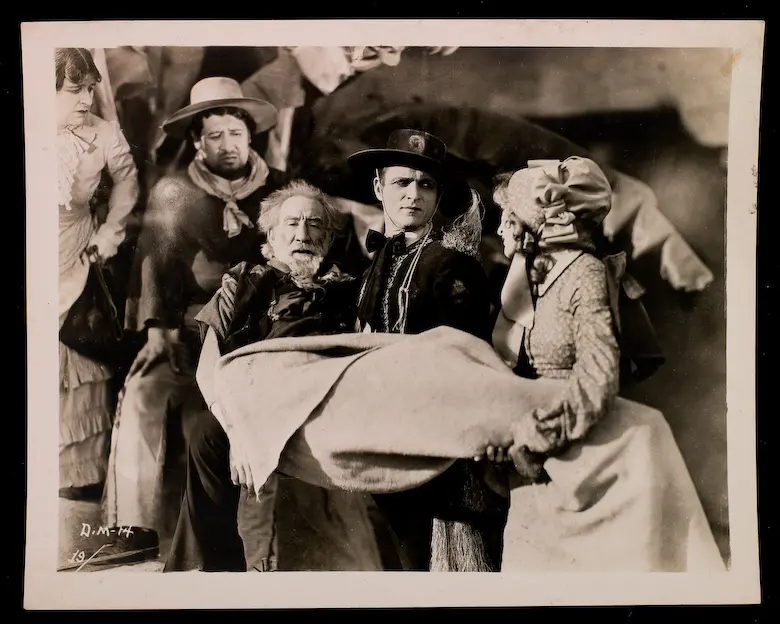
2) This film fails because the middle act gets bogged down in bureaucratic land-dispute logic that drains the momentum established by the opening desert rescue.
3) You should watch it if you want to see the missing link between the swashbuckling of Douglas Fairbanks and the gritty realism of later Westerns like Border Law.
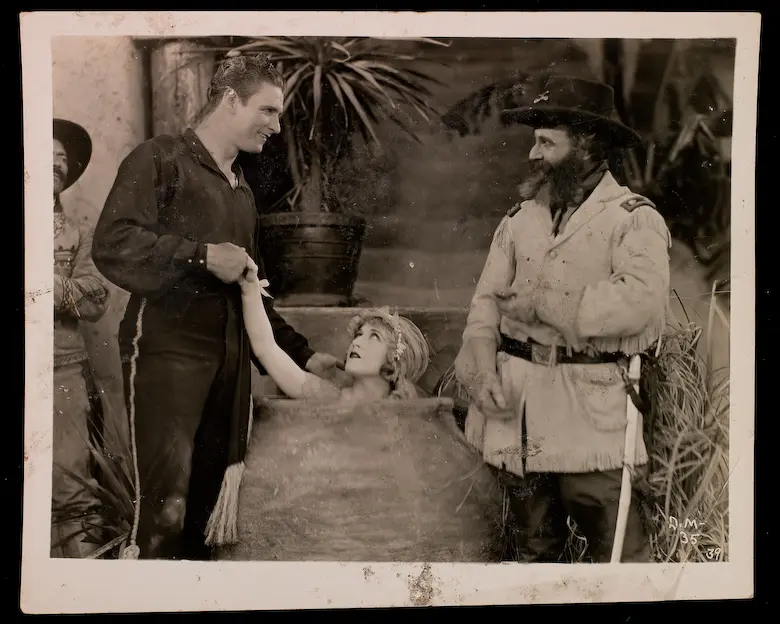
Don Miguel Arguella is not your typical Western protagonist. By making him a Mexican-Irish grandee, the script by Lloyd Ingraham and Frances Marion taps into a unique cultural intersection. This isn't just a man with a gun; he is a man with a lineage. This duality is reflected in his interactions with the settlers. While he offers them life-saving water in a sequence reminiscent of the harsh survivalism found in Sahara, he does so with a regal detachment that immediately sets him apart from the rugged Reuben Pettingill.
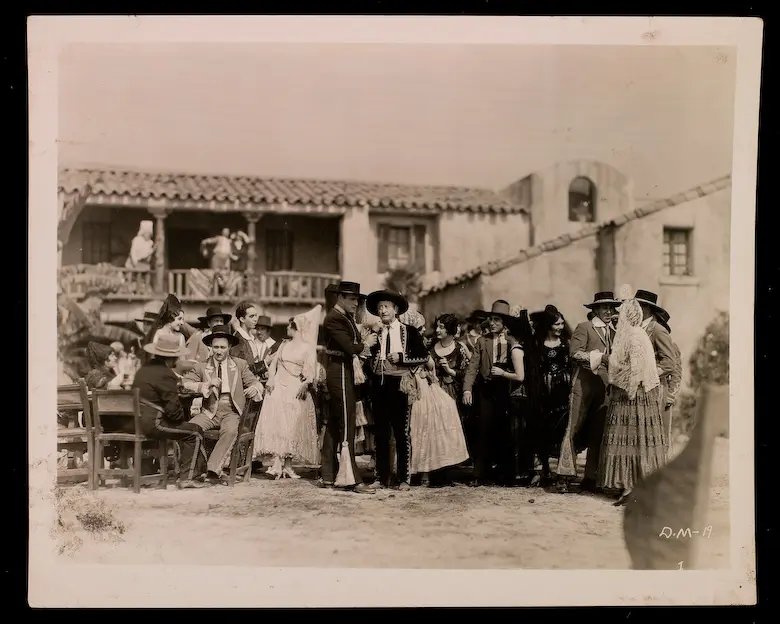
Fred Thomson plays this balance with a surprising amount of restraint. He avoids the caricatured 'Latin lover' tropes of the era, instead leaning into a stoic nobility. One specific moment that stands out is when Mike first meets Mary Kelsey. He doesn't woo her with words—which, being a silent film, would be difficult—but through a series of subtle, protective gestures that contrast sharply with the aggressive posturing of the film's villains. It is a performance rooted in movement, much like Thomson's work in The Rat's Knuckles.
Reuben Pettingill, played with a sneering efficiency by Noah Young, represents a very specific type of early American villain: the man who uses the law as a weapon. The plot point regarding the unrecorded boundaries of the Arguella estate is surprisingly grounded for a 1927 production. It transforms the film from a simple 'good vs. bad' shoot-em-up into a commentary on the shifting tides of power in California. Pettingill isn't just trying to kill Mike; he's trying to erase his existence through paperwork.
This focus on land rights adds a layer of tension that elevates the film above standard fare like Go Easy. However, this is also where the pacing stutters. The scenes involving the alcalde, Don Luis Ybara, and the various legal machinations can feel repetitive. The film spends a significant amount of time on the 'wrongful accusation' trope, a narrative device also explored in Someone Must Pay, but here it feels like a mandatory detour to get us to the final showdown.
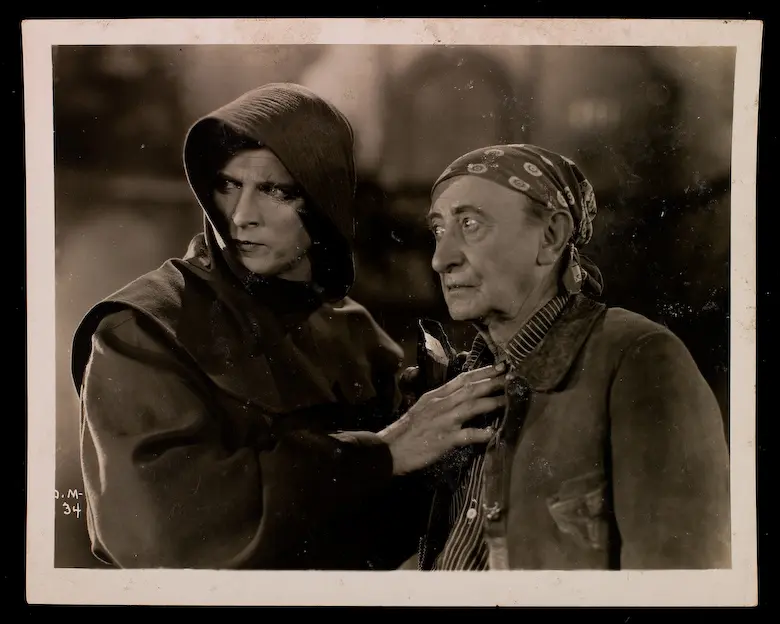
If there is one reason to seek out Don Mike today, it is the final twenty minutes. The decision for Mike to pose as a monk to infiltrate the wedding of Pettingill and Mary is a classic piece of silent film deception. It allows Thomson to play with shadow and costume, creating a sense of impending doom for the villains. But the true 'wow' factor comes when the disguise is shed. The 'dagger-rope' sequence is a masterclass in practical stunt work. By attaching daggers to long ropes and swinging them in lethal arcs, Mike creates a literal 'no-go zone' around himself.
This scene is brutal, efficient, and visually arresting. It lacks the sanitized feel of many 1920s fights. You can feel the weight of the steel and the desperation of the men trying to close the distance. It’s an unconventional observation, but this scene feels more like a precursor to modern 'gun-fu' than a standard Western brawl. It is the moment where the film's themes of ingenuity and ancestral right collide. It works. But it’s flawed in its brevity; you almost wish the entire film shared this level of creative energy.
We cannot discuss a Fred Thomson film without mentioning Silver King the Horse. In many ways, Silver King is a better actor than half the human cast. The way the horse navigates the rocky terrain of the estate and responds to Mike's cues provides a sense of authenticity that CGI simply cannot replicate. The cinematography captures the vastness of the California landscape with a clarity that rivals the work in Border Law. The use of natural light during the desert rescue creates a palpable sense of heat and exhaustion.
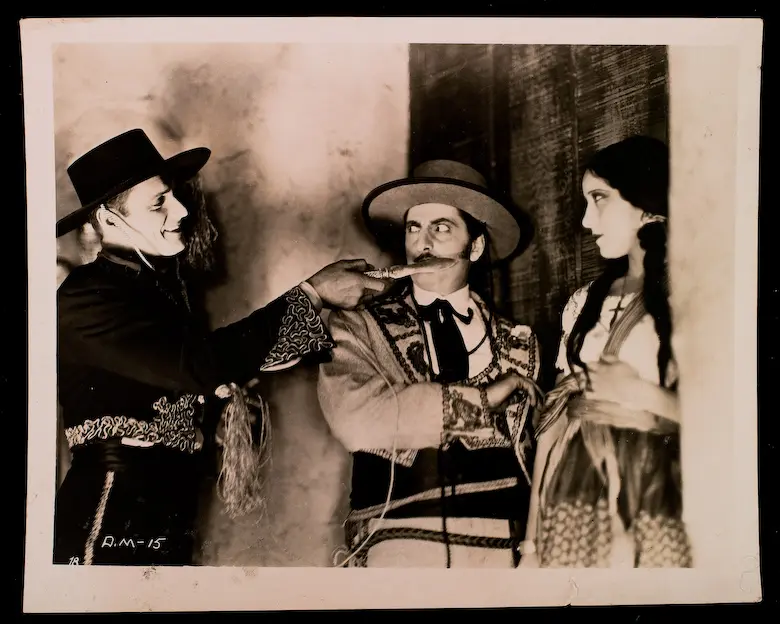
The direction by Lloyd Ingraham is steady, though occasionally uninspired during the indoor dialogue-heavy scenes. He excels when the camera is allowed to move with the action. For instance, the sequence where General Frémont’s soldiers arrive at the rancho is shot with a scale that feels genuinely historical. It reminds the viewer that this story is set against the backdrop of the Mexican-American War, a detail often lost in smaller productions like Help Wanted.
Why should a modern viewer care about a silent Western from 1927? The answer lies in the film's unique perspective on the American West. Unlike many films of its time that portrayed the 'wild west' as a vacuum waiting to be filled, Don Mike acknowledges a pre-existing civilization with its own laws, grudges, and nobility. It is a film about the friction caused when two different definitions of 'justice' meet on the same patch of dirt.
While it may not have the philosophical depth of The Scarlet Oath, it possesses a kinetic joy that is infectious. The dagger scene alone justifies the runtime. It is a piece of cinema history that refuses to be boring, even when it’s being overly complicated. If you can forgive the occasional pacing lag in the second act, you will find a film that is surprisingly modern in its cynicism toward land-grabbing and refreshingly ancient in its commitment to physical heroics.
Pros:
Cons:
Don Mike is a fascinating artifact that manages to be both a crowd-pleasing actioner and a semi-serious look at the death of the Old West. It doesn’t just rely on the tropes of Hit-the-Trail Holliday; it seeks to create a specific atmosphere of lost nobility. While it isn't a perfect film, its high points are so distinct that they overshadow the narrative lulls. It’s a bold, slightly weird, and ultimately rewarding experience for any serious cinephile.
IMDb —
1923
Community
Log in to comment.