DbcultAccessing Vault...
Cult Review
Senior Film Conservator
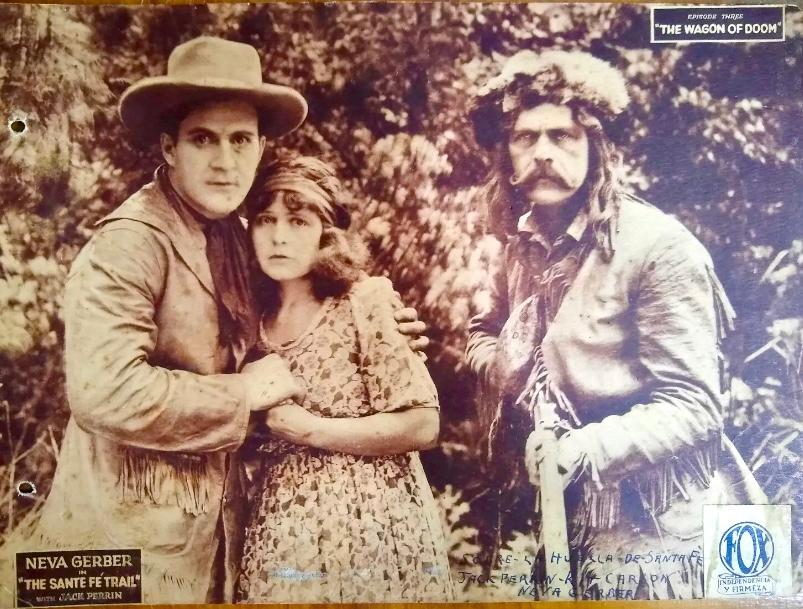
The Santa Fe Trail arrives like a sun‑bleached parchment, each frame etched with the grit of an era that still haunts the American imagination. Directed by Ben F. Wilson, whose oeuvre often straddles the line between pulp adventure and earnest melodrama, the film manages to transcend its modest budget through an alchemy of stark visual composition and a script that, while penned by Wilson and Robert Dillon, feels more like a seasoned storyteller whispering from a campfire.
\n \nAt its core, the story is a study in the fragile equilibrium between lawlessness and order, a motif that recurs throughout the western canon. Jim Welch’s inheritance of a cattle empire is not merely a plot device; it becomes a crucible for examining the weight of legacy. The rustlers, embodied by Coffey’s flamboyant villainy, represent the ever‑present specter of chaos, while Joe De La Cruz serves as the moral compass, his stoic presence echoing the archetype later refined in classics such as The Code of the West. The film’s pacing mirrors the rhythm of the trail itself – deliberate, punctuated by sudden bursts of tension that keep the audience perched on the edge of the dusty horizon.
\n \nJack Perrin’s portrayal of Welch is a study in restrained masculinity; his eyes convey a simmering resolve that rarely erupts into melodramatic outbursts. Perrin’s chemistry with Maria Laredo, played with fierce independence by Neva Gerber, is palpable, their exchanges crackling with an undercurrent of forbidden desire that feels both timeless and contextually grounded. Joe De La Cruz, meanwhile, delivers a performance that oscillates between the stoic sentinel and the wounded soul, his subtle gestures speaking louder than any dialogue. Clark B. Coffey’s antagonism is theatrical without tipping into caricature, a delicate balance that keeps the audience wary of his next machination.
\n \nCinematographer Wilbur McGaugh captures the desolate beauty of the Santa Fe corridor with a stark, high‑contrast aesthetic. The use of chiaroscuro during night sequences accentuates the moral ambiguity that pervades the narrative, while wide‑angle shots of the canyon vistas evoke a sense of insignificance that mirrors the characters’ internal struggles. The iconic chase across “Dead Man’s Crossing” is filmed with kinetic energy, the camera swooping low to the ground before soaring to reveal the sweeping expanse, a technique reminiscent of the visual poetry found in The Rainbow Trail.
\n \nThe screenplay, while adhering to genre conventions, sprinkles moments of lyrical introspection that elevate the material. Lines such as \"The trail does not forgive, it only remembers\" (spoken by De La Cruz) linger beyond the final frame, underscoring the film’s meditation on memory and consequence. Dillon’s dialogue occasionally flirts with the poetic, a trait that aligns the film with contemporaneous works like The Flower of Faith, where narrative depth is achieved through carefully crafted exchanges rather than sheer action.
\n \nThe sparse, twang‑laden score punctuates moments of tension while allowing ambient desert sounds – wind whistling through crevices, distant horse hooves – to dominate. This auditory restraint reinforces the film’s commitment to realism, a choice that feels daring for a period piece often reliant on bombastic orchestration.
\n \nWhen juxtaposed with Destroying Angel, The Santa Fe Trail shares a thematic preoccupation with redemption through sacrifice, yet it diverges by foregrounding community over the lone hero archetype. Its narrative economy also aligns it with the lean storytelling of Mysteries of Paris, where plot twists are delivered with surgical precision.
\n \nReleased at the cusp of the Great Depression, the film resonated with audiences yearning for tales of perseverance against overwhelming odds. Its portrayal of a multicultural frontier – highlighted by De La Cruz’s Mexican heritage and Laredo’s mestiza identity – subtly challenges the monolithic narratives prevalent in earlier westerns, hinting at a progressive undercurrent that would later blossom in revisionist cinema.
\n \nThough often eclipsed by more flamboyant contemporaries, The Santa Fe Trail endures as a touchstone for filmmakers seeking to blend action with introspection. Its influence can be traced in modern series that emphasize the psychological toll of frontier life, such as the gritty narratives of contemporary streaming westerns. Moreover, the film’s commitment to visual storytelling over dialogue foreshadows the minimalist approach championed by directors like Denis Villeneuve.
\n \nIn sum, The Santa Fe Trail stands as a testament to the power of restraint – a film that, despite budgetary constraints, delivers a richly textured experience through deft direction, compelling performances, and an evocative visual palette. It invites viewers to contemplate the inexorable march of history across an unforgiving landscape, reminding us that every trail, no matter how dust‑laden, carries the imprints of those who dared to tread it.
\n
IMDb —
1926
Community
Log in to comment.