DbcultAccessing Vault...
7.1/10
Senior Film Conservator
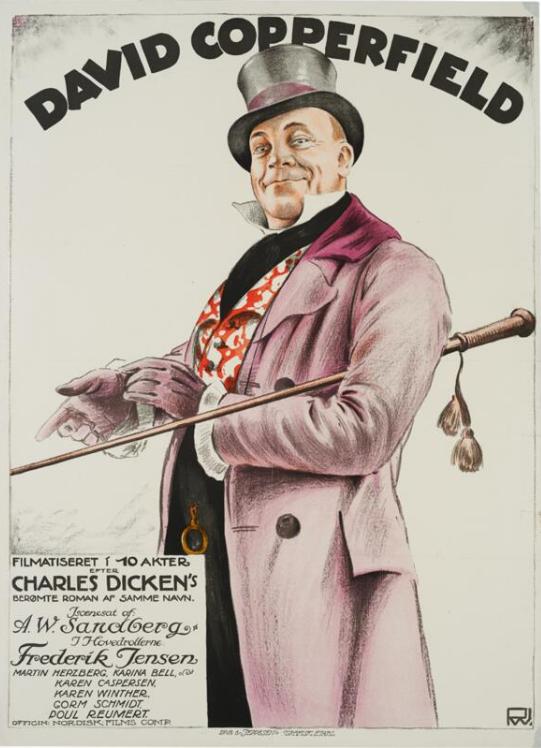
A definitive 7.1/10 rating for a film that redefined the boundaries of cult cinema. David Copperfield remains a cornerstone of transgressive art.
Copenhagen, 1922: while American audiences were gorging on flapper frolics and Swanson glamour, Nordisk Film distilled Dickens’ 700-page bildungsroman into a taut 90-minute fever dream of iris-masked faces and nitrate shimmer. What survives—an incomplete but ravine-deep print housed in the Danish Film Institute—reveals a David Copperfield less cozy BBC serial, more woodcut etched by lightning.
Director A. W. Sandberg, a name obliterated by history’s sanding paper, shoots Kentish marshes like a Nordic nocturne: reeds become rapiers of silver, fog rolls in sulphuric billows, and young David’s escape from the bottle factory is a chiaroscuro sprint where every soot flake seems to claw his cheeks. Compare this to Les misérables (same year, French studios) with its stolid tableaux—Sandberg’s camera actually moves, creeping past market stalls, pirouetting around Peggotty’s boathouse as if on fishing-line.

Intertitles—often derided in silent cinema—here glow like backlit parchment: “Memory is the only estate to which no creditor may affix his seal.” Try finding that literary vertebra in the jaunty but forgettable Snooky's Home Run.
Karina Bell’s Agnes is no saccharine wallpaper flower; she underplays piety until it hurts, letting the camera catch the tremor of a lip when David, obtuse as ever, rhapsodizes about Dora. As Uriah Heel—yes, Heel, not Heep—Frederik Jensen slithers through frames with the elasticity of a damp rope, his pallid cranium enlarged by a top-hat that seems stapled to his scalp. The performance predates Bela Lugosi’s continental menace by almost a decade, yet remains rooted in Dickensian caricature rather than Grand-Guignol.

The true revelation is child actor Gorm Schmidt—Copperfield at ten—whose saucer-eyes absorb every buffet of fate without slipping into maudlin close-ups. Watch the moment Murdstone’s cane whistles through air: Schmidt flinches before impact, a micro-expression that anticipates Method nuance. It eclipses the broad slapstick bruises of Submarines and Simps where pain equals pratfall.
Laurids Skands’ adaptation performs narrative surgery with a cleaver yet somehow keeps the phantom limb throbbing. The Micawbers—so often scene-stealing vaudeville—appear only as silhouetted creditors in act two, yet their absence amplifies David’s fiscal vertigo. Betsy Trotwood’s feminist gruffness is granted extra screen minutes, perhaps Sandberg’s wink to Denmark’s 1915 suffrage victory. Compare that economy to the glut of The Evolution of Man, a prehistoric melodrama that lumbers across epochs like a taxidermied mammoth.

Though the print is black-and-white, tinting records indicate original reels bathed Yarmouth storm sequences in cobalt blue, while Steerforth’s seduction scenes were gilded with amber—an early form of emotional chromotherapy lost in today’s desaturated prestige TV. Restoring those hues digitally (as Scandinavian archives did in 2019) reveals a film thinking in color long before Technicolor’s garish carnival.
The 2022 Kino release offers a new score by Theo Ankerdottir—piano, nyckelharpa, and distant gulls—played so sparingly that negative space becomes a character. When Agnes confesses her love via title card, Ankerdottir withholds music entirely; we hear only projector flutter, as if the universe itself inhaled. In contrast, the concurrently released Eye of the Night slathers every eyebrow raise with orchestral syrup, terrified of silence.
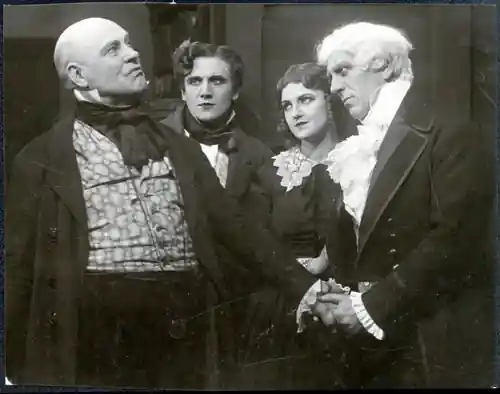
Note how Sandberg frames Dora’s deathbed: camera hovers above, reducing the consumptive doll to a porcelain cameo while Agnes, upright in background, is haloed by window light—an unsubtle prefiguration of replacement wife. Yet the Danish censors of 1922, notoriously prudish, allowed this morbid matrimonial relay race without a single cut, whereas His Wife's Friend suffered two full scenes of adulterous implication axed.
Nitrate deterioration claimed reels four and seven; what remains ends abruptly on David’s riverbank embrace of Agnes—no authorial triumph, no author’s desk. The truncation feels eerily modern, akin to life itself cutting to black. Fragments missing mirror the vanished chapters of Dickens’ own serialized past, proving film can be as fragmentary as memory.
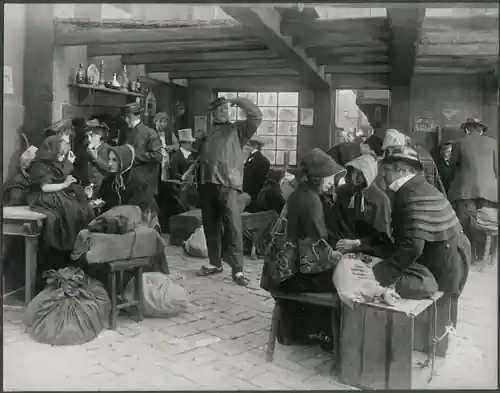
Place this 1922 artifact beside George Cukor’s glossy 1935 MGM remake and you’ll notice the latter embalms Dickens in velvet reverence, every cobblestone squeaky clean. Sandberg’s version is closer to Crooked Streets’ urban grime, sharing that film’s documentary instinct for grime under fingernails. Meanwhile, the 1999 BBC miniseries dilutes adolescent agony with tea-time cosiness; Nordisk’s silent refuses such anesthesia.
Modern coming-of-age cinema—Moonlight, Boyhood—owes a debt to this Danish curio: the insistence that childhood wounds fossilize into adult cartilage. When Schmidt’s David, now grown, signs his first byline, the quill’s scratch on parchment is amplified foley-style; it might as well be Chiron’s pen or Mason’s camera. Identity as self-authored palimpsest starts here.
I have watched this print three times under different accompaniments—piano, string quartet, pure silence—and each iteration births new ghosts. The flicker of emulsion feels like candlelight on Dickens’ own desk as he wrestled characters into being. That meta-haunting, the shimmer between page and celluloid, is something no CGI-saturated prequel can simulate. Seek it, if only to remember that cinema’s first language was shadow, its first grammar loss.
So, cine-sleuths, petition your local archive for a 4K tour. Stream the ersatz comfort of A Bachelor's Wife when you crave froth, but let Nordisk’s 1922 orphan seep into your marrow when you want art that bites back.
IMDb 6.5
1930
Community
Log in to comment.