DbcultAccessing Vault...
Cult Review
Senior Film Conservator
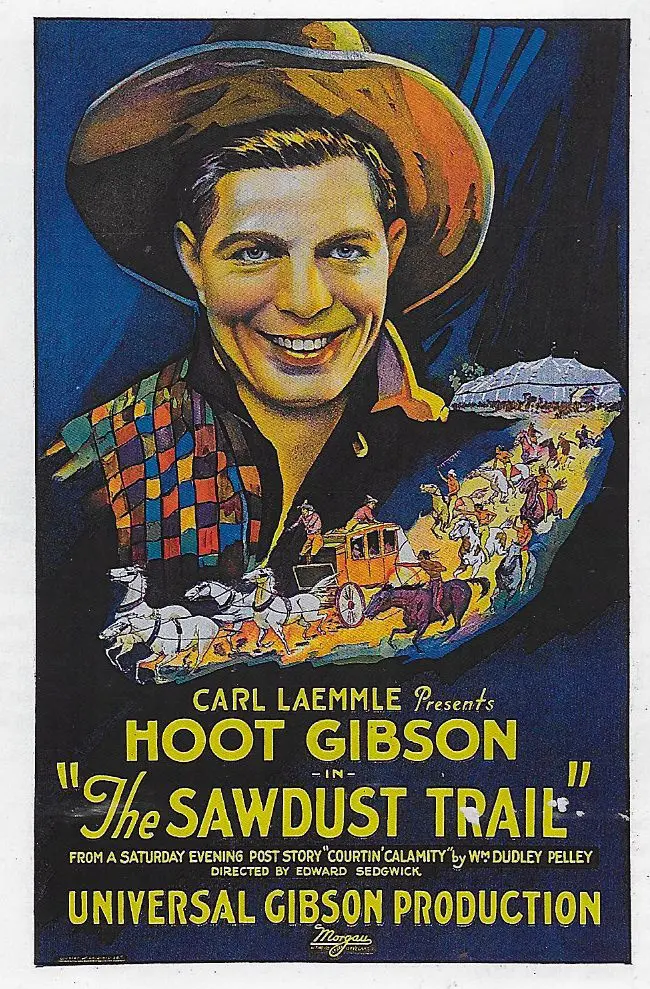
Step back in time, not merely to the roaring twenties, but to a cinematic landscape where the flicker of a projector held entire worlds captive. 'The Sawdust Trail', a 1924 silent Western, emerges from this era not as a mere genre piece, but as a surprisingly nuanced exploration of identity, performance, and the intricate dance between societal expectations and individual agency. Directed with an eye for both grand spectacle and intimate character study, this film, penned by William Dudley Pelley, Richard Schayer, and Raymond L. Schrock, offers far more than just cowboy heroics; it presents a fascinating psychological drama wrapped in the dusty canvas of a traveling Wild West show. It challenges preconceived notions and asks us to look beyond the surface, a theme that resonates profoundly within its own narrative fabric.
At the heart of this compelling tale is Clarence, portrayed with intriguing ambiguity by Charles K. French. He is introduced as an eastern college youth, but his true purpose for joining the rough-and-tumble world of a Wild West exhibition is initially shrouded in mystery. His chosen persona—that of a mild, inoffensive dandy—is a masterstroke of calculated misdirection. Clarence's meticulously coiffed hair, his perhaps overly refined gestures, and his general air of delicate urbanity are designed to elicit a specific reaction: dismissal. He is an outsider, a fish out of water, seemingly ill-equipped for the grit and visceral demands of the sawdust arena. This deliberate masquerade is not merely a plot device; it’s a profound commentary on the performative nature of identity, a theme that echoes in other films where characters adopt false fronts to navigate treacherous social terrains, much like the hidden talents revealed in The Stolen Voice (1915), though with a far more ambiguous moral compass here.
Opposite Clarence, and immediately at odds with his affected fragility, is the formidable "Calamity" Jane, brought to vivid, defiant life by Josie Sedgwick. Jane is not merely a leading lady of the show; she is its very embodiment of untamed spirit. Her moniker suggests a life lived on the edge, and her characterization as a "man-hater" is no casual detail. It speaks volumes about her past, her experiences, and the defenses she has erected against a world she perceives as inherently patriarchal and treacherous. Sedgwick imbues Jane with a raw, visceral power, her every gesture and expression conveying a fierce independence. She is a woman who has carved her own path, refusing to be defined or confined by conventional gender roles, a cinematic precursor to the strong, independent female protagonists seen in later dramas like The Mating (1918), albeit with a more pronounced initial antagonism towards the opposite sex.
The central conflict of 'The Sawdust Trail' hinges on the volatile interactions between Clarence and Jane. His effeminate posturing is a red flag for her, a symbol of everything she despises in men: weakness, deception, and a lack of genuine grit. For Clarence, Jane represents the raw, unpolished authenticity of the West, a world he is ostensibly trying to understand or, perhaps, exploit. Their initial encounters are a fascinating ballet of mutual disdain and growing, reluctant curiosity. The film masterfully uses the backdrop of the Wild West show itself—a staged performance of rugged individualism—to highlight the larger themes of authenticity versus artifice. Everyone, in a sense, is performing. The cowboys and cowgirls perform their roles for the audience, and Clarence performs his dandyism, while Jane performs her stoic independence. The question the film subtly poses is: which performance is closer to the truth?
No discussion of a 1924 Western would be complete without acknowledging the presence of Hoot Gibson. A veritable legend of the silent screen, Gibson typically embodied the quintessential cowboy hero: stoic, honorable, and fiercely capable. In 'The Sawdust Trail', his role serves as a crucial counterpoint to Clarence’s elaborate charade. Gibson’s character, often a man of few words but decisive action, represents an authentic, grounded masculinity that directly challenges both Clarence’s performative weakness and Jane’s ingrained misandry. He is the genuine article, the unvarnished truth amidst the theatricality. His presence forces both leads to re-evaluate their positions: Jane, to confront her generalizations about men, and Clarence, to perhaps shed his disguise and face the consequences of his subterfuge. Gibson’s understated charisma and natural horsemanship are always a highlight, bringing an undeniable gravitas to the Western genre, much like his commanding presence in 40-Horse Hawkins (1926), where his integrity often anchors the narrative.
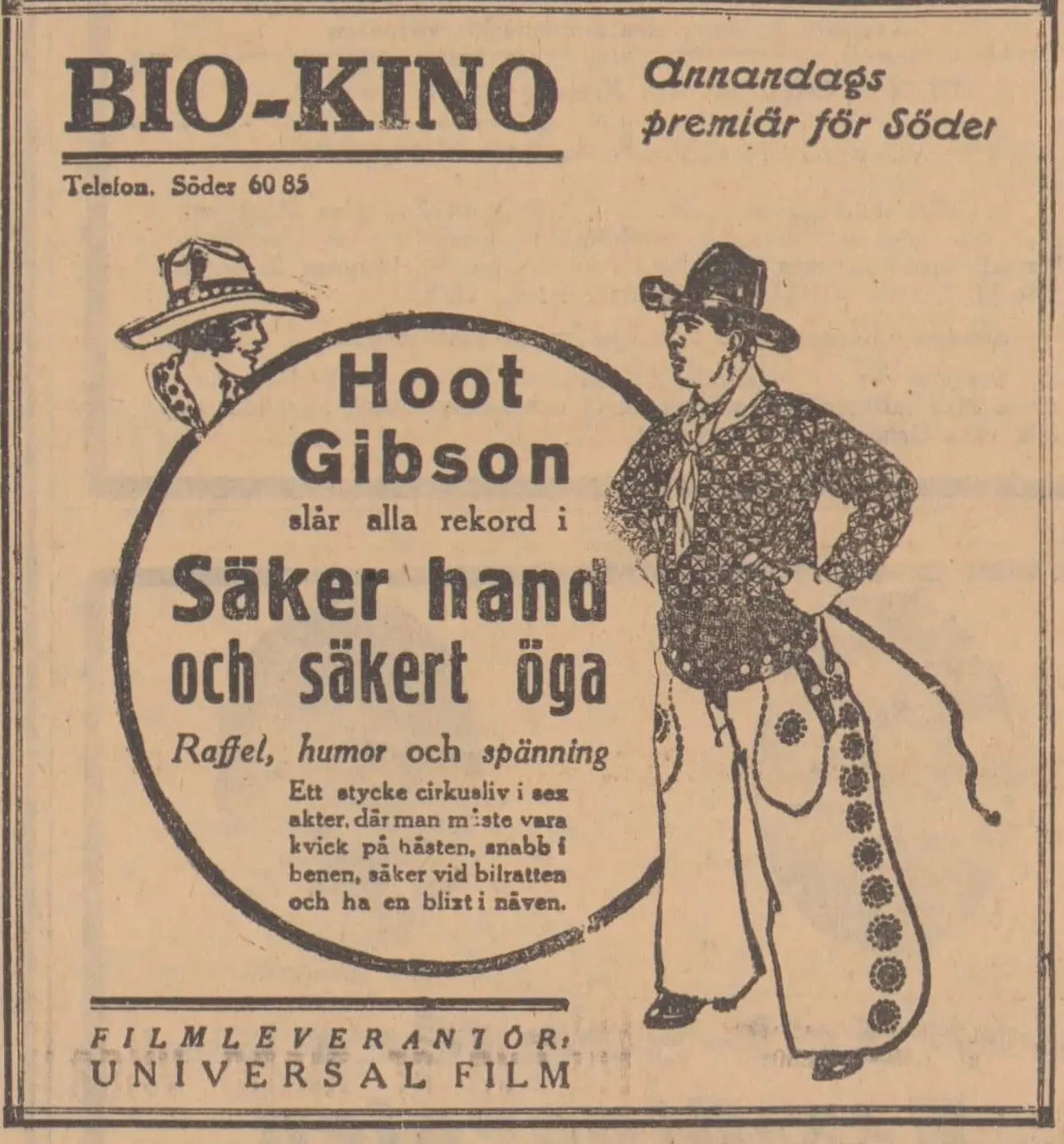
The brilliance of silent film lies in its ability to communicate complex emotions and narratives through purely visual means. 'The Sawdust Trail' excels in this. The director, whose name isn't explicitly listed in the prompt but whose vision is palpable, relies heavily on the nuanced performances of the cast. French’s subtle shifts in expression, Sedgwick’s hardened gaze softening by degrees, and Gibson’s quiet strength are all conveyed through masterful pantomime. The cinematography, though perhaps not groundbreaking for its time, effectively captures the kinetic energy of the Wild West show, juxtaposing the grandiosity of the performances with the raw, personal drama unfolding backstage. Intertitles, sparingly but effectively used, provide crucial exposition and internal monologues, guiding the audience through the characters' evolving psyches without disrupting the visual flow. The stark black-and-white palette, in a way, enhances the moral ambiguities and stark contrasts within the story.
Beyond its surface as a Western romance, 'The Sawdust Trail' delves into themes that remain remarkably pertinent. The notion of masquerade, personified by Clarence, speaks to the masks we all wear, whether to protect ourselves, to achieve a goal, or to simply fit in. This theme of hidden identity and inner turmoil finds echoes in films like The Painted Soul (1915), where a character's true nature struggles against external pressures. The film's exploration of gender dynamics is particularly compelling for its era. Jane’s fierce independence and initial rejection of men challenge conventional portrayals of femininity, while Clarence’s effeminacy subverts traditional masculinity. The film ultimately navigates a path toward understanding and perhaps a more balanced view of male-female relationships, suggesting that authenticity, rather than adherence to rigid roles, is the true path to connection.
Furthermore, the film subtly touches on the enduring myth of the American West. The Wild West show itself is a commercialized, romanticized version of a fading frontier. Clarence, the Eastern intellectual, is drawn to it, perhaps seeking a raw truth that urban life cannot provide, or perhaps merely to study it as an anthropologist would. The contrast between the sophisticated East and the rugged West is a classic trope, but here it’s filtered through the lens of individual character journeys, making it feel fresh and personal. The film asks what it truly means to be 'authentic' in a world increasingly shaped by performance and perception, a question as relevant now as it was a century ago.
'The Sawdust Trail', though perhaps not as widely remembered as some of its contemporaries, stands as a testament to the depth and artistry achievable in silent cinema. It’s a film that refuses easy categorization, blending elements of Western adventure, romantic drama, and psychological character study. The combined talents of Charles K. French, Josie Sedgwick, and Hoot Gibson create a dynamic ensemble, each bringing distinct energy and emotional weight to their roles. The writers, William Dudley Pelley, Richard Schayer, and Raymond L. Schrock, crafted a narrative that is both entertaining and thought-provoking, a delicate balance that many films, even today, struggle to achieve. It reminds us that even in the seemingly straightforward world of early Westerns, there were artists pushing boundaries, exploring complex human emotions, and challenging the very definitions of heroism and villainy.
For enthusiasts of silent film, or anyone with an interest in the evolution of cinematic storytelling, 'The Sawdust Trail' offers a rich and rewarding viewing experience. It’s a film that invites re-watching, revealing new layers of meaning with each flicker of its historical frames. Its enduring appeal lies not just in its thrilling Wild West spectacle, but in its timeless examination of what it means to truly see, and be seen, beyond the masks we choose to wear. It’s a compelling journey into the heart of human nature, set against the exhilarating, dusty backdrop of a bygone era, proving that sometimes, the most profound truths are found where the sawdust meets the trail.
IMDb 6.6
1936
Community
Log in to comment.