DbcultAccessing Vault...
Cult Review
Senior Film Conservator
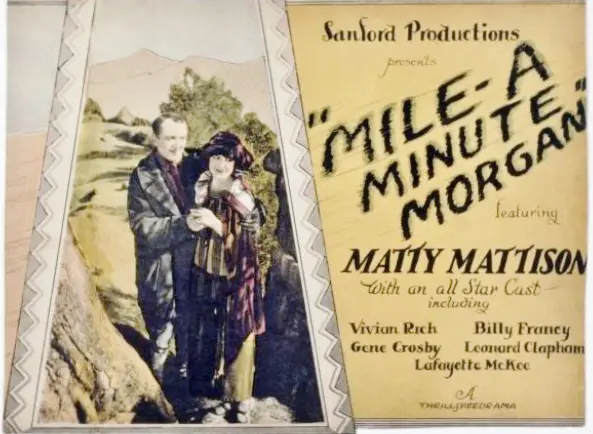
Within the pantheon of 1920s silent cinema, few films capture the intersection of industrial vigor and individual identity as succinctly as Mile-a-Minute Morgan. Directed with a kinetic sensibility by Frank S. Mattison, this 1924 feature operates as more than a mere sports melodrama; it is a nuanced exploration of the 'disguised prince' trope transposed onto the rugged landscape of the American timber industry. Gene Crosby portrays Paul Bunyon—a name heavy with folkloric resonance—not as a mythical giant, but as a man seeking to shed the suffocating mantle of inherited wealth. This rejection of the silver spoon in favor of the crosscut saw provides a compelling psychological foundation that elevates the film above its contemporary peers like New York Luck.
The narrative architecture rests upon the chemistry between Crosby and Billy Franey, who plays Philo Brown. Franey’s performance is a masterclass in the 'fast-talking sidekick' archetype, providing the comedic friction necessary to propel the plot into its second act. It is Philo’s mendacity—his insistence that Paul is the legendary pugilist 'Mile-a-Minute Morgan'—that serves as the film’s central irony. Paul, who seeks invisibility, is thrust into the most visible arena imaginable: the prize-fighting ring. This transition from the horizontal labor of the lumber camp to the vertical confrontation of the ring mirrors the social mobility themes found in The Little Minister, though Mattison trades Victorian sentimentality for a more visceral, muscular aesthetic.
The visual language of the film utilizes the naturalistic backdrop of the lumber yard to create a sense of grounded realism. Unlike the stylized artifice seen in The Marionettes, Mile-a-Minute Morgan revels in the sawdust and sweat of its setting. The cinematography captures the imposing scale of the timber, making the human figures appear transient and small against the machinery of industry. This visual choice underscores Paul’s struggle; he is a small cog in his father’s machine, yet he possesses a reservoir of strength that only emerges when his personal honor—and his love for Patricia Jennings—is threatened.
Vivian Rich, as Patricia, delivers a performance of remarkable agency for the era. While she occupies the role of the manager’s daughter, she is the primary catalyst for Paul’s transformation. Her persuasion is not merely romantic but moral; she recognizes the man beneath the alias. In many ways, her character arc shares a DNA with the resilient spirits portrayed in Salvation Nell, where female intuition serves as the compass for male redemption. When Kenneth Winster, played with a sneering efficiency by the antagonist, abducts Patricia, the film shifts from a character study into a high-stakes thriller, demonstrating Mattison’s versatility behind the lens.
The centerpiece of the film—the boxing match—is choreographed with a raw intensity that predates the polished artifice of later Hollywood sports films. The tension is palpable as Paul enters the ring, a reluctant gladiator fueled by the gaze of the community and the expectations of his beloved. This sequence is a fascinating study in physical acting; Crosby conveys a mixture of trepidation and burgeoning resolve that keeps the audience tethered to his plight. The fight is not just about physical dominance; it is a ritualistic purging of his former identity as the 'millionaire's son.' By donning the persona of Morgan, he paradoxically finds his true self.
The subsequent chase sequence, where Paul pursues Winster to recover the stolen purse and rescue Patricia, is a testament to the era’s stunt-driven storytelling. The pacing here is relentless, justifying the 'Mile-a-Minute' moniker. It echoes the frantic energy found in Outlawed, yet maintains a narrative cohesion that prevents it from descending into mindless spectacle. The resolution—a trifecta of financial recovery, romantic union, and paternal reconciliation—satisfies the generic requirements of the time while feeling earned through Paul’s physical and emotional labor.
Viewing Mile-a-Minute Morgan today requires an appreciation for the 'B-picture' ecosystem of the 1920s. While it may lack the operatic scale of Ashes of Vengeance, it possesses a sincerity that is often missing from more prestigious productions. The film’s preoccupation with class and the dignity of labor reflects a post-war American zeitgeist, one that was increasingly skeptical of inherited status. In this regard, it stands in stark contrast to the European sensibilities of Prinzessin Tatjanah or the German dramatic traditions seen in So sind die Männer.
Furthermore, the inclusion of actors like Tom London and Lafe McKee ensures a level of veteran stability. These performers were the backbone of early cinema, lending a gravitas to the proceedings that helped ground the more fantastical elements of the plot. The film’s ability to balance the whimsical boasts of Philo Brown with the genuine threat posed by Winster is a delicate act of tonal management. It avoids the sheer absurdity of An Eskimotion Picture while embracing a lighter touch than the somber The Knocking on the Door.
Ultimately, Mile-a-Minute Morgan is a vibrant artifact that showcases the narrative efficiency of the silent era. It utilizes a simple premise—a man finding his worth through struggle—and expands it into a multifaceted drama that touches on romance, class conflict, and the nature of heroism. The lumber camp, often a site of exploitation in later cinema, is here a crucible for character development. Paul Bunyon’s journey from a disowned scion to a self-made hero remains a resonant theme, proving that the search for identity is a timeless cinematic pursuit.
For enthusiasts of the era, the film offers a delightful blend of action and heart. It may not have the haunting atmosphere of Um eines Weibes Ehre or the satirical bite of Diane of the Follies, but it occupies a unique space in the 1924 release calendar. It is a film that celebrates the 'everyman' by turning him into a legend, if only for a mile-a-minute. Whether you are drawn to the historical depiction of the timber industry or the burgeoning tropes of the sports film, this production remains a worthy subject of study and enjoyment. Its legacy persists in every story where a hidden hero rises to the occasion, reminding us that our true value is defined not by our names, but by our actions in the heat of the moment.
In the broader landscape of the 1920s, Mile-a-Minute Morgan serves as a bridge between the simplistic morality plays of the early decade and the more complex character dramas that would follow. It is a testament to the enduring power of the silent image to convey deep emotional truths without the need for a single spoken word. As Paul walks away with Patricia, his father’s respect finally secured, the audience is left with a profound sense of satisfaction—a testament to the film’s enduring charm and narrative vigor.
IMDb —
1921
Community
Log in to comment.