DbcultAccessing Vault...
5.9/10
Senior Film Conservator
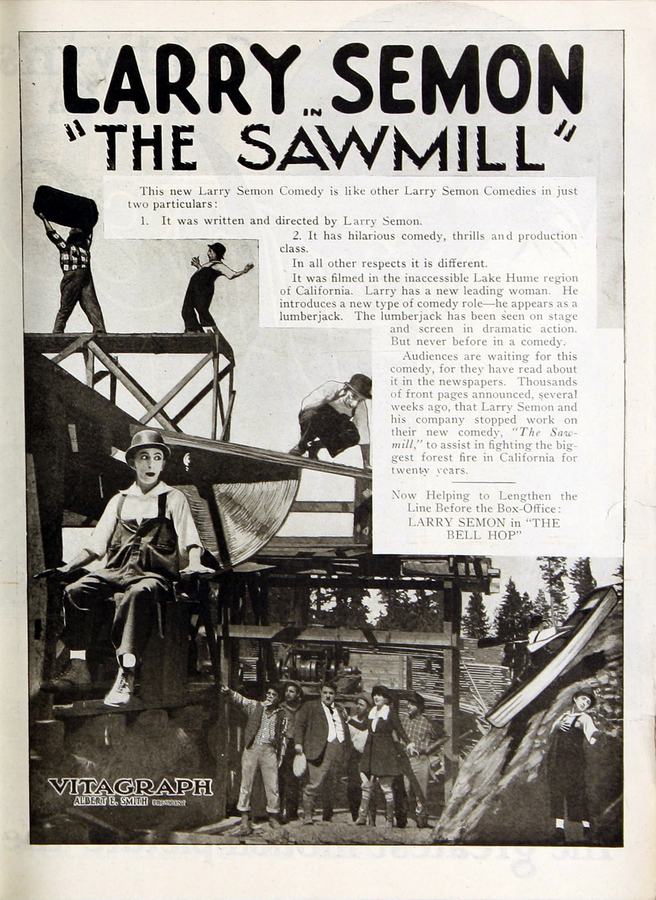
A definitive 5.9/10 rating for a film that redefined the boundaries of cult cinema. The Sawmill remains a cornerstone of transgressive art.
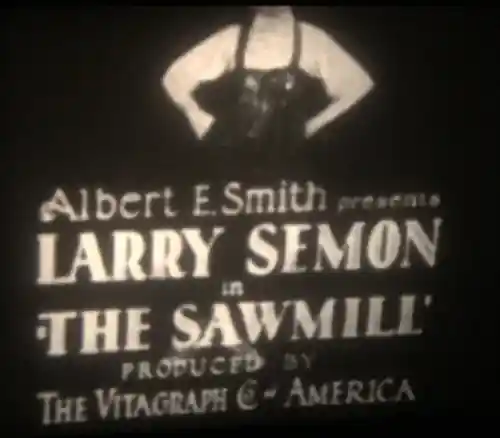
Picture a cathedral built of cedar and steel, incense replaced by pine resin, hymns replaced by the scream of circular saws. Into this sanctum stumbles Larry Semon’s straw-hair everyman, a scarecrow in greasepaint whose elbows flap like broken umbrellas. He is both sacrificial lamb and accidental messiah, and The Sawmill—a two-reel tornado released in the soot-streaked summer of 1922—electrifies that contradiction until the celluloid itself smells of smoke.
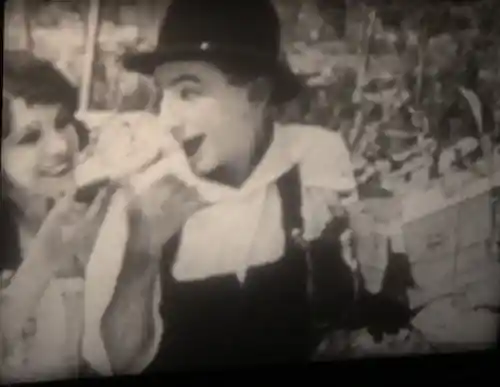
The plot, if one insists on Euclidean geometry, charts a triangle: Wally loves Virginia; Virginia’s father, the mill’s plutocrat owner, loves profit; the foreman Blackie loves bullying. But Semon, who also co-wrote and directed, treats narrative like a lumber conveyor—he feeds it in straight, then twists it into knots, knots into catapults, catapults into pratfalls. Within the first four minutes a single plank becomes a slapstick shrapnel, ricocheting off heads, launching into a vat of varnish, and catapulting our hero through a window. Gravity is optional; momentum is scripture.
Visually, the film weaponizes monochrome. Sawdust drifts like galaxies against the black void, while the mill’s furnace belches tangerine flares that tint the grain amber. DP Hans F. Koenekamp (uncredited yet cine-literate legend) cranks the camera at skewed angles so the vertical logs resemble baroque prison bars. When Wally ascends a ladder, the frame tilts twenty degrees, transforming a routine climb into a futurist diagonal. Semon’s face—white greasepaint, obsidian eyes, Cupid’s bow lips—becomes a living kabuki mask, registering panic, lust, and delirium within a single twitch.
The sound you hear while watching a silent print is imaginary but thunderous: every spin of the buzz-saw crescendos like Tiger Band cymbals, every body-slam echoes like timpani in Romeo and Juliet’s tomb. Semon orchestrates these beats with Eisensteinian precision, though his ideology is closer to Marx—Groucho, not Karl. Consider the sequence where Blackie stuffs Wally into a crate labeled “Firewood.” Cut to the furnace door yawning like Mephistopheles’ maw. The gag is pure sadist ballet, yet the edit rhythm—eight frames of the crate, six of the flames—ignites a Pavlovian shudder in any proletarian viewer who’s felt management’s boot.

Comparisons? Fair. If The Poor Boob is a bucolic sonata and Get-Rich-Quick Edgar a city-symphony scamper, then The Sawmill is a factory oratorio. Semon’s choreography rivals the conveyor-belt dexterity of A Rich Man’s Plaything, yet his satire is more corrosive than False Ambition’s melodrama. When Wally finally hurls Blackie into the river, the splash is catharsis, yes, but also a baptism that absolves no one—the mill still looms, the gears still turn, the owner still signs paychecks with the same hand that slaps backs.

Performances? Oliver Hardy—billed as “Babe” Hardy—plays a supporting bruiser, his moon-face already hint at the Laurel symbiosis to come. Frank Alexander as the owner wheezes capitalist entitlement through every pore; watch how he polishes his monocle with a banknote. Kathleen O’Connor’s Virginia is no flapper prop—her side-eye when Blackie taunts Wally could cauterize steel. And Pal the Dog, whiskers varnished with sawdust, steals the climax by untying the rope that suspends Wally above a buzz-saw—a canine deus ex machina who proves loyalty trumps brute strength.
Yet the film’s true protagonist is kinetic energy. Logs barrel down chutes like mystical gamma rays; steam valves shriek like vault alarms. Semon’s genius lies in rendering industrial peril slapstick without sanding off the danger. When a two-by-four rockets into Blackie’s groin, the viewer winces before laughing—an alchemical reaction that predates Jackass by eight decades.
Gender politics? Problematic, period. Virginia is prize, not agent; her father’s consent equals dowry. Yet Semon undercuts patriarchy by making masculinity itself a brittle farce. Blackie’s biceps deflate the moment he trips into a vat of molasses; Wally’s heroism is accidental, not muscular. The film’s final image—Wally and Virginia kissing while the mill burns behind them—reads less romantic than apocalyptic: love forged in the crucible of capital, dependent on arson for freedom.
Restoration note: the 4K Kino Lorber transfer reveals every splinter, every bead of varnish. The grain dances like static electricity; the amber tinting of the furnace sequence glows volcanic orange. Composer Robert Israel supplies a score that gallops from ragtime to atonal discord whenever the buzz-saw revs, a sonic metaphor for capital’s appetite. Turn off the lights, crank the volume, and the century collapses—1922 becomes now, the mill becomes Amazon warehouse, the foreman becomes algorithm.
Verdict? The Sawmill is not merely a curio for slapstick completists—it’s a celluloid shrapnel lodged in the American subconscious, an artifact that whistles whenever work feels fatal. Watch it for the daredevil stuntwork (Semon fractured his wrist leaping between rafters). Watch it for the proto-surreal imagery (a log-splitter morphs into a shark’s maw via double exposure). Watch it because, in an age when gig workers clock in via app, the mill’s grind remains depressingly familiar. Then, when the lights rise, listen: somewhere a saw still spins, hungry for fingers, for hours, for dreams.
IMDb —
1919
Community
Log in to comment.