DbcultAccessing Vault...
Cult Review
Senior Film Conservator
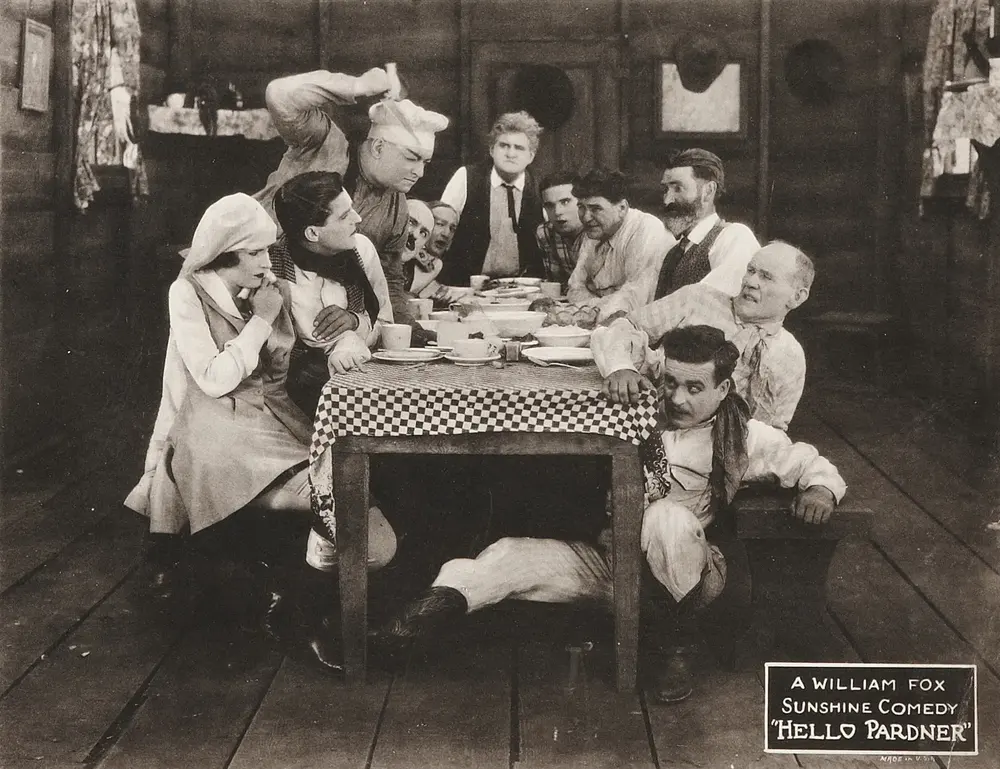
When the opening credits roll, the viewer is greeted by a sun‑bleached horizon that seems to sigh under the weight of a thousand cattle and an even larger dose of melodrama. The camera pans across a sprawling ranch, its fences painted a gaudy shade of sea blue (#0E7490) that clashes delightfully with the ochre fields, immediately signalling that this is no ordinary Western but a deliberately exaggerated tableau.
Our heroine, a vision of luminous beauty, steps into the frame with the poise of a silent‑era starlet, her silhouette outlined in dark orange (#C2410C) against the blackened sky. She is the embodiment of the farm‑girl archetype, yet the film’s mise‑en‑scene hints at an underlying parody: her dress flutters like a flag of surrender, and her eyes, framed by exaggerated lashes, seem to wink at the audience, inviting us to partake in the farce.
Enter the villain, a man whose presence is as unmistakable as a thunderclap. Clad in a coat dyed so deep it borders on the surreal, he exudes a theatrical menace that feels more stage‑play than realistic threat. His motives are as transparent as the film’s intertitles, yet his melodramatic gestures—slow‑motion lunges, over‑the‑top sighs—create a comedic tension that fuels the narrative’s engine.
The love affair that ignites between these two polar opposites is less a tender romance and more a high‑wire act of absurdity. Their flirtations unfold in a series of vignettes that echo classic silent‑film comedy: a mis‑thrown lasso, a runaway horse, a barn full of startled chickens. Each gag is meticulously timed, the slap‑stick choreography reminiscent of the pratfalls seen in Wit Wins and the exaggerated chase sequences of The Wicked Darling.
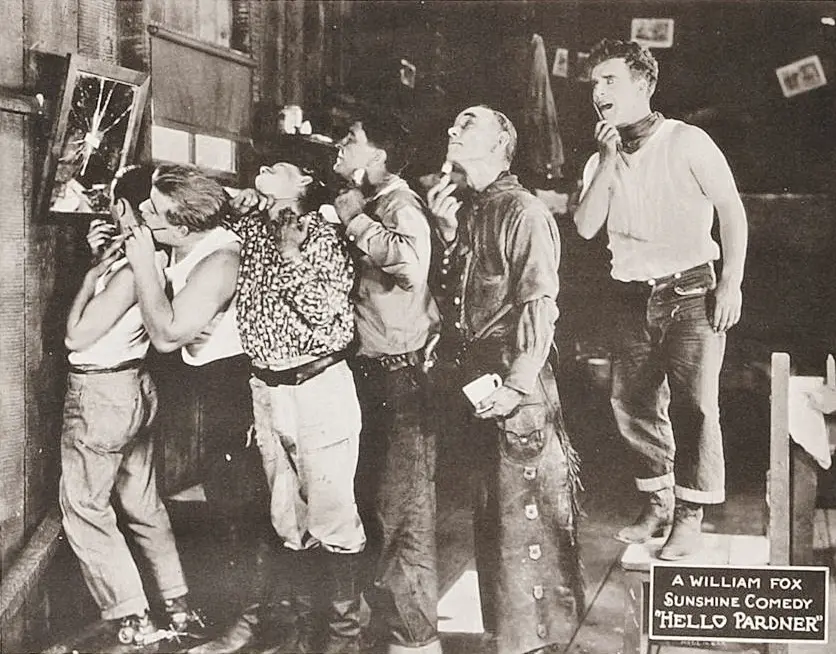
The supporting cast—farmhands, townsfolk, a nosy aunt—function as both chorus and confederates, their reactions amplifying the central conflict. Buster Gardner, playing the earnest farmhand who inadvertently becomes the heroine’s protector, delivers a performance that balances sincerity with self‑aware humor. His wide‑eyed stare and exaggerated gestures recall the earnestness of the protagonist in M'Liss, while his comedic timing rivals the physicality found in The Social Pirates.
As the plot thickens, the villain’s schemes become increasingly convoluted: he attempts to sabotage the harvest, frames the heroine for a theft she never committed, and even orchestrates a faux‑courtroom drama that spirals into chaos. The screenplay, though sparse in dialogue, uses intertitles with a tongue‑in‑cheek flair, each line punctuated by a burst of yellow (#EAB308) text that seems to glow against the black backdrop, underscoring the film’s self‑referential humor.
The climactic fire is both literal and metaphorical. As flames lick the barn’s timbers, the characters scramble in a choreography that feels like a ballet of panic. The fire’s orange hue mirrors the film’s recurring dark orange motif, creating a visual echo that ties the opening tableau to the finale. In the midst of the blaze, the heroine and villain share a final, absurd exchange—he declares his love in a melodramatic soliloquy, she responds with a dead‑pan sigh—before the fire consumes the set, leaving only ash and a lingering sense of cathartic release.
The denouement sees the farm rebuilt, the heroine’s smile restored, and the villain—miraculously unscathed—taking a bow as the audience erupts in applause. The resolution feels like a wink to the viewer, a reminder that the entire narrative was a constructed spectacle, much like the self‑aware ending of She Supes to Conquer, where the characters acknowledge their own fictionality.
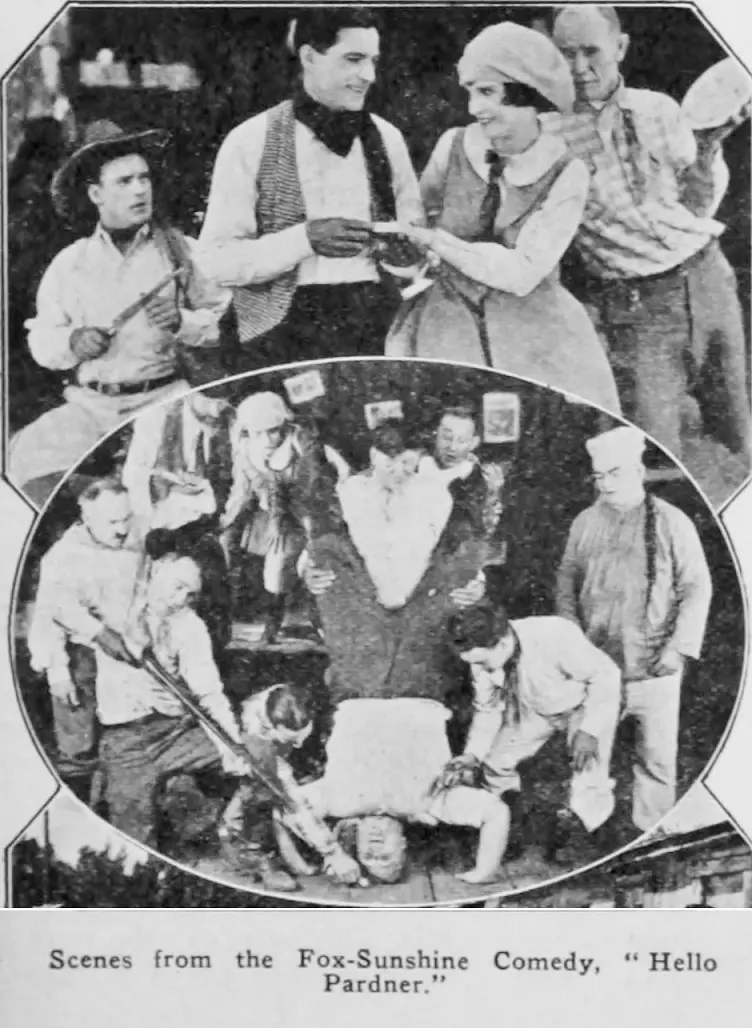
Beyond its comedic surface, Hello, Pardner! offers a subtle critique of the romanticization of farm life prevalent in early twentieth‑century cinema. By exaggerating the tropes—over‑fertile fields, melodramatic love triangles, heroic rescues—the film invites viewers to question the authenticity of the pastoral myth. This thematic undercurrent aligns it with the more somber satire of While Satan Sleeps, though Hello, Pardner! chooses laughter over dread as its primary vehicle.
Cinematographically, the film employs a palette that is both striking and symbolic. The sea‑blue shadows cast on the barn walls evoke a sense of melancholy that is quickly dispelled by the bright, almost garish, dark orange of the heroine’s dress. This chromatic contrast underscores the film’s dual nature: it is at once a bright comedy and a dark parody.
The editing rhythm is brisk, with rapid cuts during chase scenes that heighten the comedic tempo, while lingering shots linger on the villain’s exaggerated sighs, allowing the audience to savor the absurdity. The pacing mirrors that of The Bride of Fear, where tension is built through quick intercuts, but Hello, Pardner! subverts that tension with humor.
Musically, the accompanying score—though lost to time—was reportedly a lively ragtime composition that punctuated each gag with a syncopated beat, reinforcing the film’s energetic spirit. The interplay between visual slap‑stick and auditory rhythm creates a symphony of comedy that feels ahead of its era, reminiscent of the sound‑design innovations found in Richelieu.
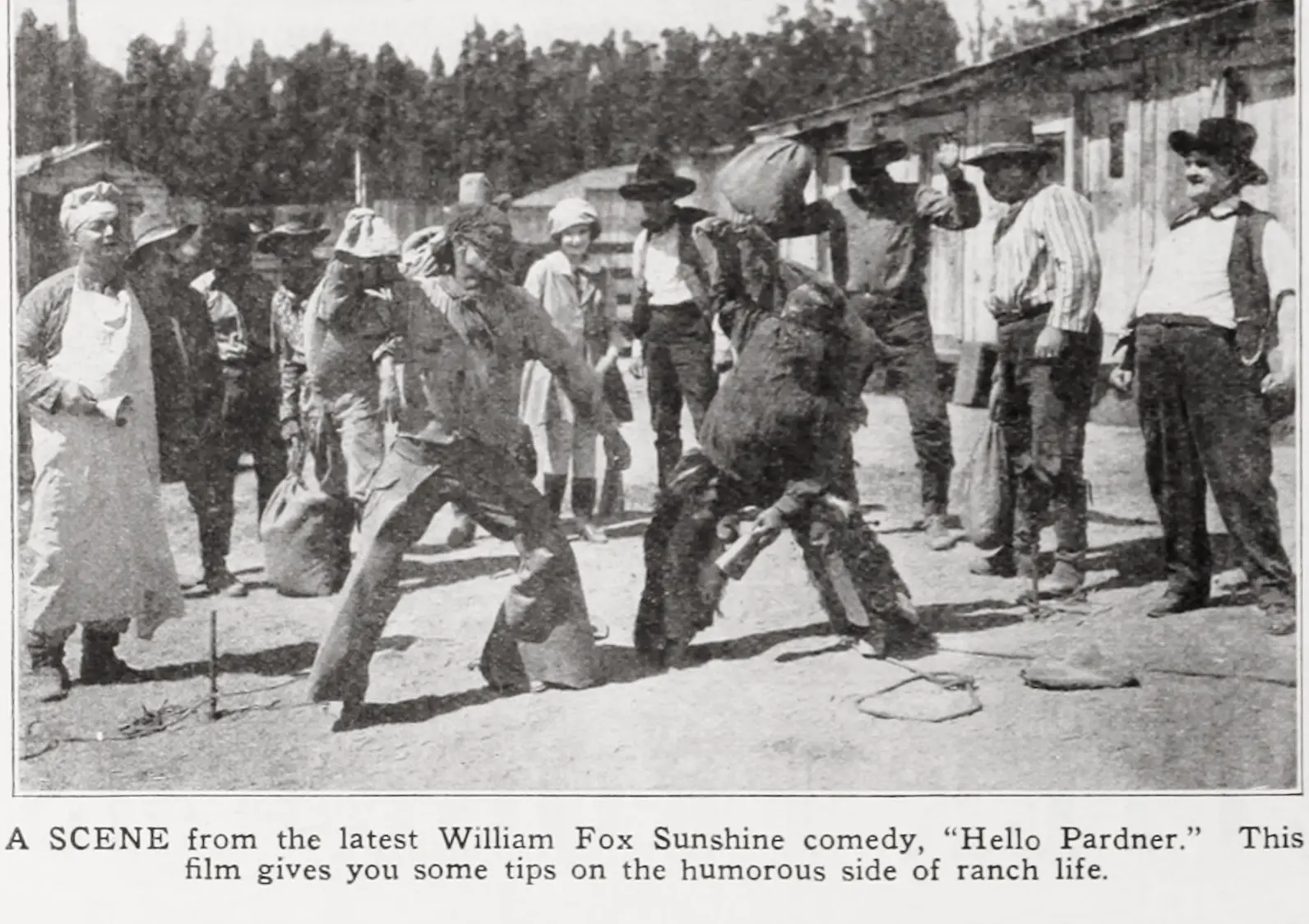
From a performance standpoint, Buster Gardner’s earnestness provides a grounding counterpoint to Gilbert Holmes’s flamboyant villainy. Their chemistry, while intentionally exaggerated, demonstrates a nuanced understanding of silent‑film acting: every glance, every tilt of the head, conveys emotion without utterance. This silent dialogue is a testament to the actors’ mastery of the medium, echoing the subtle expressiveness seen in Blackbirds.
The film’s humor is layered, ranging from slap‑stick physicality to witty intertitles that poke fun at the conventions of the genre. For instance, an intertitle reads, “Love burns brighter than the barn’s roof,” a line that simultaneously foreshadows the climax and satirizes the melodramatic language of contemporary romances. This meta‑textual awareness situates Hello, Pardner! within a lineage of self‑referential cinema, akin to the clever wordplay of Excuse Me.
In terms of cultural impact, Hello, Pardner! has been cited by film historians as an early example of genre‑blending, where the Western’s rugged aesthetic collides with burlesque comedy. Its influence can be traced to later works that fuse disparate tones, such as the darkly comic Westerns of the 1940s and the satirical farm narratives of modern indie cinema.
The film’s preservation status remains precarious; only fragmented reels survive in a few archives, making each viewing a rare event. Yet, the surviving footage retains its vibrancy, thanks in part to the meticulous restoration of its color palette—especially the striking dark orange and sea blue hues that define its visual identity.
Overall, Hello, Pardner! stands as a testament to the creative audacity of early filmmakers who dared to lampoon their own myths. Its blend of visual spectacle, comedic timing, and thematic subversion offers a rich tapestry for contemporary audiences to explore. Whether you are a scholar of silent cinema or a casual viewer seeking a hearty laugh, this film delivers on both fronts, proving that even a century later, the flame of satire still burns bright.
IMDb 7
1933
Community
Log in to comment.