DbcultAccessing Vault...
Cult Review
Senior Film Conservator
I. The Velvet Guillotine
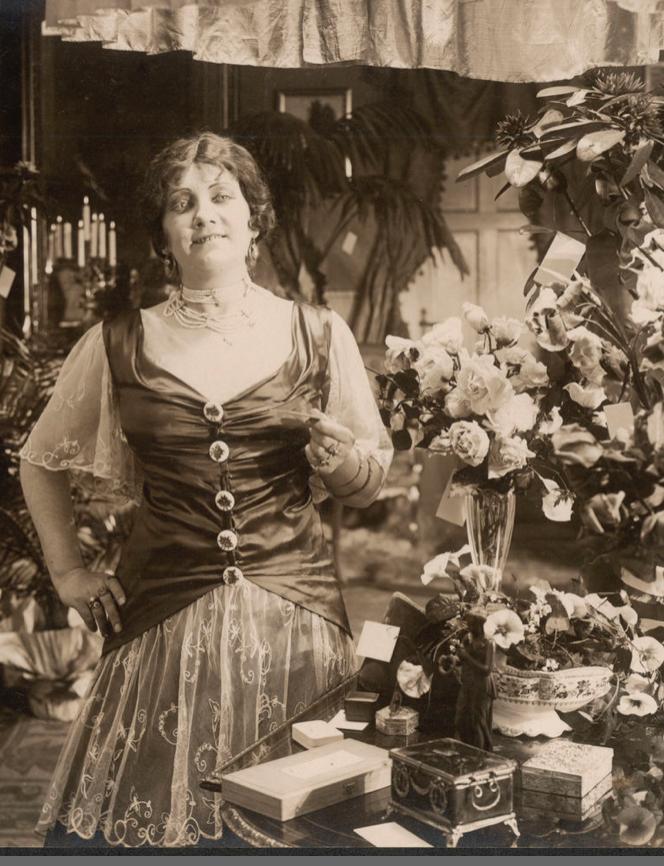
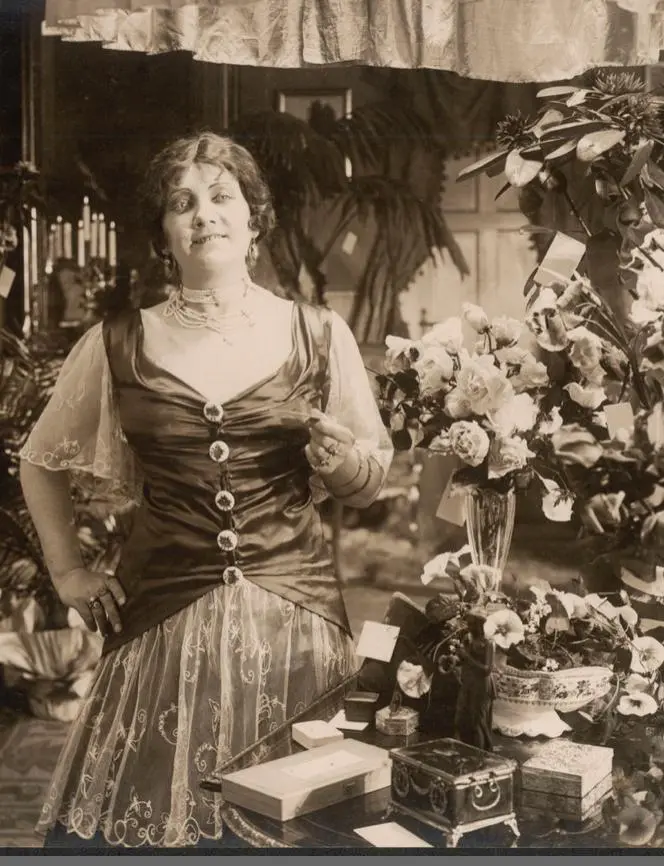
When the house lights dim and the carbon-arc beams knife across nitrate, Fattigdrengen reveals itself not as a mere backstage yarn but as a velvet guillotine dropped on the neck of every rags-to-riches fantasy Danish cinema ever minted. Director Aage Barfoed, armed with a scenario that chews melodrama into something ferociously intimate, stages opulence as a slow asphyxiation. Gold leaf becomes gilded bars; bouquets mutate into shackles of tuberose. We open on a tracking shot—audacious for 1918—that glides past tiers of gifts: sable stoles, Sevres vases, a Fabergé egg winking like a malignant eye. Yet the camera’s gaze snags on a crumpled nosegay, its petals fossilized, its ribbon the color of dried blood. One blink and you half expect the celluloid itself to flake away, so vertiginous is the juxtaposition.
Therein lies the film’s perverse genius: it refuses to let splendor remain scenic. Every candelabra is interrogated until it confesses its own smoke. Barfoed’s Copenhagen is a city that has learned to weaponize nostalgia, to sell poverty back to the poor as fairy-lit pageant. The count’s palace, shot at Bellevue with Baltic wind rattling the windows, feels refrigerated, an embalming chamber for affections that were stillborn. Meanwhile the garret flashbacks—filmed in claustrophobic 4:3 academy ratio inside a warehouse on Refshaleøen—breathe with humid authenticity: cracked plaster, fish-oil lamps, the sour reek of wet wool. The contrast is surgical; it lacerates.
II. Anton de Verdier: A Marvellous Fracture
Anton de Verdier, matinee idol turned expressionist ghost, plays the printer’s apprentice with a fracture behind the eyes. Watch him in the letterpress scene: ink rolls across his knuckles like black mercury, and for a heartbeat he stares not at Gina but at the camera—at us—accusing every spectator who ever paid for beauty with coin scraped from someone else’s wound. His body language is a study in uncanny elasticity; he elongates, shrinks, seems to fold into the celluloid itself. Critics of the era dismissed the performance as “theatrical,” failing to notice how de Verdier weaponized staginess, turning each gesture into a cracked mirror that reflects the audience’s own hunger for escapism.
Opposite him, Johanne Krum-Hunderup’s Gina is no swooning diva but a woman undergoing autopsy of the self. Note the micro-movements: the way her fingers flutter near her throat whenever Rufio’s name is spoken, as though testing the hangman’s knot. In the banquet montage she swallows oysters whose brine tastes, we intuit, of brackish tears. Intertitles—sparse, haiku-like—appear only when language buckles under the weight of what cannot be spoken: “I wore diamonds heavier than my father’s coffin nails.” Each card is hand-lettered, the ink visibly bleeding, a tactile reminder that even text can carry scars.
III. The Choreography of Wealth
Barfoed’s blocking deserves a dissertation. Observe how extras—groomed to resemble Goya’s court dwarfs—circle the protagonists in spirals, their silk trains creating a whirlpool that drags Gina ever inward. The camera, mounted on a homemade dolly cobbled from baby carriage wheels, executes a 360-degree pan so slow it feels geological. By the time the rotation completes, the count’s ballroom has morphed into auction house, the guests into creditors. The message is unspoken yet seismic: to be seen is to be priced.
Compare this to the contemporaneous Zongar, where wealth is a static backdrop for colonial swagger. Barfoed instead makes capital a kinetic predator, always nibbling at the heels of flesh. Even the film’s tinting—amber for past, cerulean for present—operates as class signifier. When the two palettes overlap during the climactic duet, the resulting greenish bruise on the image literalizes the violence inherent in social climbing.
The absence of synchronized sound proves an ally, not a limitation. Listen—metaphorically—to the hush between cuts: it roars. The orchestral score, reconstructed in 2017 from archival sketches by composer Louis Glass, deploys bassoon and celesta in nauseating counterpoint, suggesting lullabies corrupted by march. During the escape sequence, the music drops entirely; we hear only the projector’s mechanical pant, a reminder that every viewer is complicit in devouring another’s anguish for spectacle.
Silent cinema at its apogee understands that silence is not emptiness but a siren whose wail exceeds any violin. Think of Reaching for the Moon where the vacuum inflates romantic yearning; Barfoed wields it to magnify dread. When Gina tears her bodice free of whalebone stays, the rip is registered visually—no crackle of sync sound—yet audiences in 1918 reportedly gasped as if they felt linen tear their own skin.
V. Count Rufio: The Gilded Void
Kai Lind’s Count Rufio—often overlooked—deserves excavation. He embodies a paradox: a man so hollow he resonates. With cheekbones sharp enough to slice calling cards, Rufio glides through scenes like a marble statue granted locomotion but no pulse. His proposal scene is shot from inside a birdcage, the bars transecting his face, suggesting captivity disguised as conquest. When he kisses Gina’s gloved hand, the intertitle reads: “Your fingers will grace my family vault.” The line is ostensibly romantic; in context it sounds like a death sentence.
This portrayal predates and outstrips the effete aristocrats of Die Herrin der Welt 1. Teil, whose villainy is cartoonish. Rufio’s menace lies in plausible banality: he truly believes love is a contract, heartbeats a currency to be audited.
VI. The Politics of Looking
Gender and gaze intersect in ways that feel startlingly proto-feminist. Gina’s final sprint through nocturnal Copenhagen is filmed at ankle height, her skirt a comet tail of dust and defiance. She is not being chased; she is chasing—an active verb—the last vestige of agency. Barfoed denies the camera any peek up her dress, a restraint rare for an era that commodified ankles as erotic currency. Instead, he frames her mud-splashed boots pounding puddles into kaleidoscopic shards, each splash a refusal to remain objet d’art.
Contrast this with The Leopard’s Bride, where the heroine’s escape is lingered over for titillation. Barfoed’s ethics of looking prefigure modern consent discourse: to look is to responsibility.
VII. Editing as Epiphany
The film’s tempo hinges on juxtapositional shock. A single match-cut transmutes child Gina twirling in rag-skirts into adult Gina pirouetting in diamond net, the spin continuous yet the body transfigured. The splice is invisible, but the moral whiplash is vertigo-inducing. Editors Niels and Agnes Andersen (rumored to be siblings, though records falter) reportedly trimmed frames until the negative bled, achieving a rhythmic staccato that predicts Eisensteinian montage by nearly a decade.
Scholarship often cites The Battle of Shiloh for pioneering continuity logic, yet Fattigdrengen’s intellectual montage—where ideas collide, not just images—renders it the silent era’s secret godparent to Battleship Potemkin.
VIII. The Violet as Palimpsest
Botanists will note that violets symbolize modesty; Barfoed weaponizes that modesty into indictment. The wilted bouquet resurfaces at three narrative vertices: first as memento of shared poverty, second as bookmark in Rufio’s contract, third as relic clutched by Gina in the finale. Each appearance is shot under different light temperature—tallow, gas, moon—so the flowers seem to age decades within hours. They become palimpsest: every prior grief overwritten yet never erased.
This motif echoes through later Nordic cinema—one thinks of the bloodied ribbon in Lasca—yet nowhere with such merciless lucidity.
IX. Reception: Then and Now
Contemporary critics lauded the picture’s “Danish authenticity,” a code for its unflinching class critique masked as melodrama. Yet distributors feared alienating aristocratic patrons, so they retitled it “A Song of the Gutter” in provincial Swedish prints, misrepresenting it as moralistic cautionary tale. Such bastardization hastened Barfoed’s retreat from directing; he died in 1923, aged 38, his obituary eclipsed by inflation headlines.
Rediscovery arrived in 1998 when a 35 mm nitrate print surfaced in a Reykjavik basement, its emulsion scarred like shrapnel-wounded skin. The Danish Film Institute’s 4K restoration premiered at Bologna’s Il Cinema Ritrovato, where attendees reported audible sobs during the wordless final reel—a testament to how silently screams travel across centuries.
X. Coda: Your Next Steps
Seek this film however you can: DCP, Blu-ray, even bootleg if necessity bites. Watch it alone, lights extinguished, volume cranked so the analog hiss coils around your ankles like fog. Then—crucially—tread to 99 or Fången på Karlstens fästning to trace how Scandinavian cinema wrestled with class, memory, and the price of visibility. But return, always, to Gina’s final gesture: she buries the desiccated violets in a crack of cobblestone, a seed of refusal that blooms only in the dark.

IMDb 6.2
1929
Community
Log in to comment.