DbcultAccessing Vault...
5.8/10
Senior Film Conservator
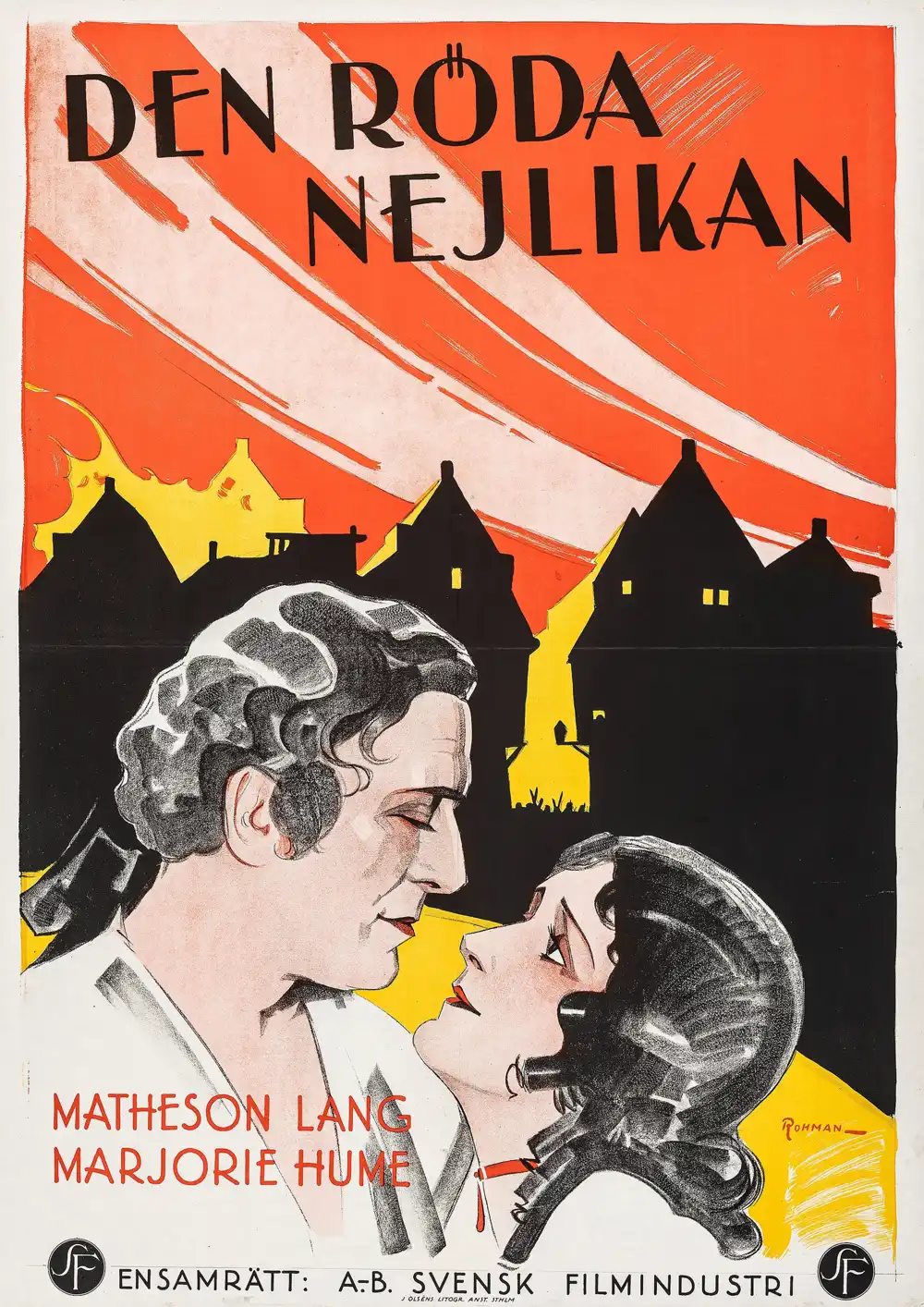
A definitive 5.8/10 rating for a film that redefined the boundaries of cult cinema. The Scarlet Daredevil remains a cornerstone of transgressive art.
If you are looking for a high-octane chase across the French countryside, you are probably going to be disappointed by The Scarlet Daredevil. But if you have a high tolerance for 1920s stage acting caught on film and a genuine interest in how many layers of lace one man can wear without falling over, it is worth a look. It is definitely for the silent film completist or the person who has seen every version of the Pimpernel story and wants to see the one where the hero is actually kind of a mean-spirited prankster.
Matheson Lang plays Sir Percy Blakeney, and you can tell he has played this role on stage a thousand times before. He has this specific way of leaning back in his chair and fluttering his eyelids that is supposed to suggest a bored, vacuous aristocrat, but it mostly looks like he’s trying to remember if he left the stove on at home. It is a very theatrical performance. When he’s in the 'dandy' mode, he’s almost exhausting to watch. You sort of sympathize with the French revolutionaries just because they don't have to listen to his fake laughter for very long.
There is a scene early on where he is showing off his new clothes, and the camera just lingers on his cuffs for what feels like three minutes. It is not even a particularly interesting shot, just a static look at some fabric. You can almost feel the director, T. Hayes Hunter, standing behind the camera thinking, 'The audience will love this lace.' They probably didn't.
The plot kicks in when he has to save a wife from the guillotine. The weirdest part of the whole movie—and the part I can’t stop thinking about—is how he does it. He frames the woman who helped kidnap her. He doesn't just outsmart her; he actively ruins her to save the 'good' lady. It is a surprisingly cynical move for a hero. The movie treats it like a triumphant 'gotcha' moment, but there is something about the way the kidnapped woman looks at the camera during the reveal that makes the whole thing feel a bit dirty. It is much darker than the tone of something like The Knight of the Rose, which at least felt like it had a soul.
Juliette Compton is in this, and she is probably the best thing about it. She has these sharp, angular features that the lighting person actually seemed to care about. Most of the other actors are just sort of... there. They stand in groups and point at things. There is a lot of pointing in this movie. If a character is surprised, they point. If they are angry, they point harder. It lacks the physical nuance you see in better silents from the same year.
The pacing is a real problem. There is a long stretch in the middle where people are just standing around in rooms reading letters. In a talkie, this would be boring; in a silent, it is borderline hypnotic in a bad way. You find yourself looking at the background details instead of the plot. There is a clock on the wall in one of the French offices that seems to change time between shots. I spent ten minutes trying to figure out if it was a continuity error or if the scene was supposed to be taking place over several hours. I think it was just a mistake.
The guillotine scenes have a strange, sterile quality. You see the blade, you see the crowd, but it all feels like a school play. The extras in the crowd look like they were recruited from a nearby pub and told to look 'angry' for five minutes. Some of them are clearly laughing in the back of the shot. It completely kills the tension. If you want to see a crowd that actually looks like it’s part of a movie, go watch The Goat or even something low-budget like Vengeance and the Girl. Here, they just look like they’re waiting for lunch.
I did like the way the shadows worked in the tavern scene near the end. There is a moment where the light from a single candle hits Lang’s face and for about four seconds, he actually looks like a dangerous spy instead of a guy in a wig. It’s a brief flash of what the movie could have been if it wasn't so obsessed with being a 'prestige' adaptation of Baroness Orczy’s work.
Also, the intertitles are incredibly wordy. They try to capture the 'wit' of the dialogue, but it just results in long blocks of text that stay on screen forever. I found myself finishing the text and then waiting, staring at the actors' frozen faces while they waited for the 'clear' signal to start moving again. It’s clunky. It lacks the visual storytelling of Sein größter Bluff, which managed to tell a much more complicated story with half the text.
Is it a disaster? No. It’s a competent, slightly stuffy piece of late-silent British cinema. It’s the kind of movie that feels like it was made for people who were afraid of the 'vulgarity' of American films. It’s very polite, even when people are being sent to their deaths. But unless you have a specific obsession with Matheson Lang or the French Revolution, you might find yourself checking your watch as often as the characters check their snuff boxes.
One final note: the hats. The hats in this movie are genuinely insane. There is one that Marjorie Hume wears that looks like it has a small bird of prey nesting in it. It’s never mentioned, and it doesn't fit the scene, but it’s the most interesting thing on screen for the ten minutes she’s wearing it.
IMDb —
1921
Community
Log in to comment.