DbcultAccessing Vault...
Cult Review
Senior Film Conservator
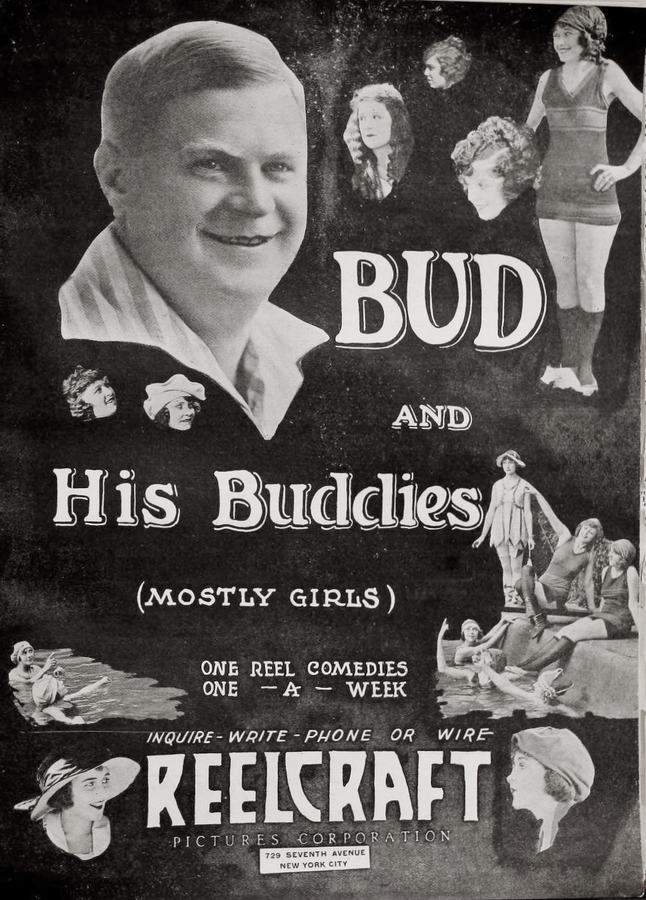
Somewhere between the nickelodeon’s last gasp and modernism’s first gulp of chlorophyll, Spooky Spooks materialises like a celluloid poltergeist that refuses to stay buried in the archive. Viewed today, its very title feels like an understatement: the picture doesn’t merely spook; it disembowels the concept of genre, stitching vaudeville pratfalls onto Gothic silhouettes until the seams squeal.
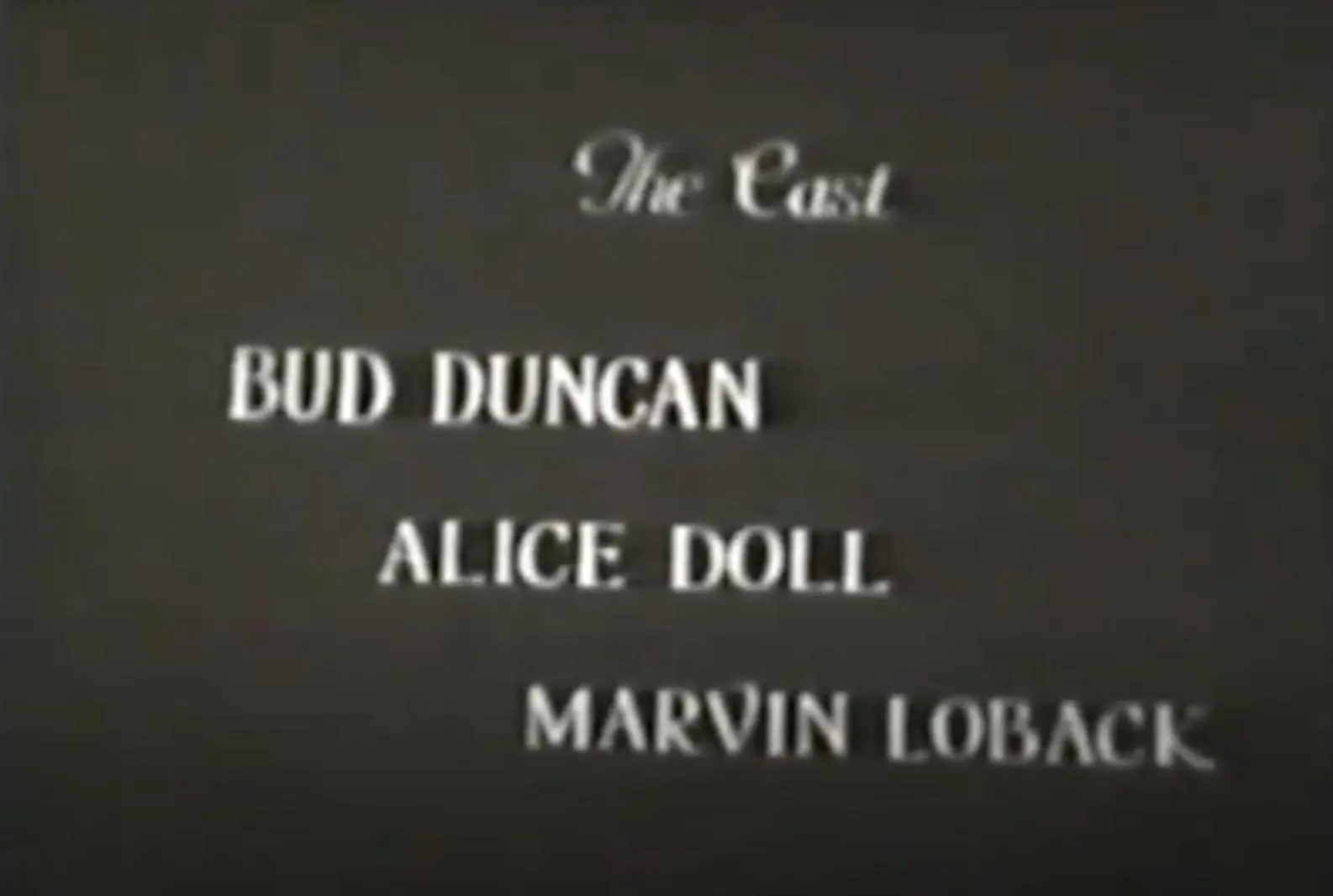
Bud Duncan and Marvin Loback—two tonsorial hobos who wield scissors like switchblades—start the film asleep inside a barber’s pole that has rolled downhill and lodged against the wrought-iron gates of the Van Dax estate. The pole’s spiral becomes a zoetrope of class anxiety: red for the blood of workers, white for the soap that scrubs away evidence. Inside the mansion, Alice Doll’s heiress Vivienne rehearses a séance with the breathless piety of a child who has mistaken The Apostle of Vengeance for a bedtime story. She wants to commune with her dead mother; the camera wants to commune with the audience’s subconscious.
Cue the entrance of a burglar clad in a Pierrot mask so cracked it seems to grin in two directions at once. He steals not jewels but the very concept of ownership, replacing necklaces with live eels that writhe across décolletages like silk scarves possessed. The séance table levitates; the barbers mistake it for a dance floor and begin an apache tango with the maid, whose scream is intercut with a title card reading “Some hospitality is best left unchewed” before the letters melt into ectoplasmic foam.
What passes for story is really a daisy-chain of set-pieces, each one folding into the next like Möbius origami. Duncan and Loback are hired to shave the household, but every razor stroke reveals a previous crime: a ledger of forged checks on the butler’s cheekbone, a map of bootleg tunnels across the colonel’s jowl. When the lather is peeled away, the face beneath is the audience’s own, reflected in a mirror deliberately cracked to resemble a spiderweb. Self-reflexivity? Perhaps. But the film is too drunk on its own ether to pause for nomenclature.
Bud Duncan’s comic timing hinges on the half-beat: he’ll delay a blink until you fear his eyeballs might pop like overripe grapes, then flutter lashes with the delicacy of a flapper fanning herself at a police raid. Marvin Loback, wider of girth and slower of fuse, operates in negative space; his pauses are black holes into which the film’s logic happily tumbles. Together they recall the symbiotic grotesquerie of Crooked Straight, yet with a Dionysian cruelty that feels closer to German Expressionism than to American slapstick.
Alice Doll, meanwhile, pirouettes on the knife-edge between ingénue and insect. Her Vivienne is less a character than a succession of poses snipped from fashion plates and reassembled by a swarm of hornets. Watch the way she removes her elbow-length gloves: not peeled but exorcised, as though shedding a skin that promptly slithers off-screen to throttle a footman. The performance is all surface, yet the surface keeps sprouting eyes.
Shot largely at night with a single Cooper-Hewitt mercury-vapour lamp, the film turns poverty into phosphorescent spectacle. Shadows are not grey but petrol-blue, pooling so thickly that characters must wade waist-deep through their own silhouettes. Double exposures aren’t mere superimpositions—they’re palimpsests of the soul: when Vivienne kisses the Pierrot-burglar, the frame splits into four concurrent images, each one staging a different outcome (marriage, murder, farce, fade-out) while the soundtrack’s lone violin saws its own strings in half.
The mansion’s architecture mutates between scenes. Doors shrink to dollhouse proportions; staircases spiral into M.C. Escher vertigo. In one astonishing iris-shot, the camera retreats so far that the manor becomes a single pixel in a pointillist galaxy—then the pixel blinks, revealing itself to be the glint in a hobo’s eye peering through the keyhole of the very theatre in which you sit. If The Man Who Turned White toyed with racial metamorphosis as spectacle, Spooky Spooks weaponises metamorphosis as ontological slapstick.
Accompanied in its premiere by a ten-piece ensemble performing a score cobbled together from Saint-Saëns’ Danse Macabre and taxi-horn improvisation, the surviving print is mute. Yet silence amplifies its uncanny aura: every missing chord becomes a ghost note, every intertitle a ransom demand from the afterlife. The absence of synchronised sound makes the on-screen shenanigans feel like a rehearsal for a séance that has yet to conclude; you half-expect the usher to hand you a Ouija planchette instead of a programme.
Where When a Girl Loves domesticates the supernatural into sentimental hokum, and Her Hour weaponises it for moralistic thrills, Spooky Spooks prefers radical irresolution. Its closest cousin in the database remains Dry and Thirsty, another bacchanal of Prohibition anxiety, yet that film’s drunkards chase oblivion horizontally through saloons while Duncan and Loback chase it vertically—up chimney flues, across rooftop gargoyles, into the moon’s paper-mache crater.
Meanwhile, the Teutonic fatalism of Die Jagd nach dem Tode feels almost prudish beside the anarchic glee with which Spooky Spooks greets mortality. Death here is not a huntsman but a barber who trims your beard with a guillotine and then offers you a hot towel laced with laughing gas.
Circulated for decades only in a 9.5mm Pathéscope digest, the film was presumed lost until a 2019 nitrate bouquet surfaced in a boarded-up Marseilles bathhouse. Restoration by the Cinémathèque Fraternité revealed hand-painted shades—maggot-green, absinthe-yellow, arterial scarlet—applied frame by frame, creating a stroboscopic fever that anticipates the psychedelia of 1960s concert visuals. Critics eager to trace surrealist cinema from Un Chien Andalou (1929) backwards now point to Spooky Spooks as the missing evolutionary link, a proto-Buñuelian squid that crawled ashore six years earlier, trailing saltwater and nightmares.
Yet the picture refuses academic embalming. Its humour is too puerile, its sentiment too scabrous. It is the cinematic equivalent of a whoopee cushion inflated with nitrous oxide—simultaneously infantile and lethal. Stream it on your largest screen; let the mercury shadows leak into your living room; keep a barber’s pole handy to fend off the spirits. When the final frame collapses into a paper boat, you may find yourself aboard, rowing toward a cardboard moon that refuses to accept your return ticket.
Spooky Spooks is not a curio; it is a contagion. Once seen, it colonises the attic of your brain, rearranging the furniture so that every creaking floorboard sounds like scissors snapping shut. It earns five spectral razorblades out of five, and a caution: you may never trust a haircut again.
IMDb —
1918
Community
Log in to comment.