DbcultAccessing Vault...
Cult Review
Senior Film Conservator
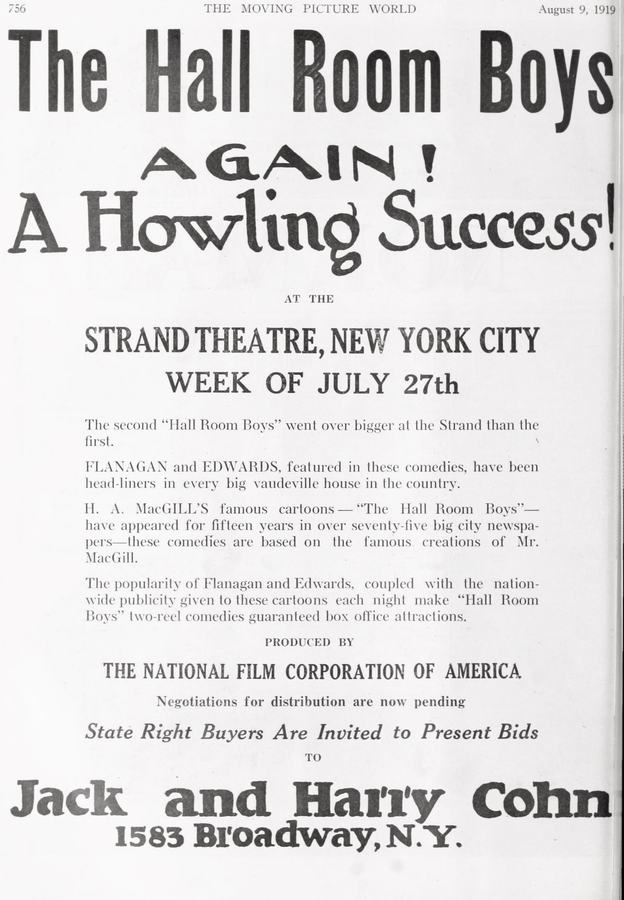
Stepping into the cinematic past, one often encounters narratives that, despite their age, resonate with an astonishing contemporaneity. Such is the case with They Do It on $8 Per, a film that, even a century removed, manages to articulate the perennial struggle of the individual against the indifferent behemoth of economic circumstance. It's a testament to the enduring power of storytelling that a tale rooted in the early 20th century can still prick at the conscience and stir profound empathy in modern audiences. This isn't merely a historical artifact; it's a mirror reflecting societal fissures that, sadly, persist.
At its core, They Do It on $8 Per is a visceral exploration of urban poverty and the relentless pressure it exerts on the human spirit. Our protagonist, Elara Vance, brought to life with remarkable nuance by the incandescent Neely Edwards, arrives in the city with the sort of bright-eyed optimism that only the truly naive or the utterly desperate can muster. Her dreams, initially painted in hues of ambition and self-reliance, are swiftly repainted in the drab tones of survival. Edwards, a performer known for her vivacity and an innate ability to convey both fragility and an underlying steeliness, delivers a performance here that is nothing short of captivating. She doesn't just play Elara; she embodies the crushing weight of her daily existence, the gnawing anxiety of an empty purse, and the quiet dignity she strives to maintain amidst indignity.
Edwards' Elara is not a character prone to histrionics, which makes her struggle all the more potent. Her quiet despair, the subtle slump of her shoulders after a long day at the factory, the way her eyes dart with a mixture of hope and fear when a new opportunity presents itself – these are the brushstrokes of a master at work. The film cleverly uses her physical presence to communicate volumes about her internal state. We see the gradual erosion of her youthful exuberance, replaced by a weary resolve. It's a performance that, in its understated power, reminds one of the quiet fortitude displayed in films like Pride, where personal integrity becomes a bulwark against societal pressures. Elara’s pride isn't boisterous; it's a silent, stubborn flame she guards fiercely.
The '$8 Per' of the title isn't just a numerical value; it’s a symbol of systemic insufficiency, a stark reminder of how little one can be valued in the cold calculus of industrial capitalism. Robert Dillon’s screenplay, a tour de force of social realism for its time, eschews simplistic villainy in favor of a more nuanced portrayal of economic forces. The true antagonist isn't a mustache-twirling landlord, but the invisible hand of poverty itself, a relentless adversary that pushes individuals to their breaking point. Dillon understands that the most compelling dramas often stem not from grand conflicts, but from the everyday battles for survival.
Complementing Edwards' central performance is Edward Flanagan as Mr. Henderson, the retired stagehand whose presence initially seems incidental. Flanagan, with his seasoned demeanor and world-weary gaze, crafts a character who serves as both an observer and, eventually, a quiet moral compass. His performance is a masterclass in subtlety; he says little, yet conveys a profound understanding of human nature and the city's unforgiving rhythm. Henderson is the kind of character who has seen it all, and his empathy for Elara is born not of sentimentality, but of genuine insight into the struggles of the working class. His role subtly echoes the themes of unexpected camaraderie found in narratives like El otro, where connections form across societal divides, offering solace and strength in unexpected places.
The interplay between Elara and Henderson is a delicate dance of unspoken understanding. He doesn't offer grand solutions, but rather a steady, reassuring presence – a reminder that not all humanity has been stripped away by the city's harshness. This relationship provides a crucial emotional anchor, preventing the film from descending into unremitting bleakness. It highlights the often-overlooked power of quiet support in the face of overwhelming adversity, a theme that resonates deeply with the human need for connection.
Robert Dillon's screenplay is the intellectual backbone of They Do It on $8 Per. Dillon, a prolific writer of his era, demonstrates a keen sociological eye, crafting a narrative that is both personal and broadly applicable. He doesn't preach; instead, he presents Elara's predicament with an unflinching honesty that allows the audience to draw their own conclusions about the systemic issues at play. The dialogue, sparse but impactful, feels authentic to the characters and their circumstances. There's a particular scene where Elara confronts her landlord, a moment of quiet desperation that Dillon imbues with palpable tension, reminiscent of the high-stakes negotiations found in films like Alimony, where economic survival often hinges on a single, fraught interaction.
Dillon's genius lies in his ability to make the audience feel the pinch of Elara's budget, the cold dread of an empty stomach, and the insidious pressure to compromise one's values for mere survival. The film doesn't shy away from the moral ambiguities inherent in such situations. When Elara is presented with a 'choice' that could alleviate her immediate suffering but compromise her integrity, the tension is not merely dramatic; it's profoundly human. This exploration of moral fortitude under duress echoes the thematic weight of classics like The Heart of Midlothian, where characters are forced to make agonizing decisions that test the very core of their being.
Beyond the performances and the script, the film's visual language is equally compelling. The unnamed city itself becomes a character – a sprawling, indifferent entity that both promises and devours. The cinematography, with its stark contrasts between the glittering facades of wealth and the grimy underbelly of poverty, effectively communicates Elara's isolation and the vast chasm between social classes. The crowded boarding house, the bustling factory floor, the shadowy streets – each setting is meticulously crafted to enhance the sense of Elara's precarious existence. The visual storytelling here is reminiscent of the gritty realism seen in films like Udenfor loven (Outside the Law), where the urban environment actively shapes the characters' fates and moral choices.
The use of close-ups on Edwards' face, particularly in moments of quiet contemplation or burgeoning despair, draws the audience intimately into Elara's psychological landscape. These visual choices amplify the emotional impact, making her struggle feel deeply personal and immediate. The film manages to convey the claustrophobia of poverty, the feeling of being trapped in a cycle that seems impossible to break, without resorting to overly dramatic visual tropes. It's a testament to a thoughtful directorial hand that understands the power of subtlety in conveying profound emotion.
The overriding theme of They Do It on $8 Per is undoubtedly resilience. Elara's journey is one of constant internal and external battles, a refusal to be utterly broken by her circumstances. It's a narrative that champions the quiet courage of everyday people facing extraordinary hardship. This theme finds echoes in films like The Egg Crate Wallop, which often depicted characters fighting against overwhelming odds, albeit sometimes in a more physically demonstrative way. Here, the 'wallop' is economic, psychological, and equally devastating.
Furthermore, the film serves as a potent, albeit perhaps unintentional, critique of unchecked capitalism and the societal structures that perpetuate poverty. It forces the audience to confront the uncomfortable truth that for some, survival is a daily negotiation, and dignity is a luxury they can ill afford. The film doesn't offer easy answers or saccharine resolutions; instead, it leaves us with a lingering sense of the fragility of human existence when stripped bare by economic forces. This unvarnished portrayal aligns with the more serious social commentaries of the era, daring to explore the darker facets of the 'American Dream' for those on its fringes.
What makes They Do It on $8 Per so remarkably enduring is its timeless exploration of human struggle. The specific economic figures may be dated, but the underlying anxieties — the fear of eviction, the pressure to make ends meet, the moral compromises forced by desperation — remain profoundly relevant. In a world still grappling with income inequality and precarious employment, Elara Vance's story feels less like a historical relic and more like a contemporary parable. The film asks us to consider what we would do, what we would sacrifice, to survive when pushed to the brink. It's a question that has no easy answer, and the film's refusal to provide one is part of its strength.
The movie’s ability to evoke such strong feelings without resorting to heavy-handed exposition or overt melodrama is a testament to its craftsmanship. It allows the audience to sit with Elara's struggle, to feel the weight of her choices, and to understand the almost imperceptible ways in which hope can be both sustained and extinguished. This emotional authenticity is a hallmark of truly great cinema, transcending the limitations of its period to speak to universal human experiences. Much like the intense, focused emotional journey in The Flame of Passion, this film burns with a quiet, persistent fire of human spirit.
Ultimately, They Do It on $8 Per stands as a quiet triumph of early social realism. It’s a film that demands attention not through spectacle, but through its unflinching honesty and the profound depth of its characterizations. Neely Edwards delivers a career-defining performance, beautifully supported by Edward Flanagan’s understated gravitas, all framed by Robert Dillon’s incisive and empathetic script. It's a reminder that the most powerful stories are often found in the everyday struggles of ordinary people, and that cinema has always possessed the unique ability to illuminate the human condition in all its complex, often heartbreaking, glory.
For those interested in the evolution of cinematic storytelling, particularly in its capacity for social commentary, this film is an essential viewing. It’s not just a window into the past; it’s a mirror reflecting persistent truths about poverty, resilience, and the enduring human spirit. It asks us to look beyond the numbers, beyond the headlines, and to see the individual lives that are shaped and sometimes shattered by economic realities. And in doing so, it achieves a rare and powerful resonance that few films, regardless of era, can truly claim.

IMDb 6.5
1935
Community
Log in to comment.