DbcultAccessing Vault...
6.6/10
Senior Film Conservator
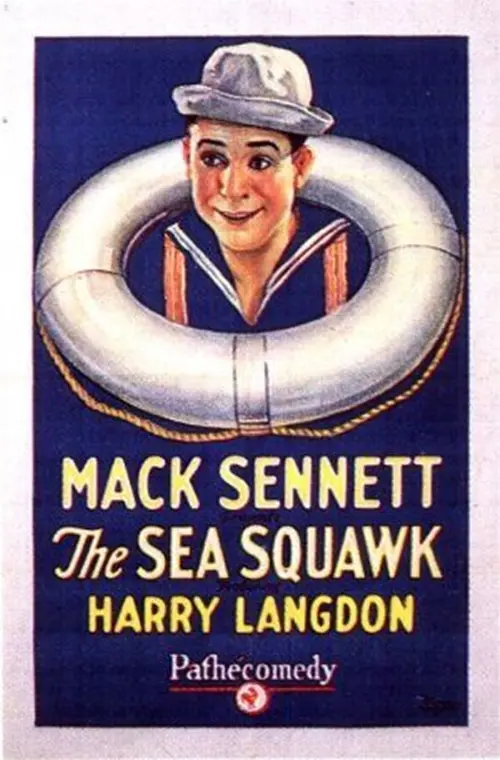
A definitive 6.6/10 rating for a film that redefined the boundaries of cult cinema. The Sea Squawk remains a cornerstone of transgressive art.
Is 'The Sea Squawk' a forgotten silent comedy worth rediscovering today? Short answer: absolutely, but with significant caveats regarding its comedic sensibilities and pacing. This film is an absolute must-see for silent film aficionados, particularly those with a deep appreciation for physical comedy and the unique artistry of Harry Langdon, but it will likely prove a challenging, perhaps even bewildering, experience for casual modern viewers accustomed to contemporary comedic rhythms.
Stepping aboard the S.S. Cognac, we are immediately thrust into a world where slapstick reigns supreme, and logic is merely a suggestion. Harry Langdon, often overshadowed by his more widely celebrated contemporaries like Chaplin and Keaton, delivers a performance that is both deeply endearing and utterly exasperating. His character, a naive Scottish immigrant, becomes the ultimate pawn in a high-stakes jewel heist, forced to endure escalating indignities with a bewildered, almost childlike innocence that is uniquely his own.
This film works because Harry Langdon's unparalleled physical comedy and his unique brand of innocent pathos elevate even the most chaotic sequences. His reactions, often delayed and deeply internal, are a masterclass in silent performance, making the absurdity feel strangely grounded.
This film fails because its narrative coherence often takes a backseat to a relentless barrage of gags, some of which feel dated or overly reliant on the protagonist's perpetual state of bewildered helplessness. The pacing, while frantic, can sometimes feel disjointed, struggling to maintain a consistent comedic rhythm.
You should watch it if you are a devoted fan of silent cinema, particularly slapstick, and are keen to witness a master comedian at work, even within a flawed vehicle. It's also essential viewing for anyone studying the diverse comedic styles of the silent era, offering a distinct contrast to the more acrobatic Keaton or the sentimental Chaplin.
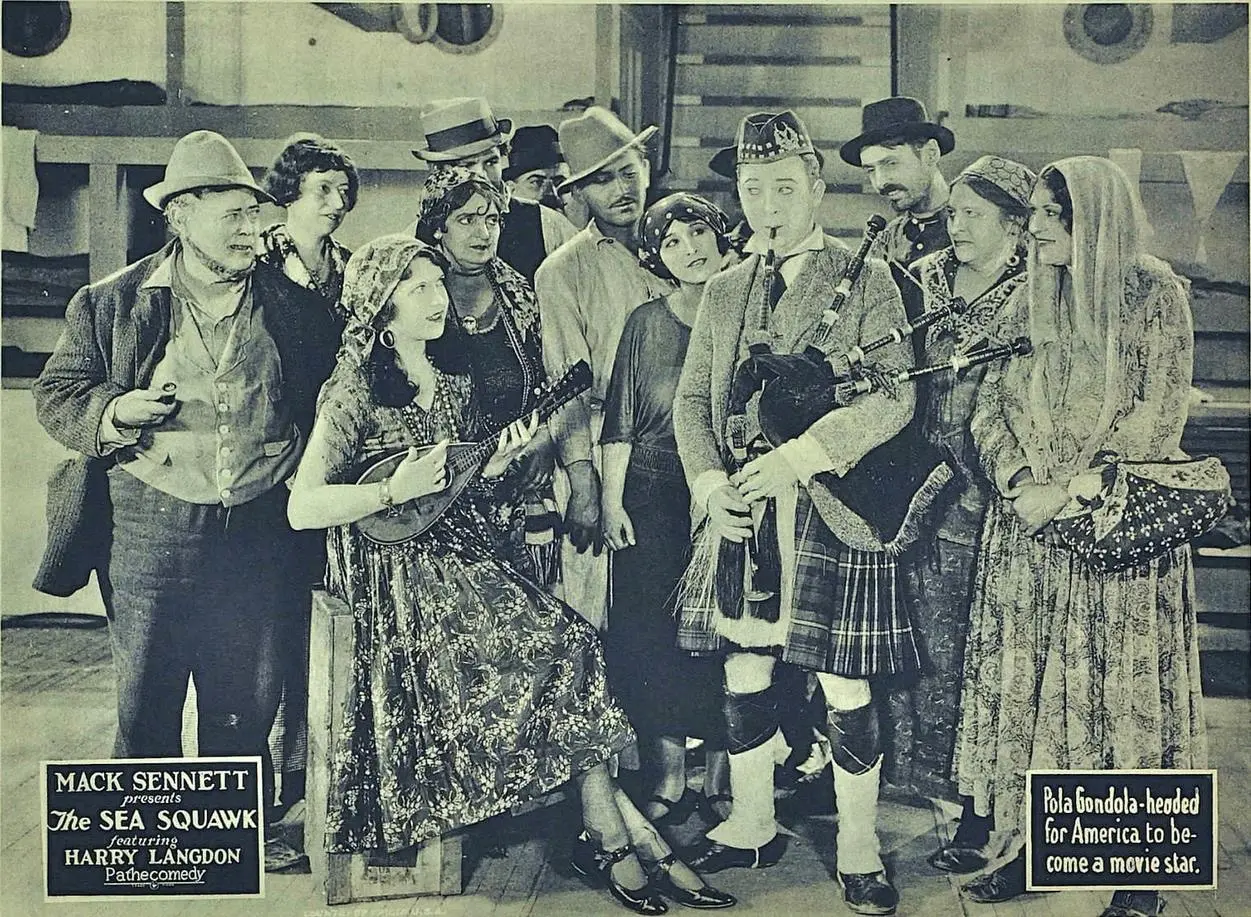
Harry Langdon's comedic persona is a fascinating anomaly of the silent era. Unlike the tramp's universal humanity or the great stone face's stoic ingenuity, Langdon's character is defined by an almost profound innocence, a wide-eyed bewilderment that makes him susceptible to every misfortune. In The Sea Squawk, this trait is pushed to its absolute limits. His Scottish immigrant, nameless and guileless, is less a proactive participant in the plot and more a human receptacle for the film's escalating madness.
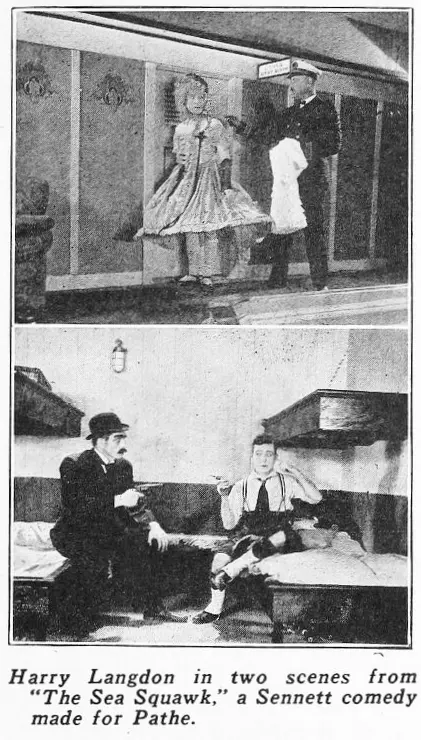
Consider the central conceit: he's forced to swallow a massive ruby. Langdon’s performance here isn't one of panicked defiance, but of a kind of dazed resignation. His eyes, typically large and expressive, convey a deep confusion rather than outright fear. It’s a subtle, almost internal form of comedy, where the humor derives from the sheer disproportion between the severity of his predicament and his meek response. This approach, while brilliant, requires patience from the viewer, as it unfolds more like a slow burn of escalating discomfort than rapid-fire gags.
His subsequent attempt to evade detection by disguising himself as a woman is a masterclass in physical awkwardness. Langdon doesn't just put on a dress; he embodies a caricatured femininity with an almost tragic earnestness. Every flutter of the eyelashes, every demure pose, is infused with his character's inherent shyness, making the disguise both hilariously unconvincing and strangely poignant. It’s a sequence that, despite its dated premise, showcases Langdon’s unique ability to find humor in vulnerability, a trait that sets him apart from his more overtly athletic or mischievous peers.
There's a moment when, even in drag, he attempts to flirt, or perhaps just interact, with another passenger. The sheer, unadulterated awkwardness of this exchange, the way his eyes dart around, uncertain and hopeful, speaks volumes about the character's loneliness and his desperate attempt to connect, even while literally hiding his identity. It’s this blend of broad physical comedy with a melancholic undercurrent that defines Langdon’s genius, making The Sea Squawk a vital piece of his filmography.
The direction in The Sea Squawk, typical of many silent comedies, often feels less like a meticulously planned narrative and more like a series of interconnected comedic set-pieces. The film, directed by Eddie Baker, prioritizes gags and physical comedy over a tightly woven plot. This isn't necessarily a flaw, especially for a film of its era, but it does mean that the narrative progression can feel episodic and, at times, bewildering.
The cinematography, while not groundbreaking, effectively captures the confined chaos of the S.S. Cognac. Close-ups are used sparingly but effectively to highlight Langdon's reactions, allowing his facial expressions to carry much of the comedic weight. Wide shots establish the frantic energy of the ship's corridors and decks, particularly during the climactic chase sequences. The camera often acts as a somewhat detached observer, allowing the absurdity to unfold without excessive manipulation, which paradoxically enhances the film's raw, unpolished charm.
Pacing is another significant element. The film moves at a breakneck speed, particularly in its latter half. There’s a constant sense of impending discovery, of the protagonist being perpetually on the verge of disaster. This frantic energy is both a strength and a weakness. It keeps the viewer engaged in the moment-to-moment gags, but it can also make the overall narrative feel rushed and underdeveloped. The tonal shifts are also quite pronounced, moving from lighthearted slapstick to genuinely perilous situations, such as Langdon's desperate climb across the ship's exterior, which injects a surprising dose of real danger into the farce.
The film's relentless pursuit of the next laugh, often at the expense of a cohesive story, is a double-edged sword. It's exhilarating for those who appreciate pure, unadulterated slapstick, but it can be exhausting for others. This is not a film that pauses for reflection; it simply barrels forward.
While The Sea Squawk is undeniably Langdon's show, the supporting cast plays crucial roles in propelling the chaos. Blackie Dawson and Pearl Blackstone, the jewel thieves, serve as effective antagonists, their menace providing the primary impetus for our hero's desperate actions. Their ruthlessness, though played for laughs, grounds the fantastical premise in a tangible threat.
The detective, hot on their trail, represents the forces of order, albeit a largely ineffectual one in the face of Langdon's accidental brilliance. And then there's Flora Danube, played by Eugenia Gilbert, described as a "blue-eyed Bulgarian daisy who keeps those eyes open." Her presence adds an element of romantic possibility and further complication, her sharp observations often inadvertently tightening the net around our bewildered protagonist. The dynamic between these characters, though often broad, creates a rich tapestry of comedic and dramatic tension.
The film's most unconventional observation, perhaps, is how it uses the ship itself as a character. The S.S. Cognac isn't just a setting; it's a labyrinthine, often treacherous environment that actively contributes to the protagonist's plight. From the cramped cabins where the ruby is swallowed to the precarious rigging he must climb, the ship is an active participant in the escalating absurdity. This turns a simple jewel heist into a true test of survival, pushing Langdon's character to his physical and emotional limits.
The climax, with its dizzying heights and frantic scrambling, feels almost proto-action-comedy. It’s a far cry from the more contained antics of a typical drawing-room farce, demonstrating a willingness to embrace spectacle that was perhaps ahead of its time for a comedy of this nature. It works. But it’s flawed. The ending, with its teasing question about a "European union in the offing," hints at a romantic resolution that feels both earned and somewhat rushed, given the preceding pandemonium.
Yes, The Sea Squawk is absolutely worth watching today, especially for specific audiences. It's a fascinating artifact of silent cinema, showcasing a unique comedic talent in Harry Langdon.
For silent film enthusiasts, it offers a deep dive into Langdon's particular brand of pathos-driven slapstick. It stands in stark contrast to the more widely recognized styles of Chaplin and Keaton, providing a valuable perspective on the diversity of comedic expression during that era.
However, for casual viewers, the film's reliance on physical comedy that can sometimes feel dated, and a plot that prioritizes gags over narrative cohesion, might be a hurdle. It requires an open mind and an appreciation for the historical context of silent film.
Those studying film history or the evolution of comedy will find immense value in its inventive sequences and Langdon's nuanced performance. It's a film that rewards careful observation and a willingness to engage with its unique rhythms.
The Sea Squawk is a charming, if chaotic, relic of the silent era that rides almost entirely on the shoulders of its unique star, Harry Langdon. It’s a film that demands patience and an appreciation for a comedic style that prioritizes bewildered innocence over aggressive wit or acrobatic prowess. While its narrative structure is undeniably flimsy and some of its humor has aged, Langdon’s performance remains a compelling study in silent comedy.
For those willing to immerse themselves in its particular brand of absurdity, there’s immense joy to be found. It’s a testament to Langdon’s singular talent that even within a film that often feels like a runaway train, he manages to anchor the experience with genuine pathos and a deeply human, albeit often passive, comedic spirit. Don't expect a pristine narrative, but do expect to witness a master at work, struggling against a world determined to make him its bewildered plaything. It's not perfect, but it's undeniably captivating for the right audience.

IMDb —
1919
Community
Log in to comment.