DbcultAccessing Vault...
Cult Review
Senior Film Conservator
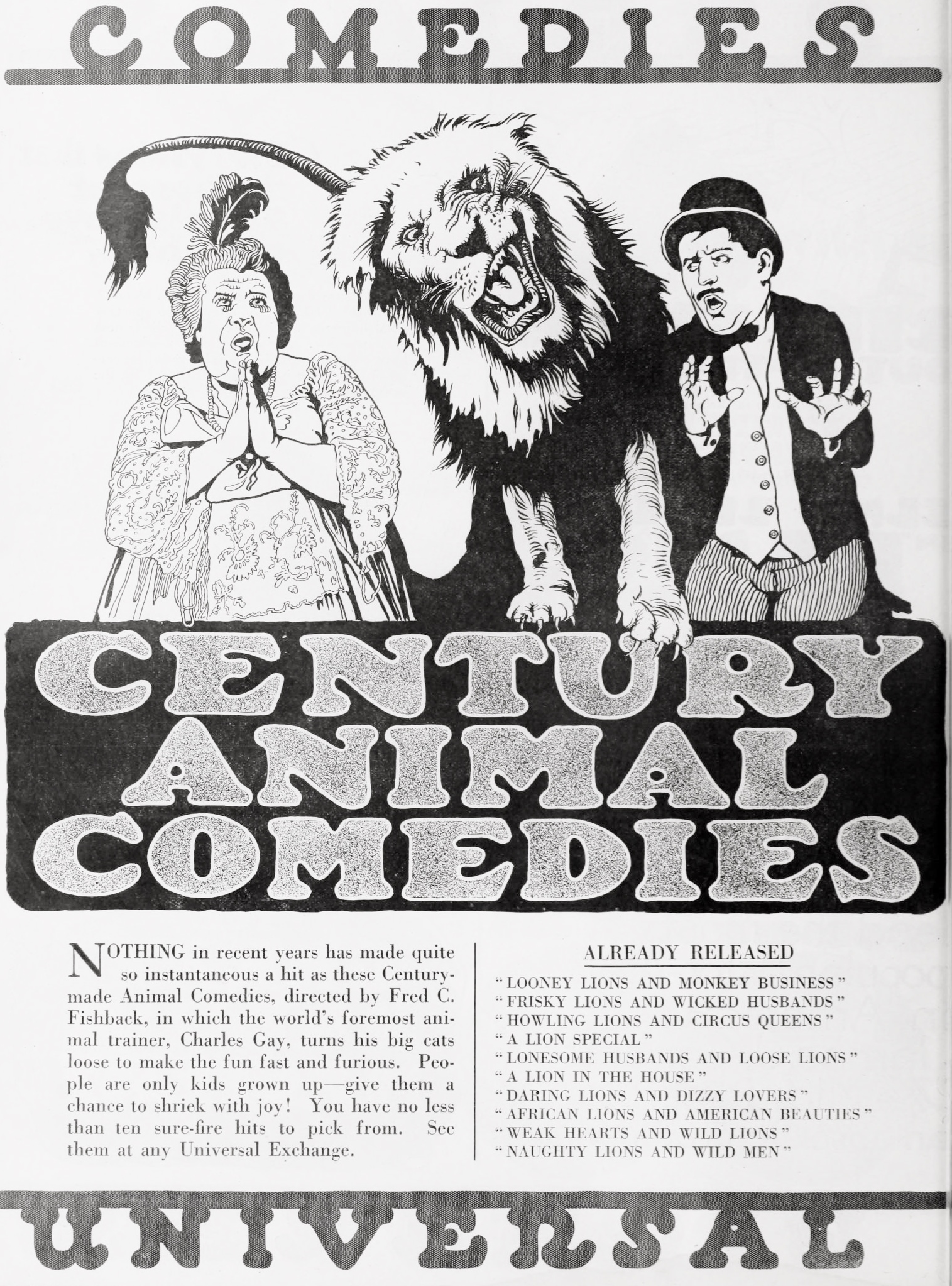
In the annals of early cinema, where the boundaries of narrative and spectacle often blurred into a delightful, if sometimes baffling, melange, Fred Hibbard’s African Lions and American Beauties stands as a testament to an era unburdened by conventional logic. This cinematic curiosity, starring Esther Wood and Jimmie Adams alongside the formidable 'The Century Lions,' is less a film and more a fever dream rendered on celluloid, a potent concoction of slapstick, romance, and untamed bestiality that defies easy categorization. It’s a work that, even a century later, continues to provoke a bewildered smile, a testament to its audacious, almost anarchic spirit. The very premise itself is a glorious exercise in the absurd, setting the stage for a whirlwind of events that escalate with a relentless, comedic momentum, leaving the viewer simultaneously amused and utterly perplexed by its sheer, unadulterated audacity. It’s a film that demands to be viewed not through the lens of modern critical analysis, but as a vibrant, untamed artifact from a time when anything was possible on screen, and frequently, everything was thrown at it.
Our journey commences in the quaint, perhaps deceptively tranquil, municipality of Youthville, a place where professional specialization appears to be a foreign concept. Here, we are introduced to a character of singular ambition and dubious credentials: a self-proclaimed 'specialist in everything' who has adopted the rather unconventional, yet undeniably direct, marketing strategy of perambulating the public thoroughfares with an enormous placard proclaiming his singular professional identity: 'Doctor.' This wandering medical enigma, a precursor to many a cinematic charlatan, embodies the freewheeling spirit of an age where expertise was often self-anointed, and a bold declaration was as good as a diploma. His presence immediately establishes a tone of lighthearted absurdity, a world where the extraordinary is merely a Tuesday afternoon. This unconventional protagonist sets the stage for a narrative that will consistently challenge expectations, weaving together disparate elements with a whimsical disregard for realism. The character's overt, almost comical, self-promotion serves as a delightful satirical jab at the burgeoning commercialism of the era, where the promise of a quick fix or a universal remedy held significant sway over an unsuspecting public. It's a charmingly naive portrayal of a nascent professional landscape, where the lines between genuine service and audacious opportunism were delightfully blurred.
Simultaneously, the narrative introduces us to a parallel, equally idiosyncratic storyline involving the pampered daughter of an affluent industrialist. This young woman, a quintessential 'American Beauty' of her time, is being dispatched by her father to the esteemed fashion domestic science school, an institution of genteel instruction overseen by the mysteriously named Prof. P. Soop. The very notion of a 'fashion domestic science school' evokes a bygone era of feminine accomplishment, a blend of practical skills and aesthetic refinement that now feels charmingly anachronistic. Her departure, however, is not without its romantic complications. She leaves behind a devoted beau, a man whose prowess lies not in finance or industry, but in the arcane art of tiddley-winks – a detail that further cements the film's commitment to the delightfully peculiar. Their parting is sweetened by a clandestine note, dropped from the train window, a small gesture of encouragement that fuels her suitor's extraordinary determination. In an act of unparalleled, almost heroic, romantic zeal, he pursues her, not by car or horse, but by driving his vehicle directly upon the train tracks, a testament to the unyielding, perhaps slightly unhinged, nature of silent film romance. This audacious pursuit, fraught with inherent peril, serves as a powerful visual metaphor for the lengths to which love's young dreamers would go, transforming a simple journey into an epic quest. The sheer impracticality of his chosen mode of transport only enhances the comedic charm, highlighting the film's playful disregard for the mundane realities of travel and logic.
Upon her arrival at the aforementioned academic institution, the ingenue is assigned her humble cot within the bustling girls' dormitory. No sooner has she settled than she is overcome by a dramatic 'fit,' an immediate and rather theatrical collapse that, with impeccable comedic timing, provides the perfect opportunity for the peripatetic 'Doctor' to make his grand, albeit entirely coincidental, entrance. This sudden onset of histrionics, a classic trope of early melodrama, is expertly utilized to propel the plot forward, creating a convenient pretext for our self-styled medical professional to interact with the film's leading lady. His arrival, a moment of seemingly opportune intervention, is played for maximum comedic effect, positioning him as the improbable hero in a developing farce. The dormitory, a setting typically associated with feminine decorum and academic pursuits, is thus transformed into an unwitting stage for an impending chaos, its quietude a mere prelude to the pandemonium that is about to unfold. The dramatic 'fit' itself, while seemingly a serious ailment, is imbued with a lightheartedness that prevents it from veering into genuine distress, maintaining the film's overarching tone of whimsical absurdity. It's a clever narrative device that efficiently brings together disparate characters, setting the stage for the truly outlandish events yet to come.
Yet, just as the 'Doctor' commences his examination, the narrative swerves sharply into the utterly unexpected. From a distant wharf, where they have presumably just arrived from the African continent, a pride of lions – 'The Century Lions' themselves – stages a dramatic escape. These majestic, untamed beasts, rather than making for the open countryside, inexplicably choose the girls' dormitory as their primary destination, infesting the hallowed halls of domestic science with their fearsome presence. The sheer improbability of this scenario is its greatest strength, a sudden, jarring injection of wild, untamed nature into a setting of refined femininity. The juxtaposition is inherently hilarious, a testament to Fred Hibbard’s willingness to embrace the most outlandish of narrative twists. The immediate aftermath is, predictably, a scene of utter bedlam. A terrible scramble ensues, a cacophony of screams and frantic movement, as the girls, previously concerned with fashion and etiquette, now face a far more primal threat. The excitement, already at a fever pitch, skyrockets as the lions, with predatory intent, begin their attacks, transforming the dormitory from a place of learning into a battleground for survival. This sudden, violent eruption of chaos is a masterstroke of comedic timing, taking the nascent romantic comedy and twisting it into something far more exhilarating and memorably bizarre. The choice of lions, rather than any other animal, elevates the stakes considerably, tapping into a primal fear that, when subverted for comedic purposes, becomes incredibly effective.
Faced with an unprecedented invasion, the young women demonstrate a remarkable, if desperate, ingenuity. In a moment of collective quick thinking, they roll their dormitory beds together, forming a makeshift barricade against the encroaching predators. But their true stroke of genius lies in their utilization of the bedsprings, which they ingeniously transform into improvised cages, creating temporary, if flimsy, sanctuaries from the snarling beasts. This resourceful act of self-preservation, born out of sheer terror, becomes one of the film's most memorable visual gags, a testament to the human spirit's capacity for innovation even under the most extreme duress. The image of young women, typically portrayed as delicate and vulnerable, actively constructing defenses against wild animals, subverts traditional gender roles in a delightfully unexpected way. The tension of the situation is expertly balanced with the inherent absurdity of their chosen defense, maintaining the film's comedic tone even in the face of genuine peril. This scene, more than any other, encapsulates the film's unique charm: its ability to blend genuine suspense with outlandish humor, creating a spectacle that is both thrilling and inherently ridiculous. The sheer visual impact of these improvised cages, made from the most mundane of dormitory furniture, speaks volumes about the creative spirit of early silent cinema, where practical effects and clever staging could conjure up truly unforgettable moments. It’s a moment that resonates with the spirit of films like The Battle and Fall of Przemysl, not in content, but in the ingenuity of human response to overwhelming odds, albeit here played for laughs.
Amidst this swirling vortex of feline fury and feminine fright, the 'Doctor' finds his own peculiar refuge. Exhibiting a survival instinct that prioritizes immediate concealment over heroic intervention, he wedges himself into an ice box, seeking sanctuary from the chaos. This choice of hiding place is inherently comedic, a clear indication of his less-than-heroic temperament, and further cements his role as a bumbling, yet well-meaning, figure of fun. His retreat into the cold confines of the ice box offers a stark contrast to the fiery danger outside, creating an immediate visual gag. Even more bizarrely, a young colored errand boy, also caught in the dormitory inferno, opts for an equally improbable, if thermally challenging, sanctuary: a red hot oven. The sheer irony of these choices, the doctor seeking cold, the boy seeking heat, is a stroke of comedic genius, setting up a delightful reversal of expectations. The subsequent physical consequences – the doctor overcome by the frigid temperatures of the ice box, and the errand boy, against all logic, catching a cold in the searing heat of the oven – are moments of pure, unadulterated slapstick brilliance. These ironic ailments serve as the ultimate punchline, highlighting the film's playful disregard for scientific accuracy in favor of maximum comedic impact. It’s a testament to the film's commitment to the absurd, where even the laws of thermodynamics are bent for the sake of a good laugh. This kind of physical comedy, reliant on exaggerated reactions and improbable scenarios, is a hallmark of the era, reminiscent of the inventive physical gags seen in films like A Kiss for Susie, where character predicaments drive much of the humor.
The film culminates in a wild chase sequence, a kinetic ballet of pursuit and evasion that sweeps through the dormitory, involving lions, terrified girls, and our two comically incapacitated male characters. This frantic crescendo of action is a masterclass in silent film choreography, relying on exaggerated movements and rapid-fire editing to convey the sheer exhilaration and absurdity of the moment. The chase, a staple of early cinema, is elevated here by the unique presence of the lions, transforming a conventional pursuit into something far more thrilling and unpredictable. The 'Century Lions' themselves deserve a special mention; their performance, whether by careful training or sheer happenstance, adds an undeniable authenticity and unpredictable energy to the proceedings. The sheer spectacle of real lions interacting, however staged, with human actors, must have been a powerful draw for audiences of the time, much like the grand vistas and exotic locales showcased in films like Armenia, the Cradle of Humanity under the Shadow of Mount Ararat, though the context here is wildly different. The comedic timing, even without spoken dialogue, is expertly managed, with visual gags and physical humor driving the narrative forward with relentless pace. Fred Hibbard, as the writer, demonstrates a keen understanding of what makes an audience laugh, crafting a scenario that is as preposterous as it is entertaining. The film never takes itself too seriously, embracing its own outlandishness with a charming self-awareness that makes the entire experience all the more enjoyable. This culminates in a resolution that, while entirely predictable for the genre, provides a satisfying emotional payoff after the preceding chaos.
The performances by Esther Wood and Jimmie Adams, while typical of the era's broad acting style, are perfectly suited to the film's comedic tone. Esther Wood, as the millionaire's daughter, embodies the ingenue archetype with a delightful blend of vulnerability and unexpected resourcefulness. Her dramatic 'fit' is a moment of high melodrama played for laughs, showcasing her ability to convey exaggerated emotion without descending into mere caricature. Jimmie Adams, as the tiddley-winks champion, projects an earnest, almost puppy-dog devotion that makes his arduous pursuit of his beloved both endearing and amusing. His unwavering commitment, even when confronted with the absurdities of the plot, anchors the romantic subplot with a genuine, if comically exaggerated, sincerity. The dynamic between the two leads, though often separated by circumstance, provides the emotional core, however lighthearted, of this otherwise chaotic narrative. Their eventual union, the traditional happy ending of many a silent comedy, feels earned through the sheer perseverance of Adams' character and the trials endured by Wood's. The 'Doctor' character, though unnamed, provides a consistent source of ancillary humor, his bumbling attempts at medical intervention and self-preservation serving as a comedic foil to the more direct romantic plot. The ensemble's commitment to the inherent silliness of the premise is what ultimately sells the film, transforming what could have been a nonsensical spectacle into a genuinely entertaining experience. The physical comedy, a cornerstone of silent film, is executed with a commendable vigor, ensuring that even without dialogue, the emotions and intentions are crystal clear to the audience, much like the clear, albeit simpler, narratives of films such as A Western Wooing.
Fred Hibbard's direction, typical of the period, is characterized by its brisk pacing and straightforward storytelling, allowing the inherent absurdity of the plot to shine through without unnecessary embellishment. He understands the power of visual humor and spectacle, orchestrating the lion invasion with a flair for the dramatic that never overshadows the comedic intent. The use of live animals, a common practice in early cinema, adds an undeniable, if somewhat unsettling, element of realism to the fantastical scenario. One can only imagine the logistical challenges and inherent risks involved in filming with actual lions in a confined dormitory setting, a testament to the daring spirit of early filmmakers. This willingness to push boundaries, to create spectacle by any means necessary, is a defining characteristic of the era, much like the ambitious scale seen in documentaries such as All for the Movies: Universal City, California, the Wonder City of the World, albeit with a different focus. The film’s narrative structure, though episodic, builds effectively towards its chaotic climax, ensuring that each new plot development adds another layer of delightful madness. Hibbard’s ability to maintain a consistent tone of lighthearted farce amidst genuine peril is commendable, a delicate balance that few filmmakers could achieve with such apparent ease. The film, therefore, serves not only as a piece of entertainment but also as a valuable historical document, offering a glimpse into the production practices and comedic sensibilities of a bygone cinematic age.
The thematic underpinnings of African Lions and American Beauties, while not overtly profound, touch upon familiar silent film tropes: the pursuit of love against all odds, the triumph of ingenuity over adversity, and the inherent humor found in unexpected situations. It’s a celebration of youthful exuberance and romantic idealism, even when those ideals are tested by escaped predators and questionable medical practitioners. The film's resolution, a classic happy ending where the 'love-sick maiden' finally marries her devoted tiddley-winks champion, reaffirms the comforting narrative conventions of the era. This satisfying conclusion, achieved after a whirlwind of comedic chaos, provides a sense of closure and reinforces the notion that true love, however circuitous its path, will ultimately prevail. The film's lasting appeal lies in its unapologetic embrace of the ridiculous, its ability to transport the viewer to a world where lions roam dormitories and doctors hide in ice boxes, all in the name of a good laugh. It’s a delightful reminder of a time when cinema was still finding its voice, experimenting with narrative forms and visual gags, and often stumbling upon moments of accidental genius. The sheer joy derived from its unhinged plot and energetic performances ensures its place as a charming, if peculiar, gem in the vast tapestry of silent cinema.
Comparing African Lions and American Beauties to other films of its time reveals its unique position within the silent film landscape. While films like A Lass of the Lumberlands might focus on more grounded romantic adventures or The Glory of Youth on dramatic coming-of-age narratives, Hibbard's creation plunges headfirst into pure, unadulterated farce. It shares a certain anarchic spirit with other early comedies, where the emphasis was on physical gags and escalating chaos rather than nuanced character development. The film’s audacity in deploying actual lions for comedic effect is a bold move that sets it apart, a spectacle that transcends mere slapstick, venturing into the realm of the truly bizarre. This willingness to blend disparate genres – romantic comedy, creature feature, and pure absurdity – is a hallmark of early cinematic experimentation, where filmmakers were still discovering the vast potential of the medium. The film's historical context is also crucial; released during a period of rapid social and technological change, it offered audiences an escape into a world where the rules of reality were delightfully suspended. It represents a fascinating snapshot of popular entertainment, reflecting a desire for escapism and lighthearted amusement in a rapidly evolving world. The film stands as a testament to the ingenuity and daring of early cinema, a period where filmmakers were not afraid to take risks, to push the boundaries of what was considered acceptable or even possible on screen. Its influence, while perhaps not directly traceable in mainstream blockbusters, lies in its contribution to the vocabulary of comedic filmmaking, demonstrating the power of juxtaposition and unexpected elements to generate laughter.
In conclusion, African Lions and American Beauties is far more than a mere curiosity; it is a vibrant, if peculiar, artifact of early cinema. Its audacious plot, memorable characters, and relentless comedic energy ensure its enduring appeal. Fred Hibbard, Esther Wood, Jimmie Adams, and indeed, 'The Century Lions,' have bequeathed to us a film that continues to mystify and delight, a testament to the boundless imagination of an era that dared to put lions in a girls' dormitory and call it romance. It defies easy explanation, demanding instead to be experienced, to be reveled in for its sheer, unadulterated absurdity. It’s a film that reminds us that sometimes, the greatest cinematic treasures are found not in profound narratives or groundbreaking techniques, but in the joyous, uninhibited embrace of the utterly ridiculous. Much like the unique cultural insights offered by films like Tsar Nikolay II or Ruslan i Lyudmila provide glimpses into specific historical moments, this film offers a window into the unconstrained, experimental spirit of early American comedy. Its lasting legacy is not just in its individual merits but in its contribution to the rich, diverse tapestry of silent film, a period of unparalleled creativity and boundless invention. It is a film that, despite its age, continues to roar with a vibrant, comedic energy, inviting new generations to marvel at its delightful madness and the sheer, unbridled joy of its unique vision.
IMDb 7.2
1925
Community
Log in to comment.