DbcultAccessing Vault...
Cult Review
Senior Film Conservator
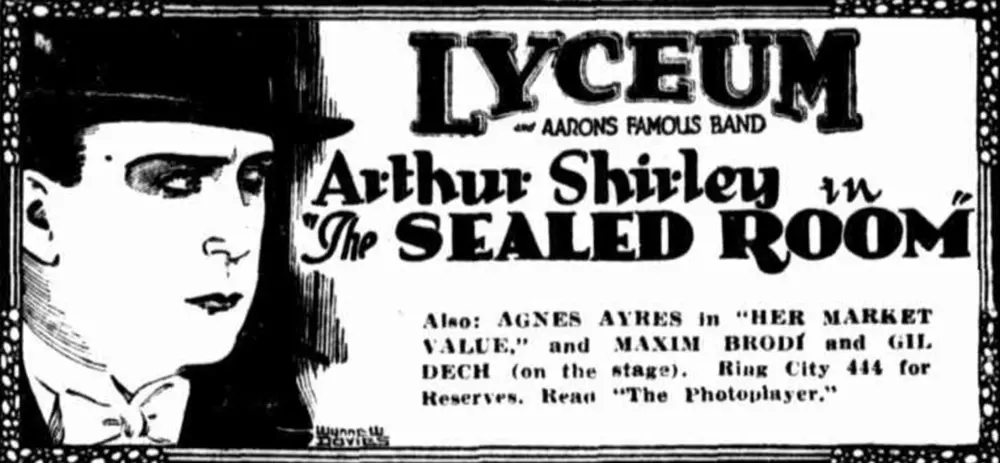
Is 'The Sealed Room' worth watching today? Short answer: yes, but with significant caveats that demand a specific kind of viewer. This film is an intriguing historical artifact best suited for silent cinema enthusiasts and those fascinated by the nascent stages of espionage thrillers, but it will likely test the patience of mainstream audiences accustomed to modern pacing and narrative sophistication.
For those willing to engage with its historical context, 'The Sealed Room' offers a fascinating glimpse into early genre filmmaking. However, it is unequivocally not for viewers seeking immediate gratification, complex character arcs, or cutting-edge technical prowess. It demands an appreciation for the foundational elements of cinema, where narrative ingenuity often had to compensate for technological limitations.
Let's be brutally honest about its standing:
'The Sealed Room' plunges us into the world of Paul Craig, an aviator-inventor whose relentless dedication to his craft ultimately costs him his sight. This tragic irony is central to the film’s unique appeal: a man who once soared above the clouds is now confined to a world of darkness. It is in this state of vulnerability that he inadvertently becomes entangled in a high-stakes political conspiracy, a narrative engine that feels both classic and surprisingly fresh for its time.
The genius of Arthur Shirley’s premise, as both writer and actor, lies in the assassins' decision to spare Craig. They see his blindness not as a threat, but as an absolute guarantee of their anonymity. This pivotal choice imbues the film with an almost unbearable dramatic irony. The audience knows Craig is a witness, even if he cannot identify his perpetrators, and this knowledge hangs heavy, creating a palpable sense of dread that transcends the silent medium.
The plot to overthrow the monarchy of fictional Ruvania is, admittedly, a standard silent-era trope. Many films of the period, from The Secret Kingdom to The Pretenders, dabbled in similar European political intrigues. However, 'The Sealed Room' elevates this familiar framework by grounding it in a profoundly personal and physically debilitating condition. It’s not just about political machinations; it’s about one man's struggle to perceive a world that actively seeks to exploit his inability to see.
The tension isn't derived from car chases or shootouts, but from the slow, creeping realization that Craig, though blind, holds a dangerous piece of information. The 'sealed room' itself becomes a metaphor for Craig's isolated existence, a place where truth and deception play out in the shadows, just beyond his reach yet intimately connected to his fate. This narrative choice is audacious and, for the most part, remarkably effective.
Arthur Shirley, pulling double duty as both writer and a key player in the cast, crafts a narrative that, while occasionally rudimentary, demonstrates a keen understanding of suspense for early cinema. His screenplay for 'The Sealed Room' relies heavily on visual cues and intertitles, which must carry the full weight of the story's exposition and emotional beats. This is where the film sometimes falters, as the reliance on text can disrupt the flow, a common pitfall of the era.
However, Shirley also makes some remarkably astute choices. The decision to make the protagonist blind is not merely a gimmick; it's a structural necessity that forces creative solutions in storytelling. How do you show a blind man's experience without sound? Shirley employs simple yet effective visual metaphors – Craig's fumbling hands, his hesitant gait, the way others guide him – to convey his altered perception.
As a director, Shirley's approach is functional rather than groundbreaking. He prioritizes clarity and narrative progression over stylistic flourishes. There are no sweeping crane shots or intricate camera movements; instead, the camera is largely static, observing the action. This directness, while perhaps lacking in visual poetry, ensures the audience remains focused on the central conflict and Craig's predicament.
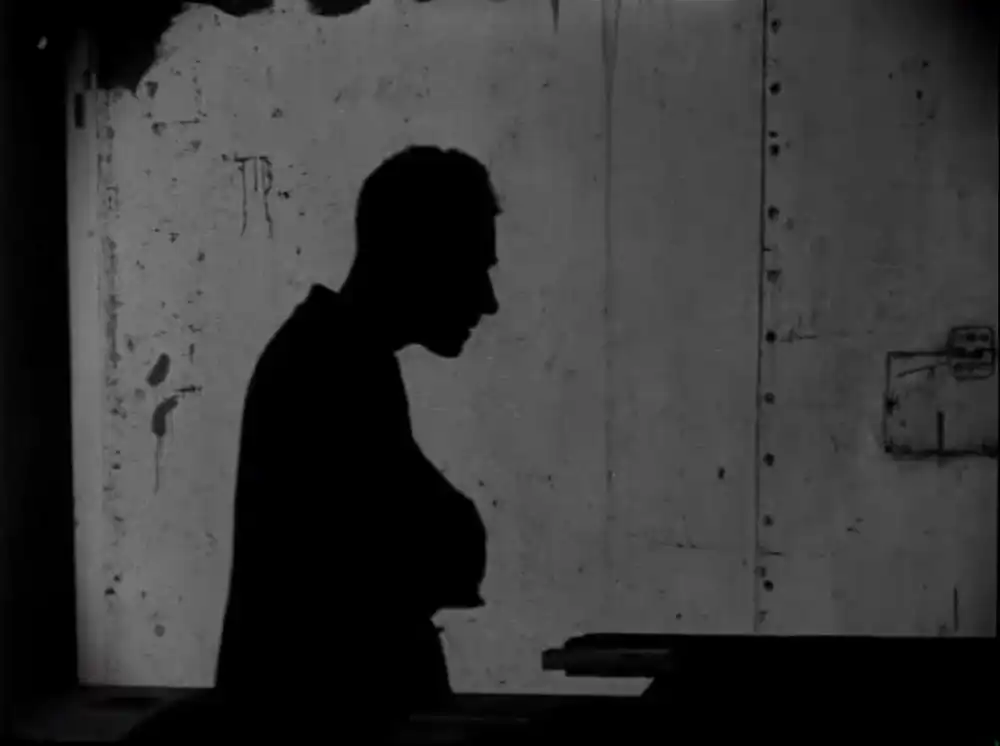
One particularly effective directorial choice is the framing of the murder scene. The killers' faces are deliberately obscured, often by shadows or clever blocking, reinforcing the idea that Craig's blindness is their ultimate protection. This visual strategy is surprisingly sophisticated for a film of this vintage, demonstrating a nascent understanding of how to build suspense through obfuscation rather than explicit revelation.
Compared to more flamboyant directors of the time, Shirley's work here is understated. He's more concerned with the mechanics of the plot than with grand artistic statements. This pragmatic approach has its merits, ensuring the story remains coherent, but it also means the film doesn't quite reach the heights of visual innovation seen in, say, a Griffith or a DeMille. It’s a workmanlike effort, elevated by a strong core idea.
Shirley’s greatest contribution is arguably the sheer audacity of his premise, trusting the audience to invest in a protagonist whose primary characteristic is a sensory deprivation. This was a gamble that largely paid off, proving that compelling narratives didn't always require overt action.
The cast of 'The Sealed Room', including Cora Warner, Muriel Veck, and Arthur Shirley himself, faced the formidable challenge of conveying complex emotions and motivations without the aid of spoken dialogue. Their performances rely heavily on exaggerated facial expressions, body language, and the theatricality common to early silent cinema. While this style can feel melodramatic to modern eyes, it was the lingua franca of film acting at the time.
Arthur Shirley, in the demanding role of Paul Craig, carries much of the film's emotional weight. Portraying blindness convincingly in a silent medium is no small feat. Shirley manages to convey Craig's vulnerability and his internal struggle through subtle shifts in posture and a vacant, searching gaze that, for the most part, avoids caricature. There are moments where his performance truly shines, particularly in scenes where Craig grapples with his new reality, a quiet despair etched on his face.
Cora Warner and Muriel Veck, in their respective roles, provide the necessary emotional anchors and dramatic foils. While their characters are not as deeply explored as Craig's, they effectively convey fear, concern, and the underlying tension of the conspiracy. Veck, in particular, manages to imbue her character with a sense of urgency and desperation that helps to propel the plot forward, even when the narrative slows.
The foreign agents, played by actors like Walter Bentley and George Bryant, are largely archetypal villains, relying on menacing glares and furtive movements to establish their nefarious intentions. They are effective in their simplicity, serving their purpose as clear antagonists. The lack of nuance in their portrayal is a product of the era, where clear-cut heroes and villains were often preferred for easier audience comprehension.
One could argue that the performances, while competent for their time, often lack the subtle realism that would come to define later eras of acting. However, to judge them by modern standards would be anachronistic. Within the context of silent film, these actors delivered what was expected, and in Shirley's case, he offered a performance that transcended mere pantomime to touch on genuine pathos.
The cinematography in 'The Sealed Room' is functional, serving the story rather than attempting overt artistry. Shots are generally well-composed, with a clear focus on the characters and their actions. The use of natural light, often supplemented by artificial sources, creates a somewhat stark, realistic feel that grounds the more melodramatic elements of the plot. There are no lavish sets or breathtaking vistas, but rather intimate, often claustrophobic, interior spaces that reinforce the film's title and Craig's confinement.
The camera work, while rudimentary by today’s standards, effectively isolates Craig in several key scenes. Close-ups are used sparingly but effectively to highlight moments of intense emotion or critical plot points, such as a character's sudden realization or a villain's grim determination. The most memorable visual moments are often those that emphasize Craig's blindness, using shadows to obscure his surroundings or framing shots from his limited perspective.
Pacing is where 'The Sealed Room' truly shows its age. Silent films generally operated at a slower tempo than modern cinema, allowing time for audiences to absorb visual information and read intertitles. This film is no exception. The narrative unfolds deliberately, with lengthy scenes dedicated to character reactions or the slow progression of events. While this can feel sluggish to contemporary viewers, it also allows for a gradual build-up of suspense that is quite effective when you settle into its rhythm.
There are moments of sudden, jarring action, such as the initial murder, which provide necessary jolts to the narrative. However, these are interspersed with quieter, more reflective scenes that explore Craig's internal world. This balance, while uneven at times, demonstrates an early attempt to weave together character study with genre thrills. It works. But it’s flawed.
Yes, 'The Sealed Room' is worth watching, particularly for those with an interest in cinematic history or the evolution of the thriller genre. It offers a unique premise and some surprisingly effective moments of suspense for its time. It serves as a valuable document of early filmmaking techniques and narrative ambition.
However, be prepared for a viewing experience that requires patience and an understanding of its historical context. The film's pacing is slow by modern standards, and its acting style can feel overly dramatic. It is not an action-packed spectacle, nor is it a character study with deep psychological insights.
Ultimately, its value lies in its historical significance and its clever central conceit. It is a film that rewards thoughtful engagement rather than passive consumption. For students of film, it's a must-see. For the casual viewer, it might be a challenging but ultimately rewarding experience if approached with the right mindset.
Pros:
Cons:
'The Sealed Room' is more than just a forgotten relic; it’s a fascinating, if imperfect, piece of cinematic history. Its core concept — the blind witness to a political assassination — remains remarkably potent, a testament to Arthur Shirley’s narrative ingenuity. While its execution is undeniably a product of its time, marked by the slow pacing and theatrical acting common to early silent films, it possesses a unique charm and a surprisingly effective tension that transcends its limitations.
For those willing to adjust their expectations and immerse themselves in the viewing sensibilities of a bygone era, 'The Sealed Room' offers a rewarding experience. It demonstrates that even in the nascent stages of cinema, filmmakers were exploring complex narrative devices and pushing the boundaries of suspense. It’s a film that demands your attention not for its flash, but for its foundational cleverness. It's not a masterpiece, but it's far from forgettable. Seek it out if you appreciate the quiet innovation of early cinema.
IMDb —
1923
Community
Log in to comment.