DbcultAccessing Vault...
5.2/10
Senior Film Conservator
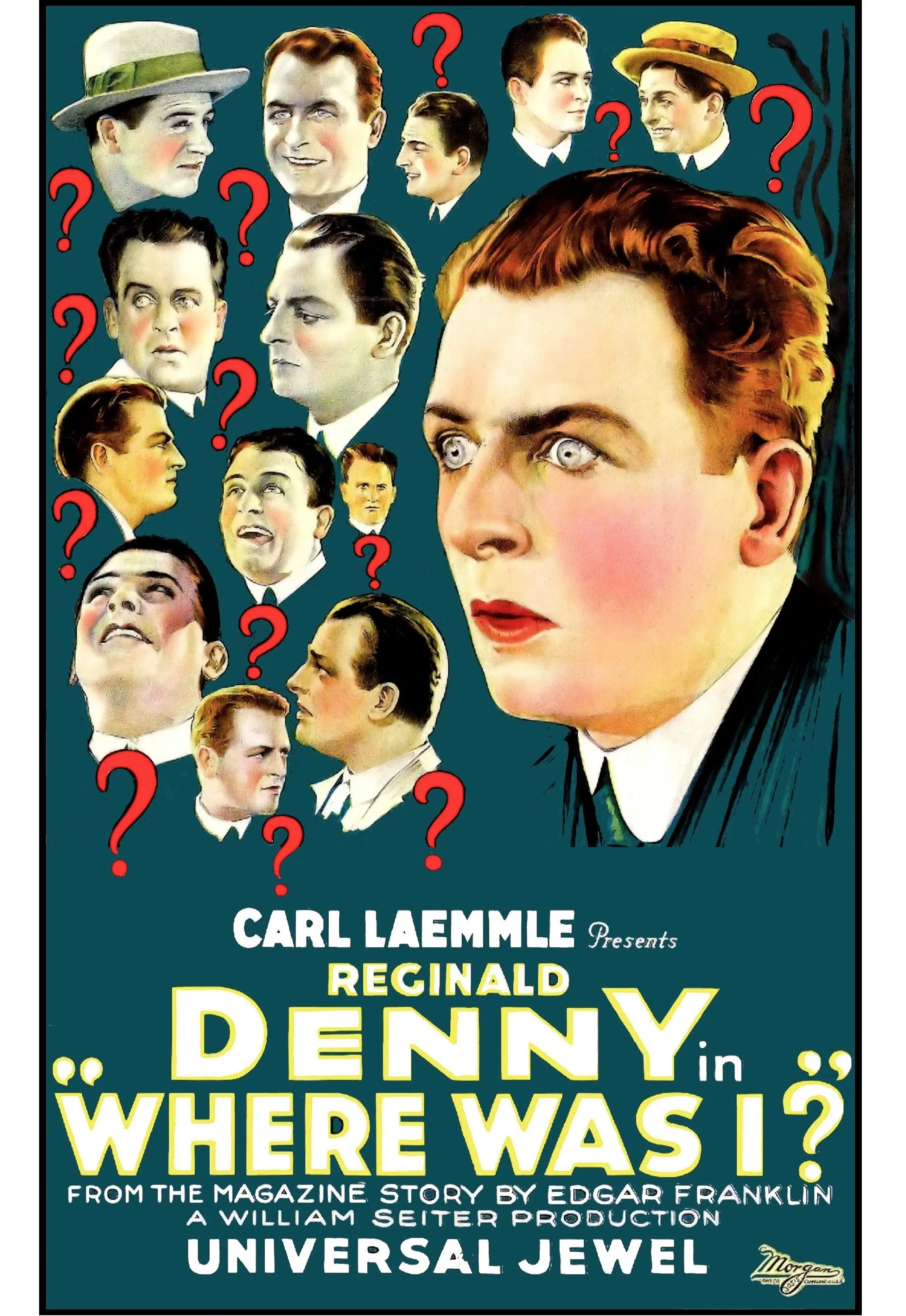
A definitive 5.2/10 rating for a film that redefined the boundaries of cult cinema. Where Was I? remains a cornerstone of transgressive art.
Short answer: yes, but with significant caveats. “Where Was I?”, a silent-era production, is unequivocally worth watching today for devoted cinephiles, film historians, and anyone with a genuine appreciation for the foundational artistry of early cinema. It is emphatically not for the casual viewer seeking modern pacing or dialogue-driven narratives, nor for those who struggle to engage with the distinct visual language and performance styles of the 1920s.
The silent film era, often dismissed by contemporary audiences as a historical curiosity, holds within its reels a treasure trove of narratives that, when viewed through the right lens, reveal profound insights into human nature and the evolving craft of storytelling. “Where Was I?”, a film whose very title suggests a journey into the past, is precisely one such artifact. It presents a stark, character-driven drama that, despite its age, grapples with themes of control, class, and the often-destructive nature of maternal ambition.
At its core, the film is a fascinating exploration of a mother's relentless campaign to sabotage her daughter's engagement, not merely through disapproval, but through calculated financial ruin of the prospective son-in-law. This premise alone sets it apart, moving beyond typical romantic melodrama to a more sinister, psychological confrontation. It's a testament to the power of silent cinema that such a complex and morally ambiguous plot could be conveyed with such clarity, relying almost entirely on visual cues and the nuanced performances of its cast.
The film, perhaps not a household name even among silent film aficionados, offers a compelling case study in the dramatic conventions of its time. It forces us to engage with storytelling in a different mode, one that prioritizes expressionistic acting, evocative cinematography, and the interpretive power of the audience's imagination. This engagement is precisely where its modern value lies, inviting a deeper appreciation for the roots of cinematic art.
The central conflict of “Where Was I?” is deceptively simple yet profoundly potent: a mother, portrayed by the formidable Marian Nixon, sets out to destroy her daughter's happiness by targeting her fiancé, played by William H. Turner. Her objective is not merely to voice disapproval but to systematically dismantle the engagement and, more chillingly, to financially devastate the young man. This is a mother who doesn't just object; she actively plots, schemes, and executes with a ruthlessness that feels surprisingly modern.
The script, credited to Melville W. Brown, Rex Taylor, and Edgar Franklin, manages to build considerable tension from this singular premise. It avoids the temptation of making the mother a one-dimensional villain by implying motivations that, while twisted, stem from a perceived duty or a warped sense of protecting her daughter’s future. Is it class anxiety? A desire for control? Or perhaps a tragic echo of her own past disappointments? The film leaves room for interpretation, which is one of its quiet strengths.
The narrative unfolds with a series of implied maneuvers rather than overt confrontations. We can almost visualize Nixon’s character, with a calculating glint in her eye, orchestrating a ‘chance’ encounter or spreading a rumor designed to undermine her daughter’s suitor. The beauty of silent film here is its reliance on inference; the audience becomes an active participant, filling in the emotional and strategic gaps between title cards and expressive gestures.
The daughter, played by Pauline Garon, finds herself in an agonizing bind. Her love for Turner’s character is palpable, yet she is trapped by the societal expectations of filial obedience and the overwhelming force of her mother’s will. This internal struggle is a powerful undercurrent, providing the emotional stakes that elevate the film beyond a simple antagonist-protagonist dynamic. The writers skillfully weave this emotional web, making us empathize with the daughter's impossible situation, a common trope in early melodramas but executed here with a particular poignancy.
The fiancé, on the other hand, is cast into a battle he likely doesn't fully comprehend at first. His struggle against an unseen, yet deeply felt, adversary adds a layer of tragic heroism to his character. The plot's strength lies in its ability to generate suspense from this unequal fight, as the audience waits to see if the young man can weather the storm of the mother's financial and social attacks. This particular narrative focus on financial destruction as a weapon is a compelling, if slightly unsettling, aspect that feels remarkably prescient in its exploration of money as a tool of power and control, a theme often revisited in later dramas like Human Collateral.
In silent cinema, the actor’s body and face become the primary vehicles for emotion and plot progression. “Where Was I?” is a masterclass in this very specific form of performance, particularly from Marian Nixon as the domineering mother. Nixon, a prolific actress of the era, conveys a frightening blend of maternal concern and ruthless ambition. Her subtle clenching of the jaw, a recurring motif, speaks volumes about her unyielding resolve, far more than any title card could convey. Her eyes, often narrowed, suggest a constant strategic calculation, making her character a truly formidable antagonist without uttering a single word.
Pauline Garon, as the daughter, offers a contrasting performance, one rooted in vulnerability and internal conflict. Her wide, pleading eyes are a silent testament to her character's internal turmoil, particularly in scenes where she's caught between filial duty and romantic love. Garon embodies the archetypal silent film ingénue, but with an added layer of tragic resignation that prevents her from becoming merely a damsel in distress. Her portrayal allows the audience to feel the weight of her mother's oppression, making her character's plight genuinely affecting.
William H. Turner, as the fiancé, delivers a performance of earnestness and quiet determination. He projects a sense of integrity that makes his struggle against Nixon's schemes all the more sympathetic. While his character might not possess the dramatic fireworks of the mother, his steadfastness provides the emotional anchor for the audience, rooting for him to overcome the seemingly insurmountable odds. His expressions of confusion turning into weary resolve are particularly effective, illustrating the slow realization of the forces arrayed against him.
The supporting cast, featuring familiar silent film faces like Otis Harlan, Chester Conklin, Arthur Lake, and the distinguished Tyrone Power Sr., adds texture to the film's world. While their roles are often secondary, they contribute to the overall atmosphere. Tyrone Power Sr., in particular, brings a certain gravitas to his character, even in a limited capacity. These actors, through their established personas and physical comedy or dramatic presence, help to ground the film in the cinematic language of the period, reminiscent of the ensemble work in films like The Charm School.
It’s worth noting the distinct challenge of silent acting. Every gesture, every facial twitch, every movement must be magnified and precisely controlled to convey emotion without the aid of dialogue. The cast of “Where Was I?” navigates this challenge with commendable skill, transforming what could be a static drama into a dynamic interplay of unspoken desires and hidden agendas. Their performances are not simply historical curiosities; they are a testament to a different, yet equally valid, form of dramatic expression.
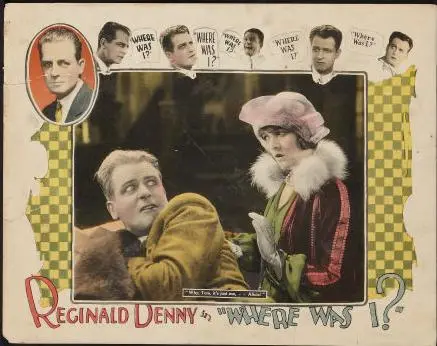
The directorial choices in “Where Was I?” are crucial to its effectiveness. Without dialogue, the director relies heavily on visual storytelling, framing, and the strategic use of intertitles to guide the audience through the narrative. The framing often emphasizes the emotional distance between characters, particularly between the mother and daughter, using compositional elements to highlight their opposing wills. Close-ups are employed judiciously, not just to show emotion but to draw attention to specific details or reactions that advance the plot.
The cinematography, while typical of the era, serves the melodrama well. Lighting is used to create mood, with shadows often hinting at the mother’s hidden motives or the fiancé’s impending struggles. There’s a certain starkness to the visual presentation that aligns perfectly with the film's dramatic tone, avoiding excessive ornamentation in favor of clarity. This practical approach to image-making ensures that the audience's focus remains squarely on the unfolding human drama, a pragmatic choice often seen in early narrative films like The Secret of the Moor.
Pacing is another critical element in silent films, and “Where Was I?” maintains a deliberate, yet engaging, rhythm. It avoids the rapid-fire editing of later periods, allowing scenes to breathe and emotions to register. This slower pace, while potentially challenging for modern viewers accustomed to faster cuts, is essential for building tension and allowing the nuanced performances to fully land. The narrative builds steadily, with each of the mother’s schemes adding another layer of pressure, leading to a satisfying, if predictable, dramatic crescendo.
The overall tone of the film is undeniably melodramatic, a hallmark of the period. However, it’s a melodrama tempered by a certain psychological depth, primarily through Nixon's portrayal. There are moments of genuine pathos and frustration, particularly as the daughter grapples with her predicament. While there might not be overt comedic relief, the occasional exaggerated gesture or reaction, characteristic of silent film acting, provides a subtle counterpoint to the underlying seriousness of the plot. This balance ensures the film, despite its weighty themes, remains accessible and engaging rather than oppressively heavy.
“Where Was I?” resonates with several enduring themes that transcend its silent-era origins. The most prominent is the struggle for autonomy, particularly for women, in a society that often dictated their choices, especially in matters of marriage. The daughter's predicament highlights the suffocating expectations placed upon young women of the era, forcing them into a passive role in their own romantic destinies. Her mother's actions, while destructive, are a twisted manifestation of a desire for control over her child's fate, reflecting broader societal anxieties about class, status, and financial security in a rapidly changing world.
The film also delves into the destructive power of ambition and the corrupting influence of wealth, or the pursuit thereof. The mother's determination to ruin the fiancé financially speaks volumes about the perceived importance of monetary standing over genuine affection and character. This is a subtle critique of a society that, even then, often prioritized material gain above all else, making the film a quiet commentary on the societal pressures of the 1920s.
One could argue that “Where Was I?” inadvertently critiques the very foundations of arranged or socially sanctioned marriages, even when not explicitly stated. The mother’s desperate efforts to manipulate her daughter’s life underscore the lack of agency many individuals, particularly women, experienced. This makes the film surprisingly relevant in discussions about personal freedom and the right to choose one's own partner, a sentiment that continues to echo in modern discourse.
An unconventional observation that struck me during viewing was the film's subtle use of domestic spaces as battlegrounds. The mother's drawing-room, rather than a place of comfort, becomes a silent character in itself, reflecting her suffocating materialism and control. The ornate furniture, the carefully arranged décor, all serve as a visual metaphor for the gilded cage in which the daughter is implicitly held. This attention to environmental detail, often overlooked in analyses of silent films, speaks volumes about the characters' inner lives and social standing, much like the detailed sets in M'Liss help define its rural charm.
“Where Was I?” challenges the notion that all silent films are simple melodramas; it possesses a psychological undercurrent that feels remarkably prescient, exploring the darker side of maternal love and societal expectations. Its bold decision to focus on financial ruin as a plot device instead of mere romantic rivalry is a standout choice for its era.
To reiterate, “Where Was I?” absolutely holds value for today’s discerning viewer, provided they approach it with the right expectations. It is a compelling piece of cinematic history that offers a window into the narrative techniques and performance styles of the silent era. This film works because it offers a fascinating glimpse into the dramatic conventions and acting styles of the silent era, anchored by a compelling, if somewhat melodramatic, central conflict. The commitment of the cast, particularly Marian Nixon, to convey complex emotions without dialogue is genuinely impressive and holds up to scrutiny.
However, this film fails because its pacing can feel deliberate to a modern audience, and some of the supporting characterizations are thinly drawn, typical of films with a singular dramatic focus. Viewers accustomed to fast-paced narratives and explicit dialogue might find its rhythm challenging, requiring a degree of patience and an active imagination to fully engage. The reliance on intertitles, while necessary for the period, can also break immersion for those unaccustomed to the format.
You should watch it if you have an appreciation for silent cinema, are interested in early character-driven dramas, or want to witness the foundational performances of actors like Marian Nixon and Tyrone Power Sr. It's an excellent example of how complex human drama was communicated before the advent of synchronized sound, showcasing the ingenuity of filmmakers in a nascent art form.
For those who are curious about the evolution of film as an art form, or who enjoy dissecting the nuances of non-verbal communication in performance, “Where Was I?” is a rewarding experience. It serves as a reminder that powerful storytelling doesn't always require the latest technology, but rather a compelling human story and dedicated performers to bring it to life.
“Where Was I?” is more than just a relic; it is a vibrant, albeit silent, testament to the enduring power of human drama. It stands as a compelling example of how early cinema, with its unique constraints, could still deliver narratives rich in psychological tension and emotional resonance. Marian Nixon's performance alone is worth the price of admission (or the effort of discovery), offering a chilling yet nuanced portrayal of a mother whose love has curdled into a destructive obsession.
While it demands a degree of patience and an open mind from modern viewers, the rewards are substantial. It offers a rare opportunity to engage with a form of storytelling that predates the talkies, a foundational art that shaped everything that came after. For those willing to immerse themselves in its silent world, “Where Was I?” is a fascinating, sometimes unsettling, and ultimately enriching experience. It’s a film that quietly asserts its place in the lineage of character-driven dramas, proving that some stories need no voice to be profoundly heard.
IMDb 7.4
1928
Community
Log in to comment.