DbcultAccessing Vault...
Cult Review
Senior Film Conservator
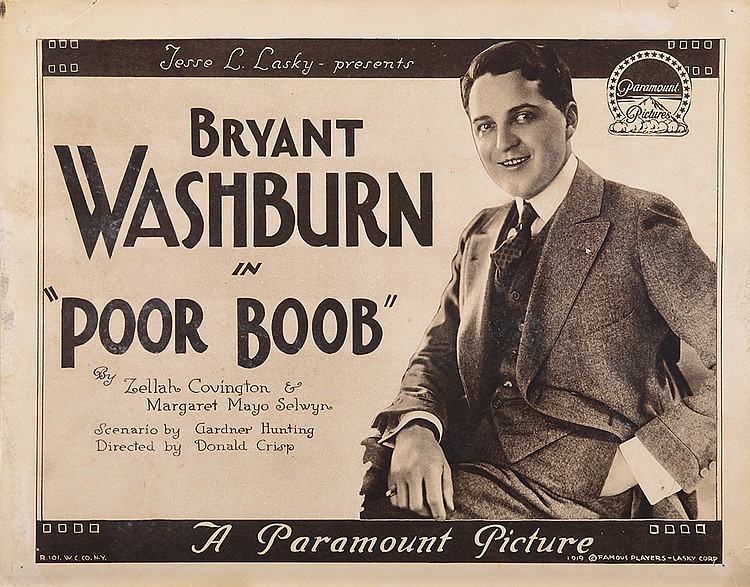
The 1925 melodrama The Poor Boob arrives at the tail end of the silent epoch, a period when filmmakers were mastering visual storytelling with an economy of gesture and intertitle. Director Jay Dwiggins, working alongside a script penned by Margaret Mayo, Z. Wall Covington, and Gardner Hunting, fashions a narrative that oscillates between rustic melancholy and urban bustle, using the eponymous protagonist’s odyssey as a canvas for broader commentary on class mobility and self‑realization.
Even though the film is rendered in stark monochrome, Dwiggins exploits contrast to evoke the emotional tenor of each locale. The opening sequences, shot in the verdant outskirts of Simpson’s village, employ soft lighting to underscore a nostalgic idyll, while the New York office scenes are framed with harsh, angular shadows that echo the protagonist’s disorientation. The cinematographer’s choice to linger on the factory’s rusted machinery, juxtaposed with the gleaming Danish consular chambers, subtly reinforces the thematic dichotomy between decay and opportunity.
Mary Thurman, portraying the enigmatic secretary "Pep," delivers a performance that transcends the limitations of silent acting. Her eyes convey a mixture of steely resolve and suppressed tenderness, a duality that becomes the emotional anchor for Simpson’s transformation. Jay Dwiggins, cast as Simpson Hightower, adopts a restrained physicality; his slouched shoulders and tentative gait betray a man out of his depth, yet his occasional decisive glances hint at an emerging self‑confidence.
Richard Rosson’s Tiny, once the object of Simpson’s affection, is rendered with a compassionate cruelty. The makeup team’s deliberate exaggeration of her size functions less as comic relief and more as a visual metaphor for the excesses that have corrupted her former lover’s aspirations. Meanwhile, Raymond Hatton’s Jimmy provides comic interludes without undermining the film’s gravitas, his quicksilver movements a foil to Simpson’s ponderous deliberations.
The narrative unfolds in three distinct acts, each meticulously calibrated to heighten tension. Act I establishes the inciting incident—Douglas’s merciless acquisition of the canning plant and Tiny’s betrayal—propelling Simpson into exile. The transition to New York is not merely geographic; it signals a psychological rupture, as Simpson confronts a world where his provincial sensibilities are rendered obsolete.
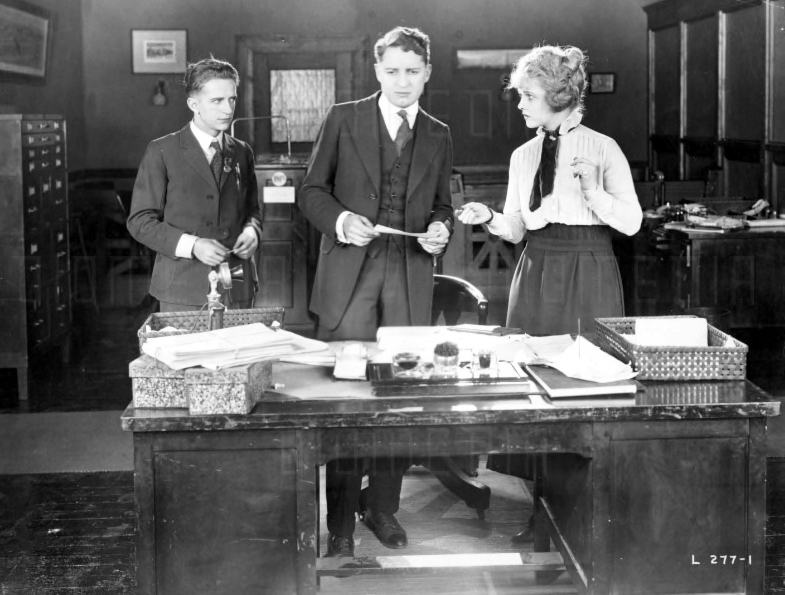
Act II delves into the machinations of Hope (portrayed by Wanda Hawley) and Jimmy, whose scheming introduces Simpson as a silent partner in a Danish contract. Their hubris culminates in a spectacular miscommunication that sees Simpson ejected from the office, a moment captured with a rapid montage of slamming doors, frantic intertitles, and a lingering close‑up of Simpson’s stunned visage.
Act III returns Simpson to his hometown, now cloaked in the veneer of success. Pep’s arrival, resplendent in a tailored suit, signals a reversal of power dynamics; she becomes the architect of Simpson’s redemption, orchestrating the reclamation of the factory and the Danish contract with a deftness that eclipses the earlier schemers. The final tableau—Simpson and Pep standing before the revived canning line, Tiny receding into the background—offers a visual coda to the film’s exploration of love, loyalty, and self‑actualization.
At its core, The Poor Boob interrogates the notion of the "self‑effacing" hero. Simpson’s journey is less about external conquest than about internal consolidation. The film posits that true empowerment arises not from the acquisition of wealth or status, but from the reclamation of agency through authentic relationships. Pep embodies this principle; she is neither a mere love interest nor a plot device, but a catalyst who validates Simpson’s worth beyond the patriarchal expectations of his village.
The motif of deception recurs throughout: Douglas’s duplicitous takeover, Hope’s manipulation, and Jimmy’s false bravado. Yet the film differentiates between malevolent deceit and the benign subterfuge employed by Pep and Jimmy to restore justice. This moral gradient invites viewers to consider the ethical elasticity of “ends justify the means” within a capitalist framework.
While The Poor Boob stands alone in its particular blend of melodrama and social critique, it shares thematic DNA with other silent-era works. For instance, the class tension and romantic entanglements echo those in Virtuous Wives, whereas the protagonist’s return to a reclaimed homeland mirrors the narrative arc of The City of Failing Light. Those familiar with Judex will recognize a similar use of disguise and subterfuge as a narrative engine.
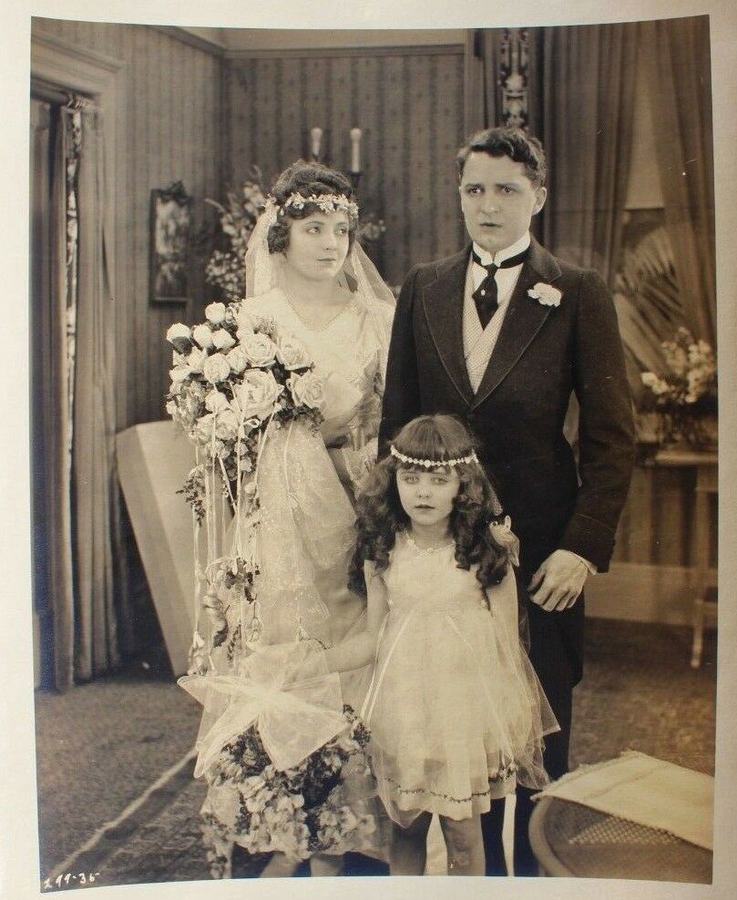
The film’s production design merits particular praise. The canning factory set, constructed on a backlot, incorporates authentic machinery salvaged from decommissioned plants, lending a tactile realism that grounds the story’s economic stakes. Costume design, especially the transition from Simpson’s simple village garb to his polished urban attire, visually maps his socioeconomic ascent. Pep’s wardrobe, a series of sharply tailored suits in muted tones, signals her modernity and agency, contrasting sharply with the more ornamental dresses worn by Tiny.
Upon its 1925 release, contemporary critics lauded the film’s “riveting performances” and “sophisticated narrative structure,” though some dismissed its melodramatic flourishes as “overly sentimental.” Modern scholars have revisited the work, highlighting its nuanced portrayal of gender dynamics and its subtle critique of early 20th‑century industrial capitalism. The film’s restoration in 2019, featuring a newly commissioned musical score, has sparked renewed interest among silent‑film aficionados, cementing its status as a hidden gem within the era’s oeuvre.
Although originally silent, the 2019 restoration pairs the visual narrative with an orchestral score that weaves leitmotifs for each principal character. Pep’s theme, a lilting violin line, underscores her resilience, while Douglas’s presence is accompanied by low brass, evoking menace. The music’s dynamic shifts mirror Simpson’s emotional oscillations, enhancing the film’s affective resonance without overwhelming the visual storytelling.
Beyond its immediate impact, The Poor Boob anticipates later cinematic explorations of the “rags‑to‑riches” trope, predating the more flamboyant renditions found in 1930s Hollywood. Its focus on a male protagonist who ultimately finds fulfillment through a competent female partner foreshadows the gender‑reversals evident in later works such as Who's to Blame?. Moreover, the film’s subtle commentary on corporate exploitation resonates with contemporary audiences attuned to discussions of economic inequality.
Thanks to the diligent efforts of the National Film Preservation Foundation, a near‑complete print of The Poor Boob survives in the Library of Congress archives. The film’s restoration was undertaken using a combination of photochemical and digital techniques, ensuring that the original grain structure and intertitle typography remain intact. This dedication to authenticity allows modern viewers to experience the film as its creators intended, preserving both its aesthetic and historical significance.
In sum, The Poor Boob offers a richly textured portrait of ambition, betrayal, and redemption, rendered with a visual elegance that belies its modest budget. The film’s deft interplay of performance, design, and thematic depth renders it a compelling study for scholars and cinephiles alike. Whether one is drawn to its romantic entanglements, its critique of early industrial capitalism, or its pioneering portrayal of a strong, self‑determined female lead, the film rewards repeated viewings. Its place within the silent canon is secure, and its relevance endures, making it a must‑watch for anyone interested in the evolution of American narrative cinema.
IMDb 5
1916
Community
Log in to comment.