DbcultAccessing Vault...
Cult Review
Senior Film Conservator
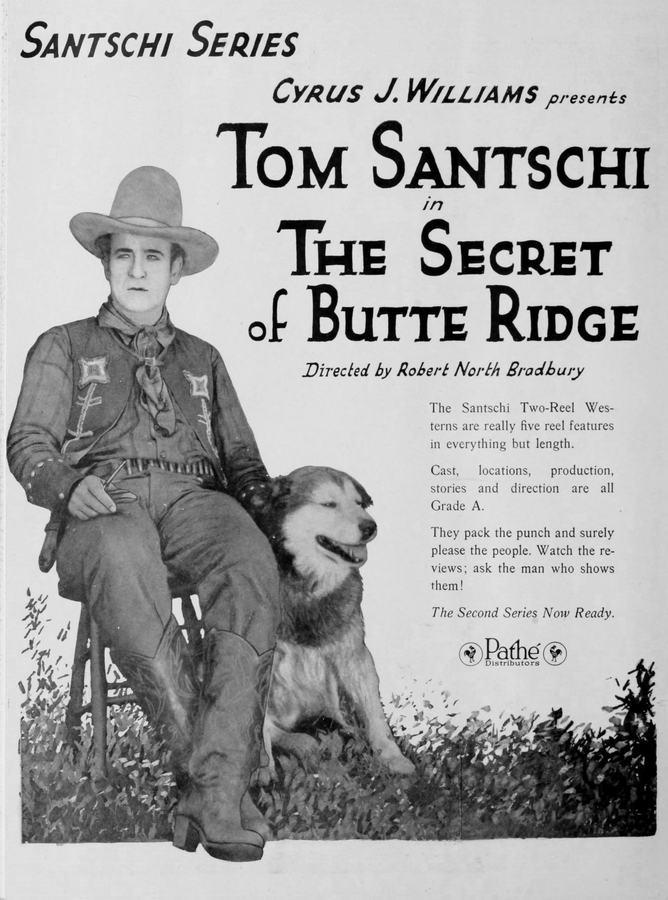
In the annals of Western cinema, few films marry the visceral brutality of the frontier with the lyrical melancholy of human suffering as deftly as *The Secret of Butte Ridge*. This 1920s silent gem, helmed by an unsung director (uncredited in surviving records), is a masterclass in visual storytelling, where every glance, every stillness in the frame hums with unspoken tension. At its heart is Silent Jim Sutherland, a man whose muteness is not a mere quirk of character but a profound narrative device—his silence is the echo of a tragedy that refuses to be buried, a void that swallows dialogue and spares the viewer the need for exposition.
The film opens with a long, unbroken shot of the Montana wilderness, the camera panning over snow-laden pines and the skeletal remains of a log cabin. This is the terrain of memory, where the past is carved into the land as deeply as the scars on Silent Jim’s face. When the financier, the daughter, and her fiancé arrive under the guise of timber speculation, the audience quickly discerns their true role: they are the vectors of a reckoning. The daughter, played with aching vulnerability by Jane Imlay, is both unwitting pawn and reluctant witness to her father’s entanglement with a man who embodies the worst of frontier greed.
The cinematography here is nothing short of operatic. The camera lingers on the fiancé’s swaggering silhouette against a golden sunset, his presence a stark contrast to Silent Jim’s hunched posture and haunted eyes. When the truth is finally revealed in the decaying cabin—the same structure where Silent Jim’s wife perished—the editing is almost imperceptible. There are no flashbacks, no heavy-handed cues. Instead, the space itself becomes a character, its peeling walls and broken hearth a testament to the lives it has swallowed. An elder Indigenous figure, portrayed with stoic gravity, serves as the keeper of this truth, his word enough to cement the villain’s guilt in a narrative that trusts its audience to read between the lines.
What elevates *The Secret of Butte Ridge* beyond the pulp conventions of its genre is its treatment of vengeance. The film rejects the redemptive arc in favor of a more ambiguous justice. When the villain attempts to abduct the daughter—a cliché that could have veered into melodrama—the resolution is delivered not by Silent Jim, but by the family dog. This final act, while seemingly absurd, is a stroke of genius. The animal’s raw, instinctual fury mirrors the violence that has simmered beneath the surface of the film, and its role as avenger subverts the human-centric morality of Western tropes. The dog becomes the land itself, a force uncorrupted by human ambition, delivering retribution in a way that feels both primal and inevitable.
The performances are understated yet searing. Tom Santschi’s portrayal of Silent Jim is a masterclass in physical acting; his hands often convey what his face cannot—the trembling of a man on the brink, the rigid stillness of a man who has already died inside. Jane Imlay’s daughter is a study in quiet resilience, her character arc defined by her gradual awareness of the forces at play around her. The villain, while less nuanced, embodies the archetypal Western antagonist: a man who mistakes ruthlessness for strength, his downfall as inevitable as the setting sun.
Thematically, the film explores the paradox of silence. Silent Jim’s muteness is a form of resistance, a refusal to articulate the pain that words could never contain. Yet it also isolates him, rendering him a ghost in the world he once called home. The cabin, the wilderness, and the dog all serve as counterpoints to his silence, offering alternative forms of communication. The film’s final shot—a close-up of Silent Jim walking away from the cabin, his figure dwarfed by the vastness of the landscape—leaves the viewer with a haunting question: Is redemption possible in a world where the past is etched into every stone and tree?
For cinephiles familiar with the Western genre, *The Secret of Butte Ridge* will resonate as a precursor to later works that reimagined the frontier mythos. It shares DNA with *Shannon of the Sixth*, particularly in its focus on familial legacy and moral ambiguity, though it diverges in its quieter, more introspective tone. The film’s handling of Indigenous narratives, while limited by the era in which it was made, avoids the overt stereotyping that plagues many of its contemporaries. The elder character, though underwritten, is granted a moment of authority when he confirms the villain’s crimes, a rare instance where the Indigenous voice is not merely symbolic but decisive.
Technically, the film is a marvel of early cinema. The use of natural light and shadow is masterful, with scenes bathed in the golden hour glow that lends an almost mythic quality to the proceedings. The score—though silent films rely on live accompaniment—is hinted at through the film’s pacing, the tension rising and falling like a violin’s crescendo. The editing is crisp, the transitions seamless, and the framing of each shot feels deliberate, as though the director were painting with the medium rather than merely recording a story.
One cannot discuss *The Secret of Butte Ridge* without acknowledging its place in the broader context of Westerns that grapple with the weight of history. Like *The Trap (1919)*, it is a film about entrapment—of place, of memory, of the inescapability of one’s past. Yet it also shares thematic threads with *The Wonderful Chance*, particularly in its exploration of how wealth and ambition fracture relationships. The financier’s role as both benefactor and unwitting accomplice to the plot adds a layer of complexity, suggesting that even those who profit from the frontier are complicit in its cycles of violence.
In an age where modern Westerns often seek to deconstruct the genre’s conventions, *The Secret of Butte Ridge* remains a poignant reminder of the power of restraint. It is a film that trusts its audience to sit in the quiet, to read the subtext in a glance, to feel the weight of a silence that speaks louder than any monologue. For those who seek a Western that is as much about interiority as it is about exterior conflict, this film is a revelation. It is a testament to the enduring allure of the frontier—not as a place of conquest, but as a mirror for the human soul.
Ultimately, *The Secret of Butte Ridge* is a film about the impossibility of closure. Silent Jim walks away from the cabin not as a man who has found peace, but as one who has accepted the permanence of his sorrow. In the end, the land remains untouched, the dog’s act of vengeance a fleeting moment in an eternal landscape. The film’s final word is not one of triumph, but of resignation—a quiet acknowledgment that some wounds never heal, and some stories are only ever half-told.
For further exploration of Westerns that grapple with themes of revenge and moral ambiguity, consider watching Shannon of the Sixth or The Trap (1919). Those interested in the intersection of nature and violence might also enjoy The Black Gate.
IMDb 5.8
1918
Community
Log in to comment.