DbcultAccessing Vault...
Cult Review
Senior Film Conservator
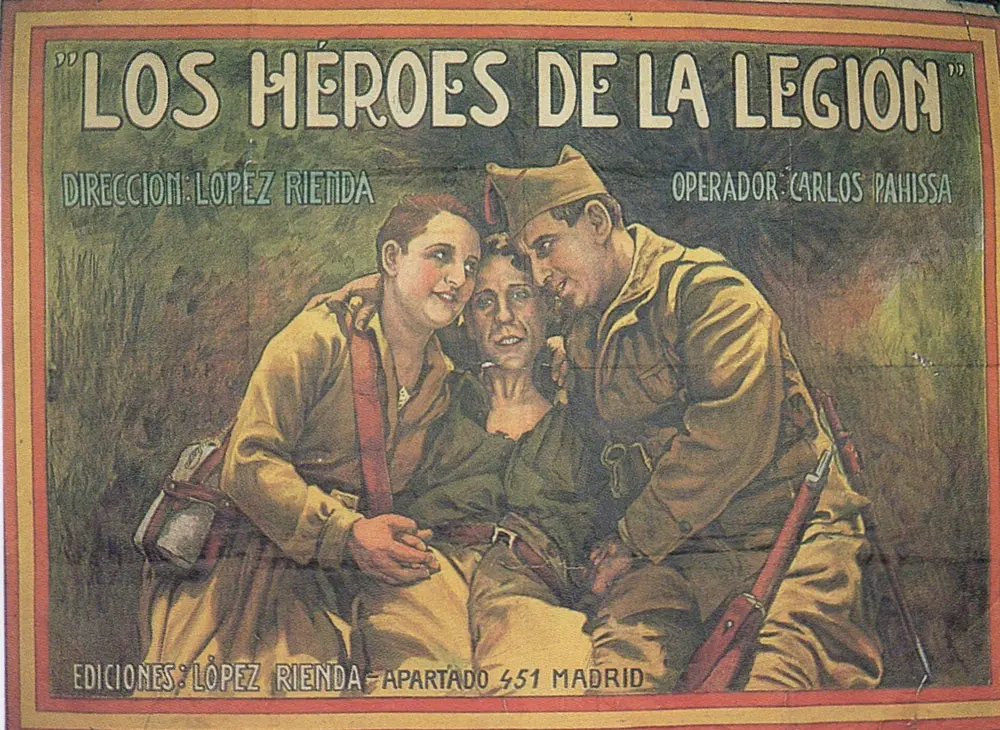
“Los héroes de la legión” is absolutely worth watching, but only if you approach it with the right set of expectations. This is not a polished, modern war epic; it’s an artifact, a raw glimpse into early Spanish cinema’s ambition, offering a distinct flavor of melodrama and earnest patriotism. If you seek a brisk, action-packed narrative, you’ll likely find its deliberate pacing and theatrical performances a hard sell. However, for those fascinated by the evolution of storytelling, the early attempts at grand scale, and the unique artistic choices of a bygone era, it delivers a peculiar, rewarding experience.
The film works because it commits wholeheartedly to its melodramatic vision of military heroism. It doesn't shy away from grand gestures or overt expressions of loyalty, which, while dated, possess an undeniable sincerity. It fails because its narrative often feels less like a fluid story and more like a series of tableaux, each designed to highlight a specific virtue or moment of peril. You should watch it if you appreciate the historical context of cinema and can tolerate, even enjoy, the stylistic quirks of early filmmaking. Otherwise, the static camera work and often exaggerated acting might test your patience.
The film’s central ambition lies in portraying the gravitas of the Spanish Legion. It tries to convey the weight of duty, the stark discipline, and the bonds of brotherhood. Much of this is achieved through a visual emphasis on uniforms, formations, and the sheer number of extras on screen. There’s a palpable effort to communicate scale, even if the filmmaking techniques of the period sometimes struggle to fully realize it. The distant, almost detached camera often frames the Legionnaires as a collective force, an entity, rather than focusing on individual faces. This approach can feel alienating at times, but it serves to underscore the idea of the individual subsumed by the larger cause.
Carmen Sánchez, playing what appears to be a civilian figure intertwined with the Legion's fate, stands out. Her performance, while still adhering to the expressive conventions of early cinema, manages to inject a genuine warmth and vulnerability. She often communicates more through a single, prolonged gaze than some of her male counterparts do with entire monologues. It’s a performance that hints at a more complex emotional landscape than the film often allows itself. The male leads – Ricardo Vayos, Pablo Rossi, Manuel Chávarri, Ricardo Vargas – deliver earnest portrayals of military stoicism. They embody the ideal of the legionnaire with a stiff upper lip, but their characters rarely break free from these archetypes. This makes their individual journeys, when the film attempts to highlight them, feel less impactful. Their faces are often set in grim determination, which is appropriate for the subject but doesn't invite much audience connection.
The direction of “Los héroes de la legión” is straightforward, almost functional. Rafael López Rienda seems less interested in visual flourish and more concerned with clearly presenting the narrative beats and the symbolic grandeur of the Legion. Shots are often static, composed to capture the full breadth of a scene, whether it’s a military parade or a tense council of officers. This deliberate lack of kinetic energy means the film relies heavily on its actors' expressions and the dramatic weight of the situation to carry the emotional load. When the camera does move, it’s usually for a utilitarian purpose, like tracking a procession, rather than to build suspense or intimacy. This approach feels primitive, but it also gives the film an unvarnished quality. It doesn't try to hide its limitations; it works within them.
The film's pacing is undoubtedly its most challenging aspect for modern audiences. It moves at a clip that feels both languid and abrupt. Scenes often begin and end without much transitional finesse, almost as if they were discrete chapters in a serialized story. There’s a sense that the filmmakers were less concerned with a seamless flow and more with hitting specific plot points or showcasing particular moments of heroism or sacrifice. This creates a disjointed experience where the narrative momentum frequently sputters, then restarts. It’s a far cry from the taut construction of something like The Spy, which, despite its age, still manages to build palpable tension through its editing choices. “Los héroes de la legión” feels more like a staged play, with scenes unfolding in front of a stationary observer.
“Los héroes de la legión” is not a film for everyone, nor is it a forgotten gem that demands rediscovery for its artistic brilliance. It is, however, a fascinating document for specific audiences. Its value lies not in its cinematic sophistication, which is limited, but in its unapologetic embrace of a certain narrative style and thematic focus prevalent in its time. It’s a film that asks you to meet it on its own terms, to appreciate its historical context rather than judge it solely by modern metrics. While it can be dramatically inert in stretches and its emotional beats often feel telegraphed, there’s an honesty to its ambition. It aims for a straightforward celebration of courage and duty, and in that, it largely succeeds, albeit with the rough edges of early cinema fully exposed. Don't expect a thrilling ride, but do expect a window into a specific moment in film history, warts and all.
IMDb 5.7
1935
Community
Log in to comment.