DbcultAccessing Vault...
Cult Review
Senior Film Conservator
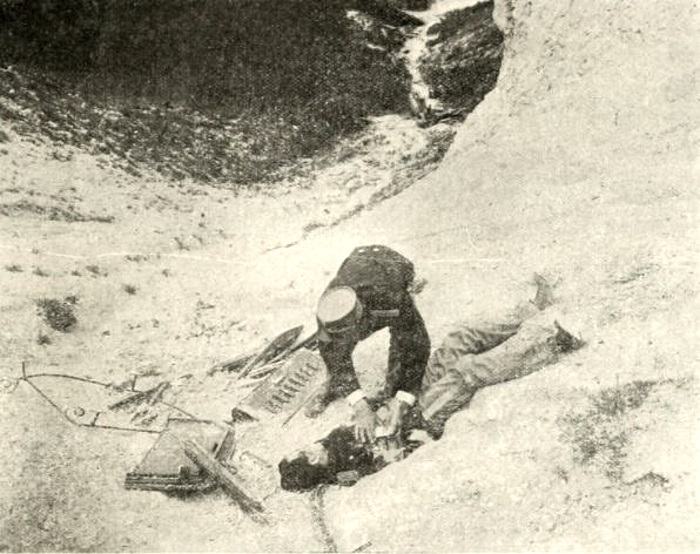
Copenhagen, 1913. While other Nordic filmmakers chased polar expeditions or filmed fjords in midsummer blaze, Carl Theodor Dreyer—still a newspaper headline hound—turned his camera inward, toward the bourgeois parlors he loathed yet understood in his marrow. The Secret of the Old Cabinet is less a narrative than a slow autopsy of dowry capitalism, a chamber piece where mahogany drawers become Pandora’s boxes and every doily reeks of ancestral debt. Shot for the modest Nordisk studio on a shoestring so frayed it might have been knitted by the characters themselves, the film vanished for decades, surfacing only in a 1999 nitrate auction inside a mislabeled reel of Das Geheimnis von Chateau Richmond. What survives is an almost complete 38-minute print—warped, water-stained, yet pulsing with the same quiet terror that would later make The Life and Passion of Jesus Christ feel like a document carved in bone.
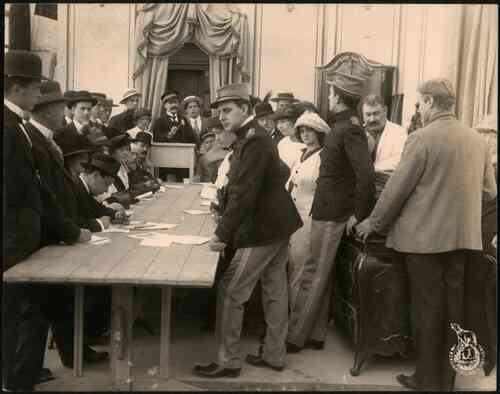
Dreyer’s camera, still shackled to theatrical tableau, nonetheless begins to breathe: it lingers on the cabinet’s keyhole like a voyeur, then dollies—yes, dollies—through a doorway to catch the husband’s pupils dilating in gaslight. The move lasts maybe four seconds, yet it heralds everything the director will later do with faces in The Passion of Joan of Arc. Here, the face belongs to Aage Fønss, operatic tenor turned matinee idol, whose cheekbones could slice rye bread. Fønss plays Axel Brede, a provincial notary whose pomaded swagger curdles the instant he discovers the empty drawer. Watch how Dreyer refuses a close-up at the moment of discovery; instead, he frames Axel mid-length, knees buckling, reflected in a convex mirror that warps him into a caricature of the patriarch he dreads becoming. The effect is both ironic and pitiless: the man shrinks before our eyes, yet the world around him stays coldly in proportion.
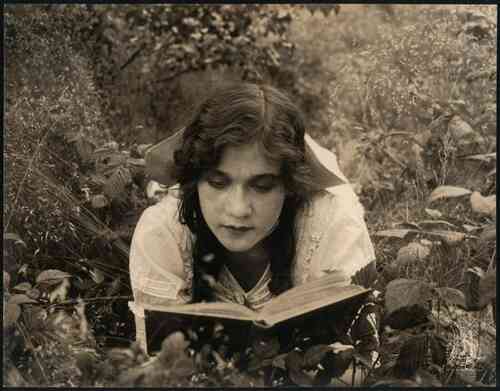
Ella Sprange, as the wife Karen, carries the film’s moral ache. Critics of the era dismissed her as "too modern," code for not sufficiently wilted; but watch her glide across parquet in ankle-laced shoes, every step a calculation of escape velocity. In a letter to her sister (read aloud because intertitles were costly), she confesses: "I married the cabinet, not the man." The line, acidic enough to etch glass, also distills Dreyer’s lifelong obsession with people imprisoned by objects—whether a wedding ring in Das rosa Pantöffelchen or the titular veil in The Magic Veil.
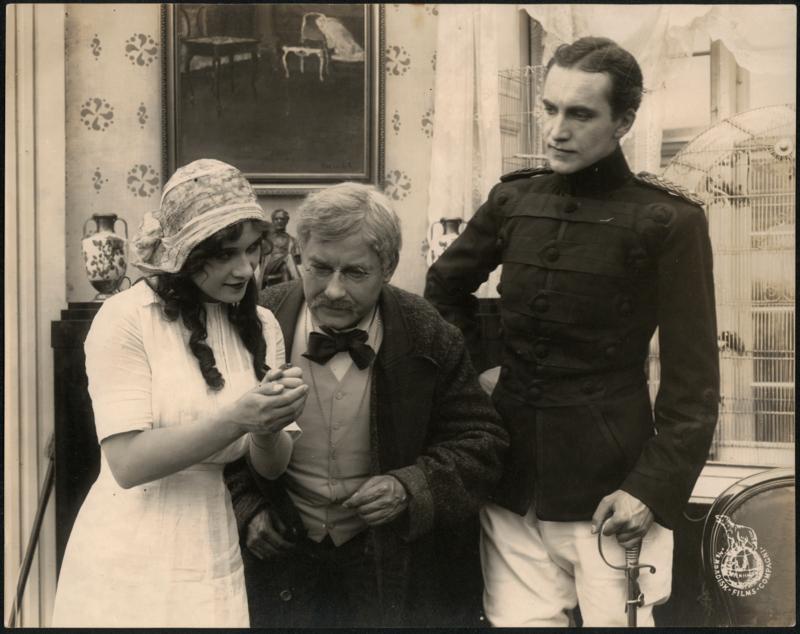
Ingeborg Bruhn Bertelsen, a veteran of the Danish Royal Theatre, plays the mother-in-law with the stealth of a chess grandmaster. She utters fewer words than a silent monk, yet every flick of her lace fan rewrites the power dynamic. In the film’s most chilling passage, she confronts Karen among the hyacinths on the rooftop greenhouse—a location so humid the celluloid seems to perspire. The camera alternates between profiles, each woman half-lit, half-eclipsed, as if moral light itself were subject to monthly interest rates. Without a single subtitle, Bertelsen conveys a lifetime of matriarchal blackmail: the curve of her spine says I have buried two husbands and will outlive you; the tremor at the corner of her lip whispers and I know where the IOU is hidden.
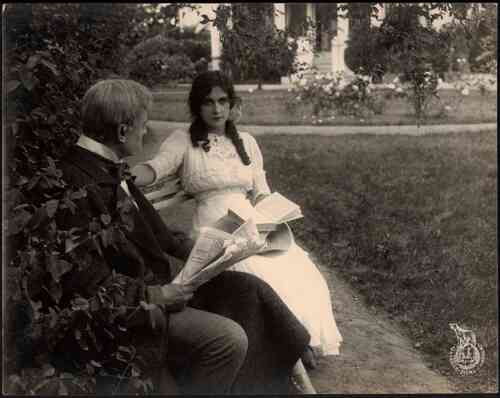
Technically, The Secret of the Old Cabinet is a bridge between the stagy symbolism of early Nordisk and the psychological realism Dreyer would perfect. The interiors were shot in a reclaimed warehouse on Refshaleøen, where the art director painted walls nicotine-ochre to suggest generations of cigar debt. Cinematographer Axel Graatkjær, who later lensed Ingeborg Holm, uses low-key lighting that prefigures German Expressionism; shadows droop like wet crepe, and the cabinet itself looms larger than any human, its claw-feet splayed like a predator mid-pounce. Graatkjær’s camera tests survive in the Danish Film Institute: exposure charts scribbled on the back of hymnals, calculations for capturing candlelight without melting the wax props. The result is an image palette of bruised umber and cadaverous blue, a visual hangover that makes the yellow flare of a match feel downright revelatory.
Comparisons are instructive. Where From the Manger to the Cross mythologizes poverty into holy spectacle, Dreyer insists that poverty is banal, bureaucratic, signed in triplicate. Where Oliver Twist sentimentalizes orphanhood, Dreyer shows marriage as orphanhood with better furniture. And where The Redemption of White Hawk ends on a sunrise of moral clarity, Cabinet closes at 3 a.m. with a ferry whistle—an unresolved chord that leaves viewers stranded between pity and contempt.
Yet the film’s true radicalism lies in its refusal to punish adultery. Karen never boards the ferry; Axel never pulls the trigger. The IOU burns, but the smoke drifts up the chimney, mingling with fog that engulfs the city like unpaid rent. Dreyer denies us catharsis because catharsis is another commodity these people cannot afford. In the final shot, the camera returns to the cabinet—now just another piece of furniture, drawers yawning like broken teeth. A maid enters, closes the doors, locks them with a key that once symbolized patriarchal control but now feels as arbitrary as a lottery ticket. Fade to black. No iris-out, no swelling orchestra, just the mechanical clack of the projector that reminds us we, too, have paid for a seat.
Contemporary reception was muted. Kinematograph Weekly called it "a domestic squall without tempest," blind to the fact that squalls are what sink marriages in shallow water. Danish clergy picketed screenings in Århus, scandalized by a film that dared suggest debt and adultery could coexist in the same pew. Over time, the movie slipped into the limbo of lost silents, overshadowed even within Dreyer’s oeuvre by the towering piety of The Life and Passion of Jesus Christ. But modern restorations reveal textures invisible to 1913 eyes: the way Karen’s shadow on the wallpaper resembles a noose, the microscopic twitch in Axel’s left eye when he fingers the empty drawer, the moment a distant church bell bleeds onto the soundtrack—an accident during telecine transfer that feels like providence.
Viewing it today, one is struck by how little has changed. Dowries have rebranded as student loans; cabinets have become credit-card statements; the river still beckons anyone whose shame compounds at 24% APR. Dreyer, ever the lapsed Lutheran, offers no grace—only the merciless clarity that objects outlive us and that every piece of furniture, sooner or later, becomes evidence against its owner.
So seek out this brittle gem, whether on 35 mm at Cinemateket or via a 2K scan on the festival circuit. Watch it with headphones; the Danish intertitles whisper differently when you can hear your own pulse. And if, afterward, you feel compelled to inventory your own heirlooms—well, that is between you and whatever cabinet you dare not open.
IMDb 4.8
1926
Community
Log in to comment.