DbcultAccessing Vault...
Cult Review
Senior Film Conservator
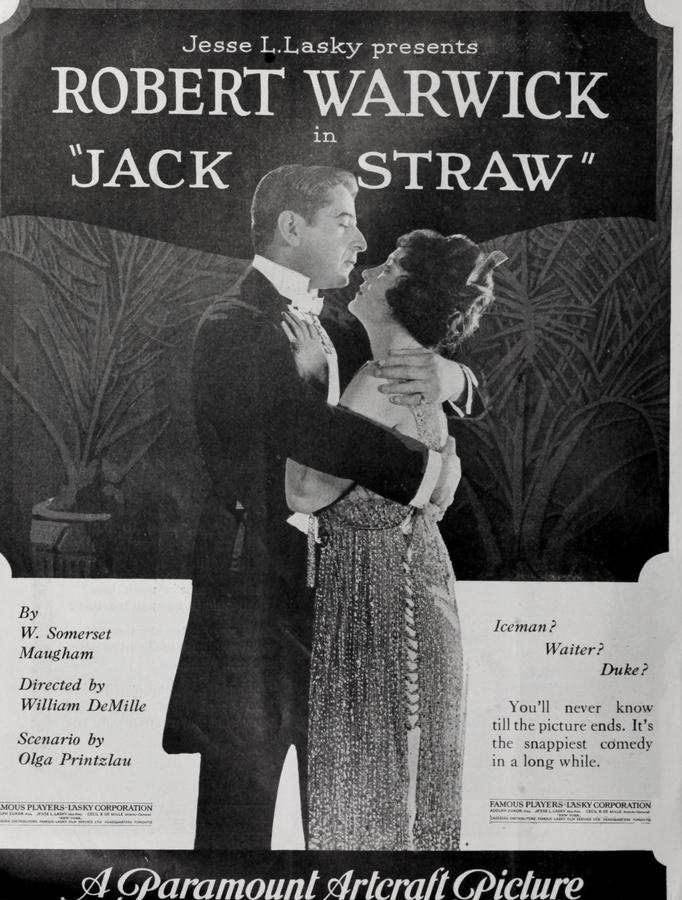
The first image we see is a block of ice sweating under a July sun, and already the film has told us everything: permanence is illusion, class is a thawing facade, and desire drips faster than any freezer can keep up. Jack Straw—title and man—arrives onscreen like a shard of that ice, jagged, glistening, destined to melt into something unrecognizably beautiful.
There is, of course, precedent for the social-swapped fairy tale: Tony America flirted with imposture, and The Pillory wore its class anxiety like a scarlet letter. Yet none luxuriates in the masquerade’s moral slipperiness quite like this 1920 one-off, stitched together by three writers whose résumés span drawing-room comedy, temperance melodrama, and proto-screwball banter. Their combined DNA produces a film that crackles like celluloid tossed on a bonfire—dangerous, dazzling, gone too soon.
Director Webster Campbell turns a tenement shaft into an echo chamber of yearning; every time Ethel hums Schubert above, the camera tilts downward to Jack’s transfixed face, lit only by the argent glint of his pick. The device is simple—two intercut spaces, one voice—but the effect is mythic: Orpheus in reverse, Eurydice calling the tune while her would-be lover remains planted in Hades’ freezer. When the family ascends economically, the shaft is replaced by the Grand Canyon of class disparity, yet the acoustic romance persists: Jack now strains to hear her across ballrooms, across lies, across his own counterfeit accent.
Costumer Ethel M. Doyle raids European fashion plates and Fifth Avenue window displays, draping Robert Warwick in officer’s coats so tight they squeak when he bows. Notice how the lapels widen scene by scene—an unsubtle visualization of Jack’s ballooning hubris—until the final revelation finds him swimming inside a coat that no longer fits, shoulders drooping like a child playing dress-up. The moment he’s stripped of the garment, the camera cuts to a close-up of his shirt sleeves: damp, translucent, ice-man attire resurrected. We are back where we began, only now the frost is shame.
Irene Sullivan’s Ethel oscillates between porcelain doll and firefly, her eyes registering each new betrayal a millisecond before her mouth catches up; it’s a master class in silent-film micro-acting. Opposite her, Warwick walks the tightrope between suave and self-loathing—watch how his left hand trembles whenever he lifts a teacup, a minute vibration that betrays the workingman’s terror beneath the archducal gloss. In support, Charles Ogle (the original Frankenstein monster) turns Holland into a grinning Mephistopheles whose moustache seems to twirl itself, while Sylvia Ashton’s Mrs. Jennings deploys the raised eyebrow the way a conductor wields a baton: one flick and the orchestra of snobbery swells.
You can feel W. Somerset Maugham’s shiv-sharp wit in every epigram tossed over whist tables ("A man may be born in a hovel and still possess a palace accent—if the hovel is cold enough"). Olga Printzlau supplies the aching close-ups, the moonlit confessions, while Elmer Harris threads the comic set pieces—an errant poodle, a runaway lobster bisque—into a farce that never forgets it’s also a love story. The resulting hybrid is less a three-act structure than a three-body problem: hearts, egos, and social roles orbiting one another at suicidal speed.
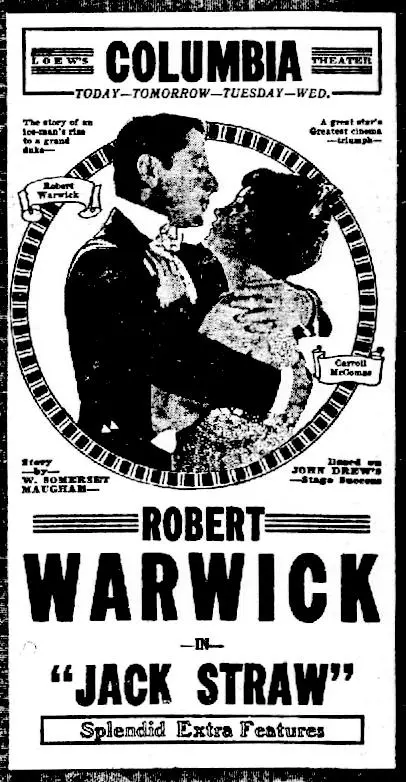
Cinematographer Frank Zucker toggles between Weimar-shadowed interiors and overexposed California exteriors, the brightness so aggressive it feels accusatory. Notice the pivotal ballroom scene: chandeliers spray prisms across the crowd, yet Jack’s face remains half-eclipsed, a Rembrandt triangle of darkness clinging to his eye like a bruise. The film understands that America’s class mobility is not a staircase but a pendulum—every surge toward sunlight drags a counter-weight of shadow.
While the film is mute, its 1920 road-show engagements came with a cue sheet urging pit orchestras to weave Schubert’s Standchen through ragtime flourishes. The juxtaposition is ideological: European romanticism shackled to Yankee syncopation, the very tension that Jack embodies. Contemporary reviewers complained the mix was sacrilege; today it plays like prophecy—America has alwayssyncopated its high culture, turning lieder into jazz and archdukes into waiters.
For all its focus on male metamorphosis, the film’s stealth tragedy is Ethel’s lack of agency. She sings, she weeps, she accepts an engagement brokered by maternal fiat—yet Sullivan infuses the role with such luminous interiority that every downcast glance feels like a suppressed revolution. Compare her to the heroines of Little Women or Welcome Little Stranger, whose narratives grant them moral authorship; Ethel’s arc is half-erased, a palimpsest visible only in Sullivan’s tremulous smile.
The picture opens in a Harlem tenanted largely by Black families, yet Jack—coded white Irish—and the Jennings occupy its apartments without comment. The film glides past this friction like a skater over thin ice, leaving hairline cracks for modern viewers to parse. One wishes for the counter-narrative wit of Tony America, which at least acknowledged its racial cosmopolitanism; here the neighborhood functions as exotic wallpaper, a casualty of the era’s myopia.
Jack Straw survives in a single tinted print at the Library of Congress, its lavender ballroom scenes bruised into magenta by age. Once hailed as "the smartest comedy since Chaplin traded shoes," it vanished from syndication after 1927, eclipsed by jazzier con-artist capers like Bare Knuckle Gallagher. Yet its DNA persists: the class-swapped rom-com, the fake-identity screwball, the moral that love trumps lineage—narrative genes recycled by It Happened One Night, Trading Places, even Parasite. To watch it now is to witness the moment Hollywood learned that America’s most renewable resource is self-invention, and its most volatile fuel is shame.
The closing iris-in shows Jack and Ethel framed against a California orange grove, blossoms drifting like tiny suns. It is meant to signal rebirth, yet the tinting has faded so that the fruit looks white—ghost fruit, winter reclaiming spring. The metaphor is accidental but perfect: in America every success story carries the frost of its origins, every palace a faint drip of the icehouse. Jack Straw may have swapped tongs for tiaras, yet the chill lingers, a reminder that identity is only ever on loan, and the bill always comes due—sometimes in Schubert, sometimes in ragtime, always in the echo of a voice you first heard in the dark.
IMDb 6.2
1933
Community
Log in to comment.